
by Judy Robinson
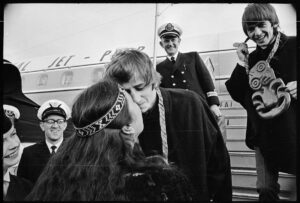
Image Caption – Figure 1: 1964 – Ringo Starr being greeted with the hongi, Wellington. Hill, Morris James, 1929-2002 :Negatives of Wellington, and national events and personalities. Ref: 1/4-071854-F. Alexander Turnbull Library, Wellington, New Zealand.
What is tiki? This exotic word conjures vivid and iconic images. In discussing tiki, questions of production, purpose and scale emerge. There are three predominant eras of tiki production. The first is the protohistoric period prior to recorded European contact, ‘[in Hawaii] A. D. 1650-1778: the period of ‘classic’ Hawaiian civilization, with all zones throughout the region densely settled’ (Ivory 2016: p.51). The second era is from 1778 for approximately another two hundred years until after World War 2 (WW2). The third era is post WW2, incorporating the Tiki Pop movement.
Tiki from the first era can be identified by the extant carvings in museum collections, from visual records of artists, diary entries and observations of early explorers, traders and missionaries, or from the remaining in situ figures and stone carvings, for example those in Belau, Tahiti or Rapa Nui. Rarely, new examples of tiki carvings from this era come to light. In 2014, five 200-year-old carved timber Māori storehouse panels re-emerged after being buried in a swamp in Aotearoa New Zealand. (Griggs 2015).
Tiki, the noun, may be ‘a large wooden or small ornamental greenstone image representing a human figure [Māori]’ (Australian Concise Oxford Dictionary 2015: p.1509). This definition raises the question of scale. After WW2 many objects that are now considered to be tiki were produced to evoke things Polynesian, particularly as mass tourism flourished in Pacific Oceania. With a change in purpose the scale of tiki varied, not necessarily toward miniaturisation. Since 1938, tiki has become an adjective, ‘designating a venue, object, music, food, etc., in a style which is evocative of these islands’ (oed.com, 2024).
Sven Kirsten, tiki pop historian, offers the following definition of tiki: ‘Polynesians worshipped their ancestors as gods, sculpting them into idols of wood or stone. In some of their myths, a demigod named Tiki appeared comparable to the Bible’s Adam, this half mortal/half deity was said to be the first man, and possessed human faults and a sense of humor [sic]. This eventually inspired the islanders—namely those in the Marquesas and in New Zealand—to call all carvings depicting the human form Tikis’ (Kirsten 2014: p.11).
Pacific arts author and curator Michael Gunn extends the geographic range of Kirsten’s definition of tiki to encompass all of Polynesia, while describing a tiki presence beyond the physical with this definition: ‘Tiki is a concept prevalent in much of central Polynesia, Aotearoa New Zealand and the Hawaiian archipelago. On one level it is simple— Tiki means sculpture, carving, drawing, etching, engraving, tattoo. But it is far more than a generic term for something tangible’ (Gunn 2014: pp.125-126).
It seems tiki has always meant more than these material things. Tiki is, to some extent, also a vibe.
‘Say tiki and most Australians will probably describe a carved green jade pendant worn suspended around the neck. This pendant tiki is hei (hanging) tiki. The Australian perception that heitiki is the only form of tiki was helped by Air New Zealand’s marketing campaign’ (Robinson 2016: p.14). ‘In the 1960s and 1970s, green plastic hei tiki were routinely distributed to passengers flying on New Zealand’s national airline, and one of the enduring photographic moments recording the Beatles 1964 visit to New Zealand depicts the ‘fab-four’ wearing giant tiki around their necks’ (Museum of New Zealand Te Papa Tongarewa) (Fig.1).
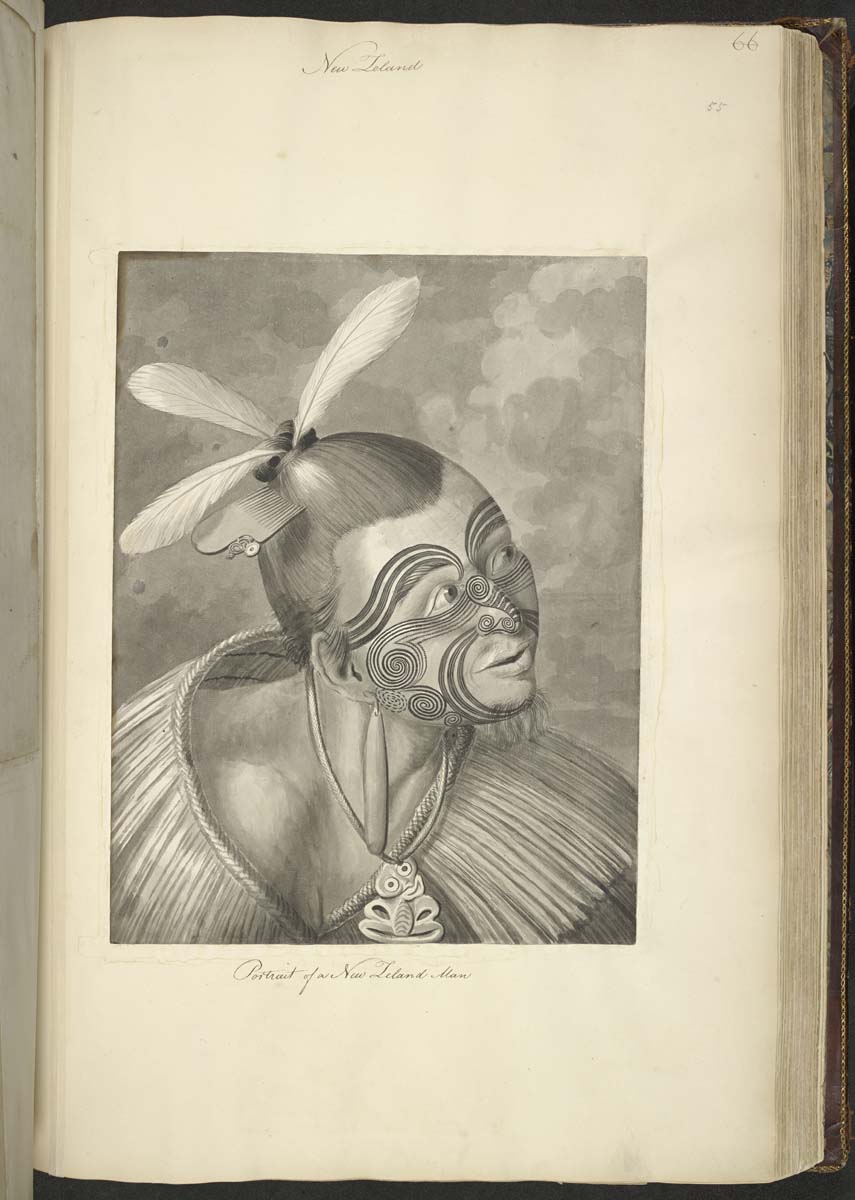
A heitiki is defined as being small. The scale of a protohistoric heitiki can be seen in Parkinson’s 1770 engraving, described as an ‘archetypal image of the Māori warrior’ (Rudiger, Joppien and Bernard Smith 1985: p.35). The greenstone heitiki in Parkinson’s image looks to be approximately 65mm high (Fig.3). The largest heitiki souvenir in my collection is example (#3) shown in the centre of the assemblage of heitiki in Figure 2. This outsized heitiki, made from resin and paua shell, is 140mm high x 95mm wide. The promotional heitiki worn by the Beatles during their 1964 tour of New Zealand are exaggerated in scale, three times the size at more than 300mm high, evoking popstar tiki vibes.

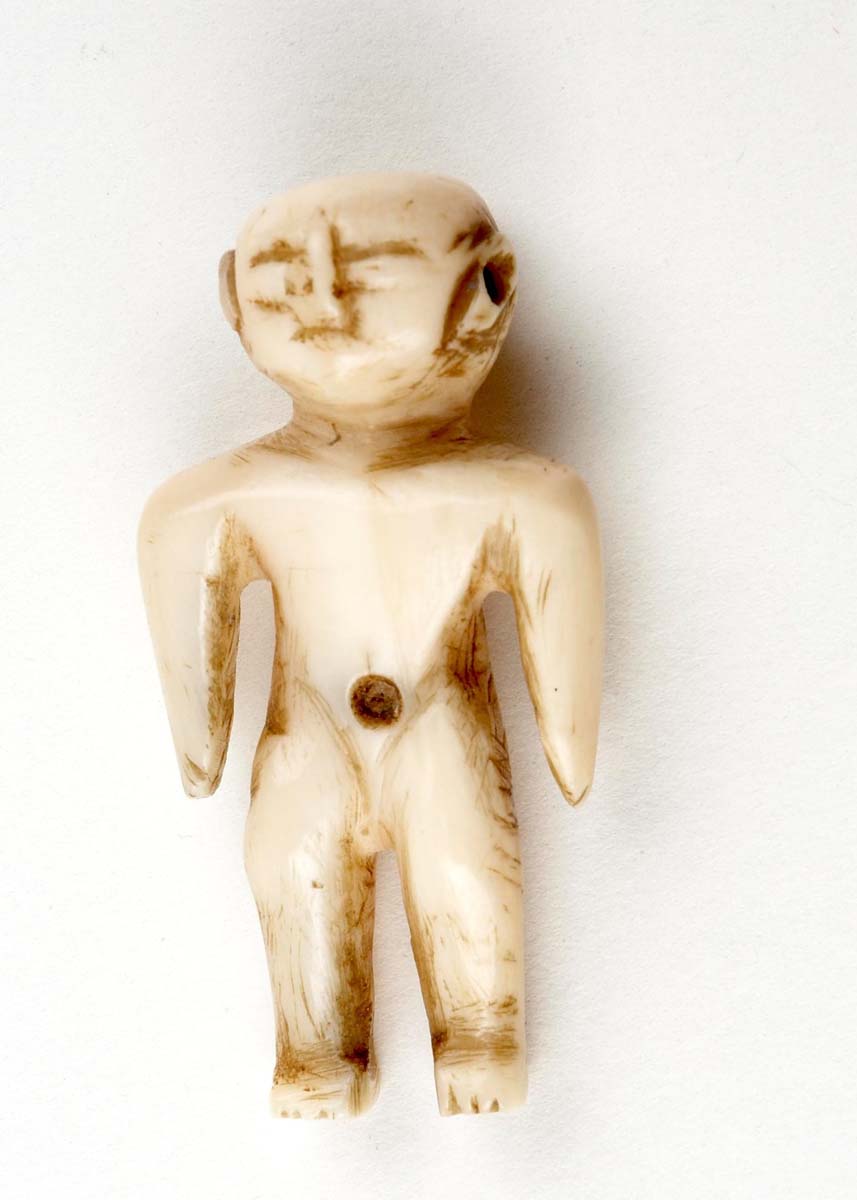
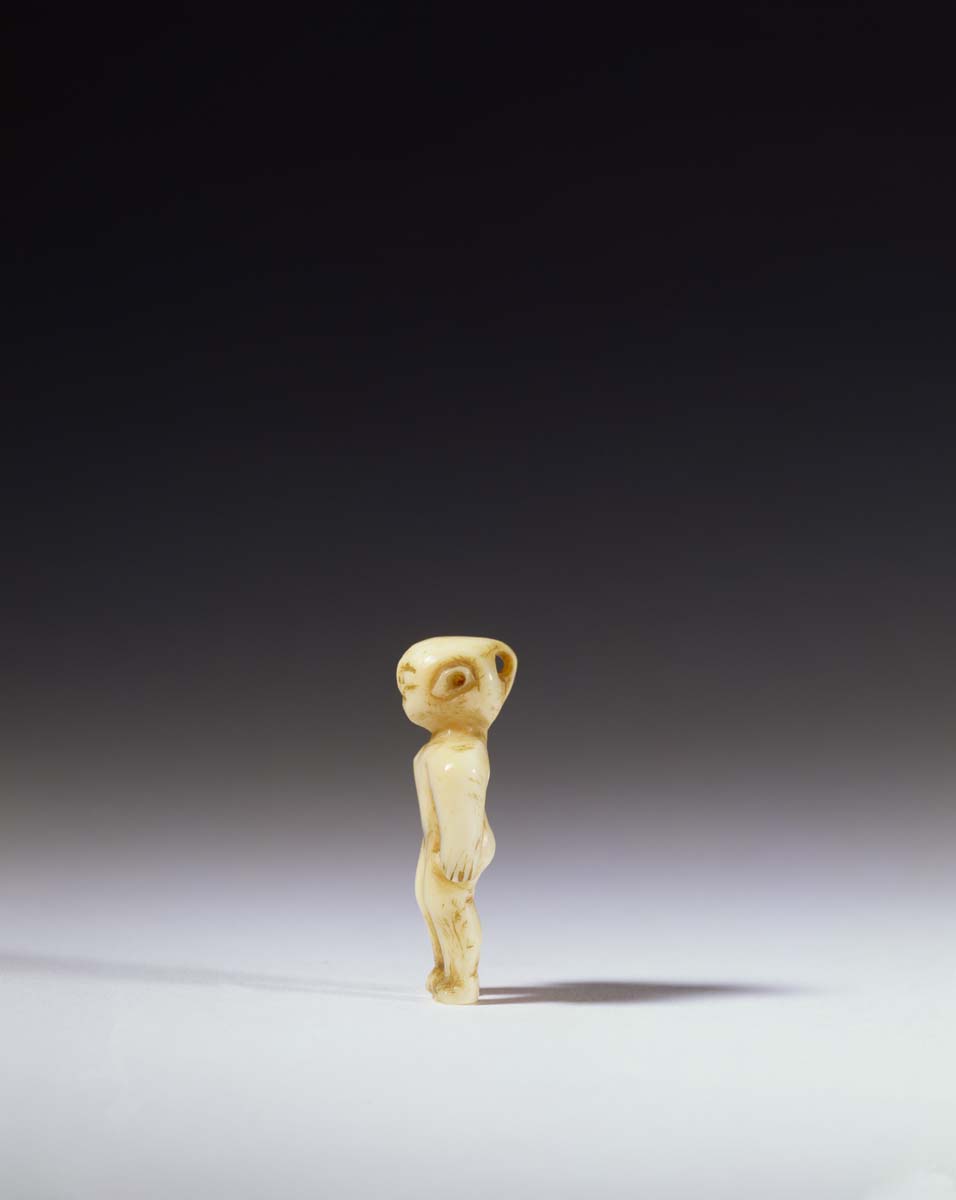
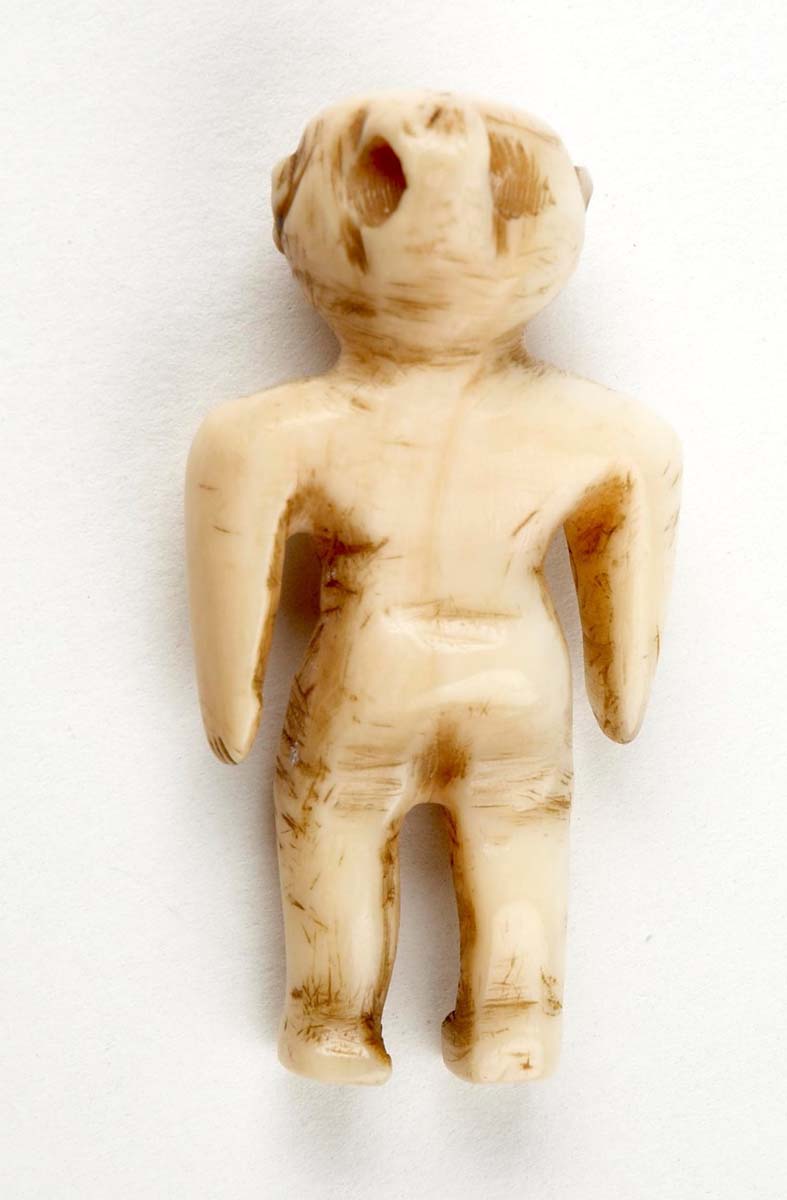
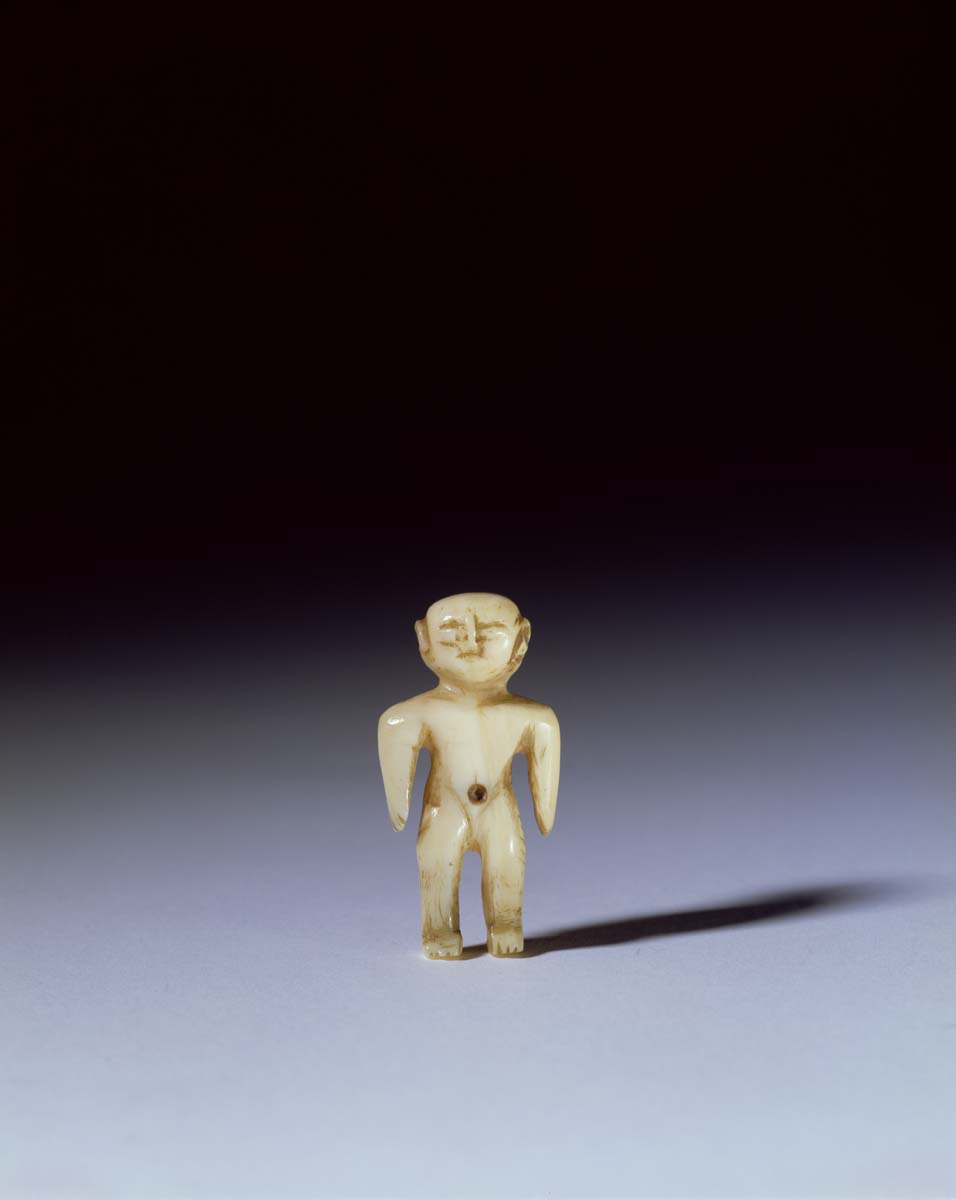
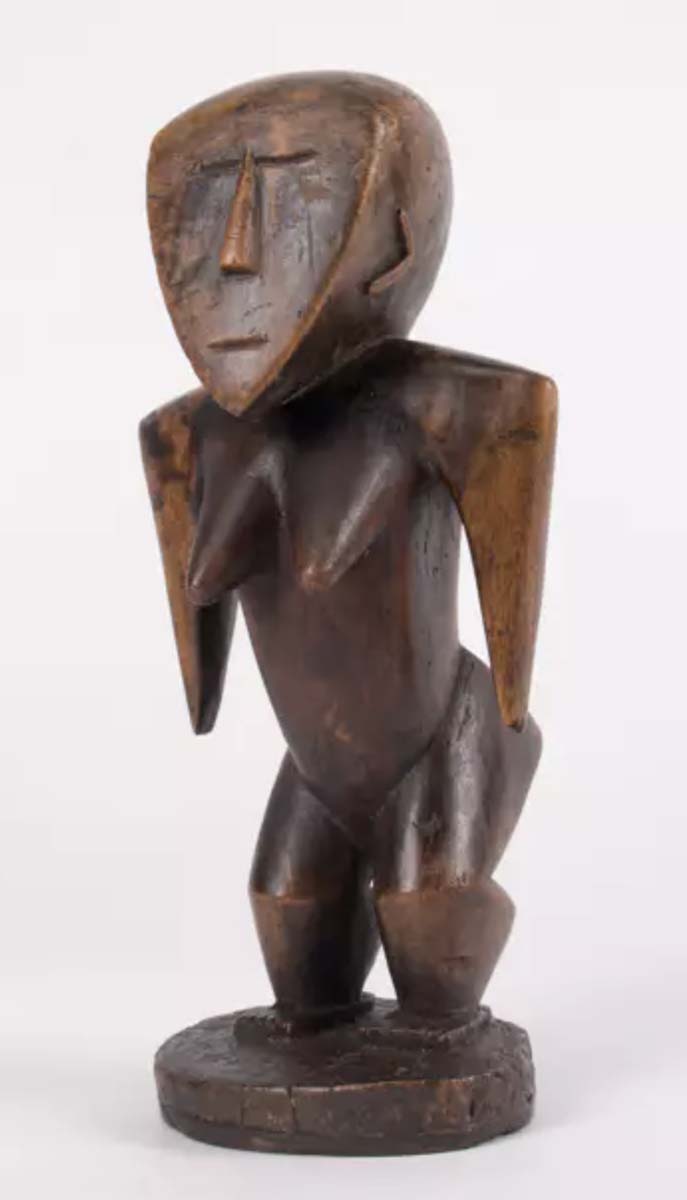
‘Heitiki have a protohistoric precedent in the miniature standing human figures carved in whale ivory, such as examples from Tonga, Fiji, and the Marquesas Islands. A heitiki thought to have been collected from Tonga on Cook’s second or third voyage (Fig.4) is 33mm long, designed to be suspended by a cord threaded through ‘a lug at the back of the head’ (Hooper 2006: p.250). These hei–tiki carvings share the humanoid shape and form of the protohistoric wood sculptures from the same islands’ (Robinson 2016: p.6). For example, the 330mm tall Tongan carving (Auckland Museum 32652, Oldman Collection 531) (Fig.5) shares similar features to the tiny whale ivory carving. Large/larger carved wooden images representing human figures are the other form of tiki, and these images, whether protohistoric or in their more modern incarnations, are prolific in tiki collections.
Pablo Picasso owned a 720mm tall Marquesan carved wooden tiki. This tiki ‘would later accompany him through the rest of his unparalleled career’ (Kirsten 2003: p.28). To understand the exact size of this tiki in spatial terms, standard tabletop height is 720mm. Sitting on the floor with this figure would put an adult at eye to eye with the tiki. Picasso’s tiki came into his ‘possession as early as the end of 1907’ (Stepan 2007:119). Its existence speaks to the carving practices that retained traditional forms from European contact until into the 20th century. ‘With its slightly crouching posture, angled arms with hands resting gently on the belly, and the large head with high forehead, Picasso’s piece conforms with the canon of the Tiki. Large eyes, a flat nose merging with the forehead, and a broad mouth (with a suggestion of tattoos next to the corners) are presented in bas relief, while the forcefully carved ears protrude to the sides. Picasso’s tiki, fabricated decades after the first contact phase (1774-1821), is shorter and more thickset than the two older pieces… …however, as traces of erosion indicate, it may well have been ritually used for some time’ (Stepan 2007:119).
Picasso’s tiki is from the second era of tiki production, after European contact and before WW2. ‘All the tiki sculptures I am collecting have almost certainly been carved within several recent decades, from the early 1960s to the turn of the 21st Century. Their creation coincided with the demand for Pacific Oceanic tourist souvenirs after the post-WW2 boom in Pacific airline and cruise ship tourism. These souvenir tiki are often to be found in cardboard boxes in Australian garages: too valuable to be thrown away and too misunderstood to be prized as collectables or prominently displayed in Australian houses’ (Robinson 2016: pp 11-12).
In 2012, for $40, I purchased the Ohno figure (Fig.6), a finely carved rainforest hardwood tiki from an opportunity shop in Sydney’s inner west. This figure, at 254mm (10”) tall, just over a third of the height of Picasso’s tiki, came fixed to a 40mm thick timber base bearing a brass plaque engraved with the words ‘To – MR ISAMU OHNO President Morinaga Milk Industries From – WALTER HARADA’. The Ohno figure has ‘the eye located off the face in the hair pattern and elongated, dropping to a point where it follows the downward sweep of the hair’ (Cox and Davenport 1988:41), in the Hawaiian Kona style. Its wide open-mouth on an outsized head, and crouching stance, are similar to those tikis drawn by Louis Choris, the German-Russian draftsman for the Von Kotzebue expedition to the Sandwich Islands, now Hawaii, in 1816.
Kamehameha I was the King of the Hawaiian Islands, reigning between 1795 and 1819. ‘None of those thirteen tiki figures drawn by Choris survived the iconoclasm in 1820 after the death of Kamehameha’ (Cox and Davenport 1988:80). At least ten of the protohistoric tiki figures drawn by Choris depicted them carved atop a pole or staff, ‘integral to their supporting posts, and from perspectives other than from the front’ (Robinson 2016: p.101).
It is likely that the Ohno figure had its origins in mid-20th Century Hawaii, carved as a souvenir, or perhaps specially commissioned as a gift for Mr Ohno. This souvenir carving stands alone and is not attached to a pole, fencepost or house post, as so many protohistoric tikicarvings are depicted in sketches. John Webber was the official ship’s artist on Cook’s third Pacific voyage aboard the Resolution in 1776. Webber’s 1784 engraving, An Offering Before Captain Cook, Sandwich Islands, shows a small carved image ‘as a finial on the corner fence post, and possibly another one on the gate.’ (Cox and Davenport 1988: p.70) on the heiau enclosure at Napoopoo, Hawaii.
Large hair features in souvenir tiki carvings from Solomon Islands, Vanuatu, Fiji, Tonga, Tahiti, and Aotearoa New Zealand, although the Hawaiian figures featuring ‘massive, geometrically patterned hair, sweeping back and down at the sides of the body, are head treatments found nowhere else in existing Polynesian sculpture. If they have an origin outside Hawaii, it could be in the towering, feather head ornaments worn by the chiefs of Tahiti.’ (Cox and Davenport 1988: p.106).
Enormous heads with wide open mouths are typical features of tiki carvings. The head of Picasso’s Marquesan tiki is approximately a third of its total body height. ‘In most of the Polynesian sculpture, except in the west (Fiji, Tonga, and Nukuoro), the mouth is open and the tongue is generally showing, but only in New Zealand does the extended tongue become a dominant feature of the face’ (Cox and Davenport 1988: p.106). The head of the Ohno tiki, including hair, exceeds 50% of the figure’s total height.
Tiki eyes are generally outsized in proportion to the total figure, often represented by supplementary material. ‘In some cases, there is a great deal of materiality and activation associated with the eyes of tiki figures, an extreme example being the monolithic moai figures of Rapa Nui. In the ahu ceremonies, the eyes of the moai were activated and deactivated by the insertion of large discs of white coral or stone into the ‘oval eye sockets’ (Robinson 2016: p.64, Van Tilburg 2004: p.470). ‘Shell for eyes in wood carving was common in New Zealand and Easter Island, but in both cases the eyes were always circular in shape. The Hawaiians used a pointed ellipse for the eye, generally held in place by a wooden peg through the center, which represented the iris.’ (Cox and Davenport 1988: p.107).
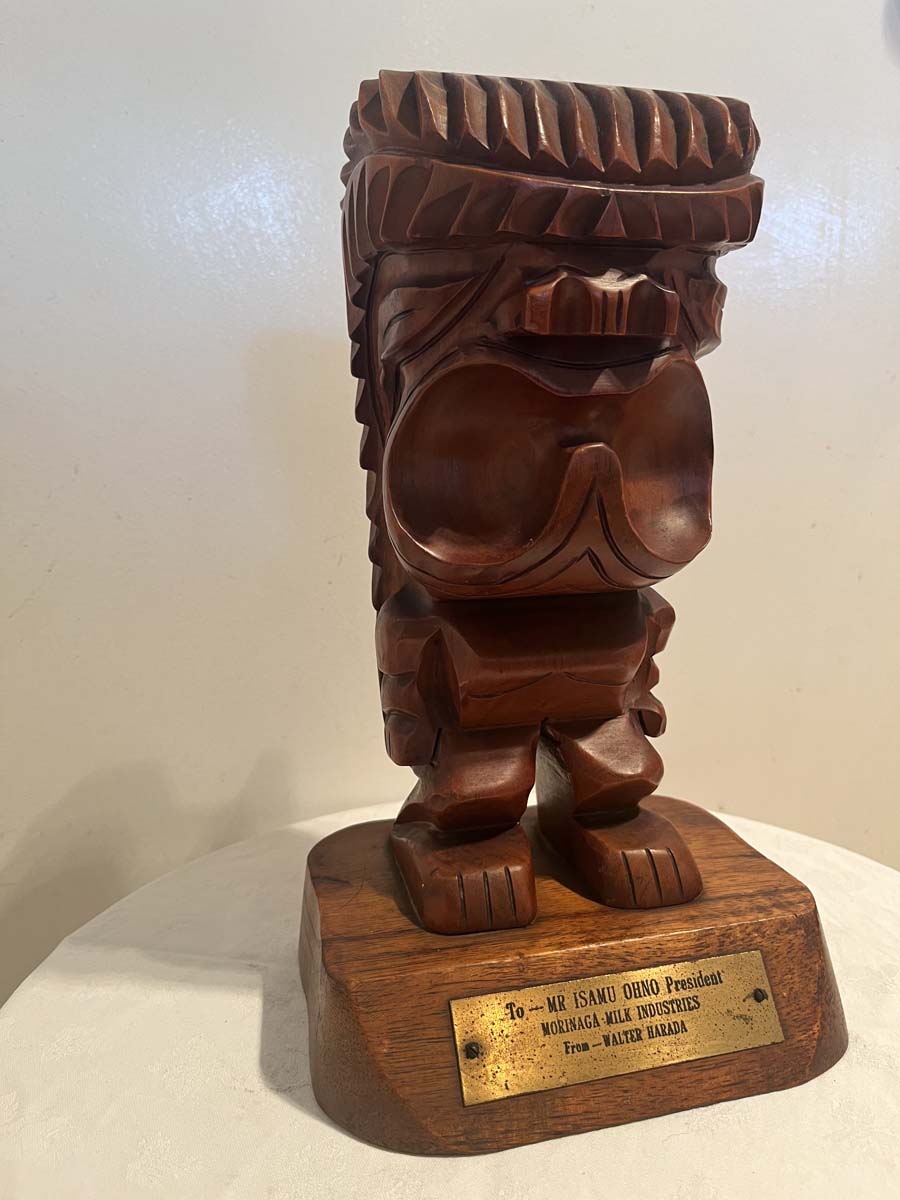
The crouching stance of the Ohno tiki, with flexed knees and heavy calves, is widespread in Polynesian figure carving. In carving, flexed knees are ‘a simple means of expressing action in an otherwise static pose’ (Cox and Davenport 1988: p.107). Perhaps reflecting the culturally close correlation between ceremonial dance and war dance, crouching could be interpreted as either a dance pose or warrior stance.
Hawaii became an American state in 1959, and by the 1960s tiki had become a decorating style in America. In the 20th Century, a third type of tiki collectables emerged in the form of Tiki Pop. Inspired by protohistoric tiki examples and tourist souvenir wood carvings, manufacturers imagined and produced tiki mugs to advertise Pacific Oceanic themed cocktail bars, restaurants, theme parks, bowling alleys, apartment buildings, motels and casinos (Kirsten 2014: p.167). Tiki mugs such as the one pictured (Fig.7) are mostly ceramic productions featuring the tiki head, with designs based on protohistoric tiki. In this case the mug was made in the 1960s in Japan for the Aku Aku Tiki Bar in Las Vegas, USA, the design based on the moai figures of Rapa Nui.
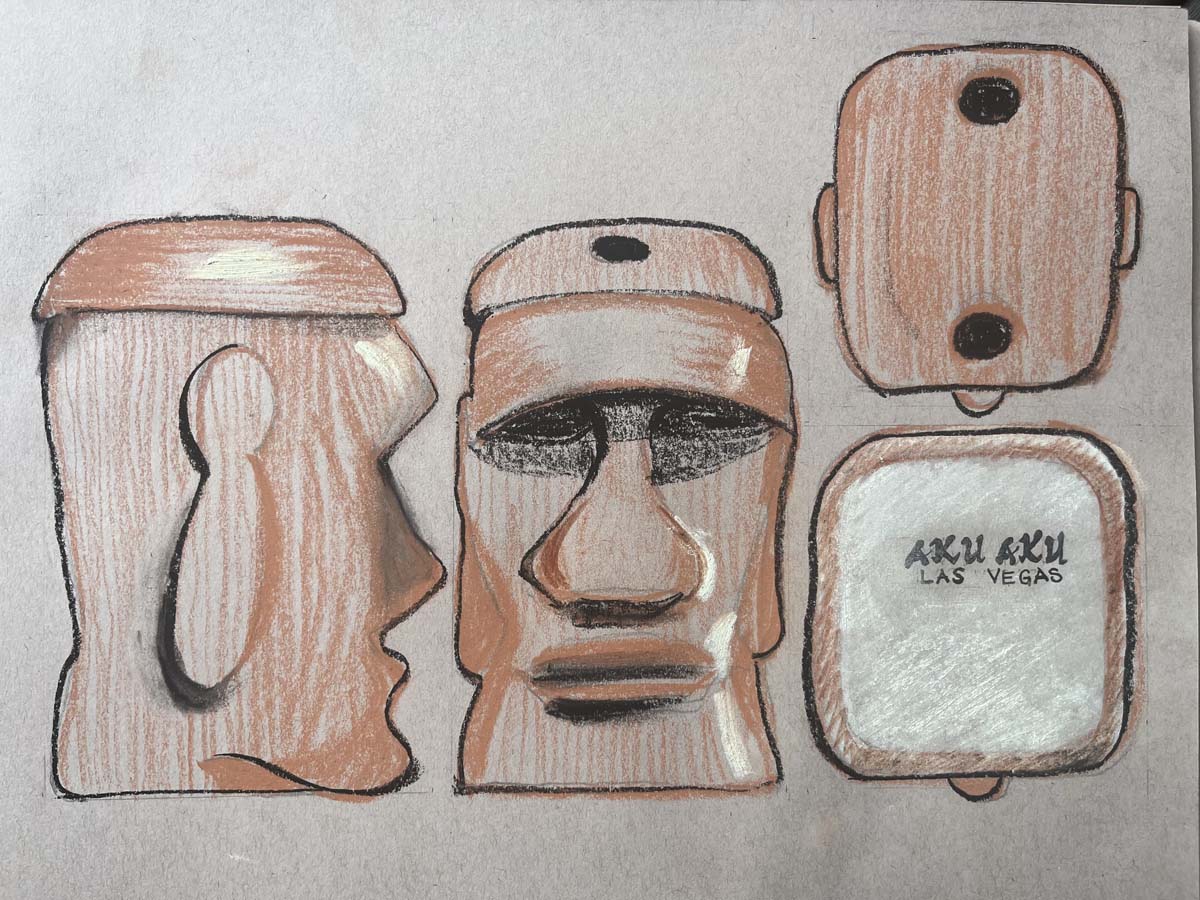
Post-WW2 American developments in the Tiki Pop style were often bedecked with carved interpretations of Polynesian figures, sometimes in grand scale. ‘In Polynesia, monumental images were almost invariably related to an architectural orientation–large temple complexes, enclosures, platforms, or, as in New Zealand, large meeting houses’ (Cox and Davenport 1988:109).
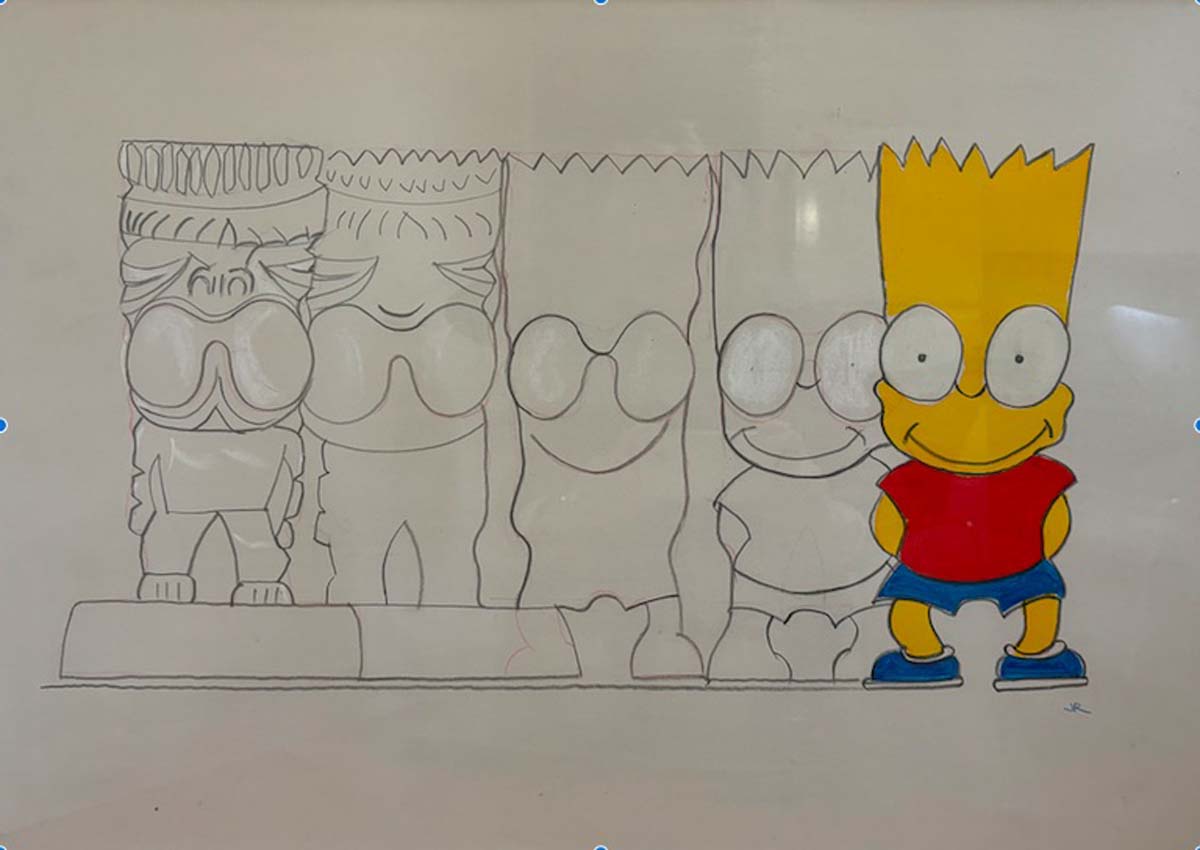
Before my tiki explorations, I owned a large collection of Mickey Mouse memorabilia, including a postcard image of New Zealand artist, Dick Frizzell’s 1997 lithograph, Mickey to tiki tu meke (https://collections.tepapa.govt.nz/object/1154419). Frizzell’s now iconic image morphs Mickey Mouse’s head in seven stages until it becomes a tiki, combining pop art with Māori iconography. Marge Simpson’s towering blue hair reminded me of the Hawaiian tikis. The enormous heads, wide eyes, crouching stance and towering hair of Simpsons characters made me curious. Using the Ohno tiki as a starting point, in five stages the transition to Bart Simpson was complete (Fig.8). What is tiki now?
In my next OAS Journal article, Flight of the Tiki, I will discuss the broader story of tiki production, mapping its history of Pacific Islands settlement.
Judy Robinson completed a MPhil (Architecture) at the University of Newcastle in 2016 with a thesis titled Exploring the orientation of tiki houseposts in protohistoric Pacific Oceania.
References
Australian Concise Oxford Dictionary. Melbourne: Oxford University Press, 2015. oed.com, 2024.
Cox, J.H, and Davenport, W.H., 1988. Hawaiian Sculpture – Revised Edition. USA: University of Hawai’i Press, 1988.
Griggs, K., 2015. “Motunui Epa: Maori Storehouse Carvings Returned after 150 Years Buried in a Swamp, 40-Year European Exile.” In ABC News. New Plymouth, New Zealand: ABC, 2015.
Gunn, M., 2014. Atua: Sacred Gods from Polynesia. Canberra: Publishing National Gallery of Australia.
Hooper, S., 2006. Pacific Encounters: Art & Divinity in Polynesia 1760 – 1860 London/NZ: British Museum Press/Te Papa Press.
Ivory, C., 2016. “Mata Hoata: Arts Et Société Aux Îles Marquises.” edited by Musée du quai Branly. Paris: Musée du quai Branly.
Kirsten, S.A. 2003. The Book of Tiki: The Cult of Polynesian Pop in Fifties America. Cologne: Taschen, 2003.
Kirsten, S.A., 2014. Tiki Pop: America Imagines Its Own Polynesian Paradise Musee du Quai Branly: Taschen.
Museum of New Zealand Te Papa Tongarewa, http://collections.tepapa.govt.nz/object/82245. Accessed 2016.
Robinson, J., 2016. Exploring the orientation of tiki houseposts in protohistoric Pacific Oceania. University of Newcastle, Australia
Rudiger J. and Smith, B., 1985. The Art of Captain Cook’s Voyages: The Voyage of the Endeavour 1768-1771, vol. 1 Melbourne Australia: Oxford University Press.
Stepan, P., 2007. Picasso’s Collection of African and Oceanic Art. Germany: Prestel Publishing, 2007.
Van Tilburg, J., 2004 Hoa Hakananai’a. British Museum Objects in Focus. London: The British Museum Press, 2004.