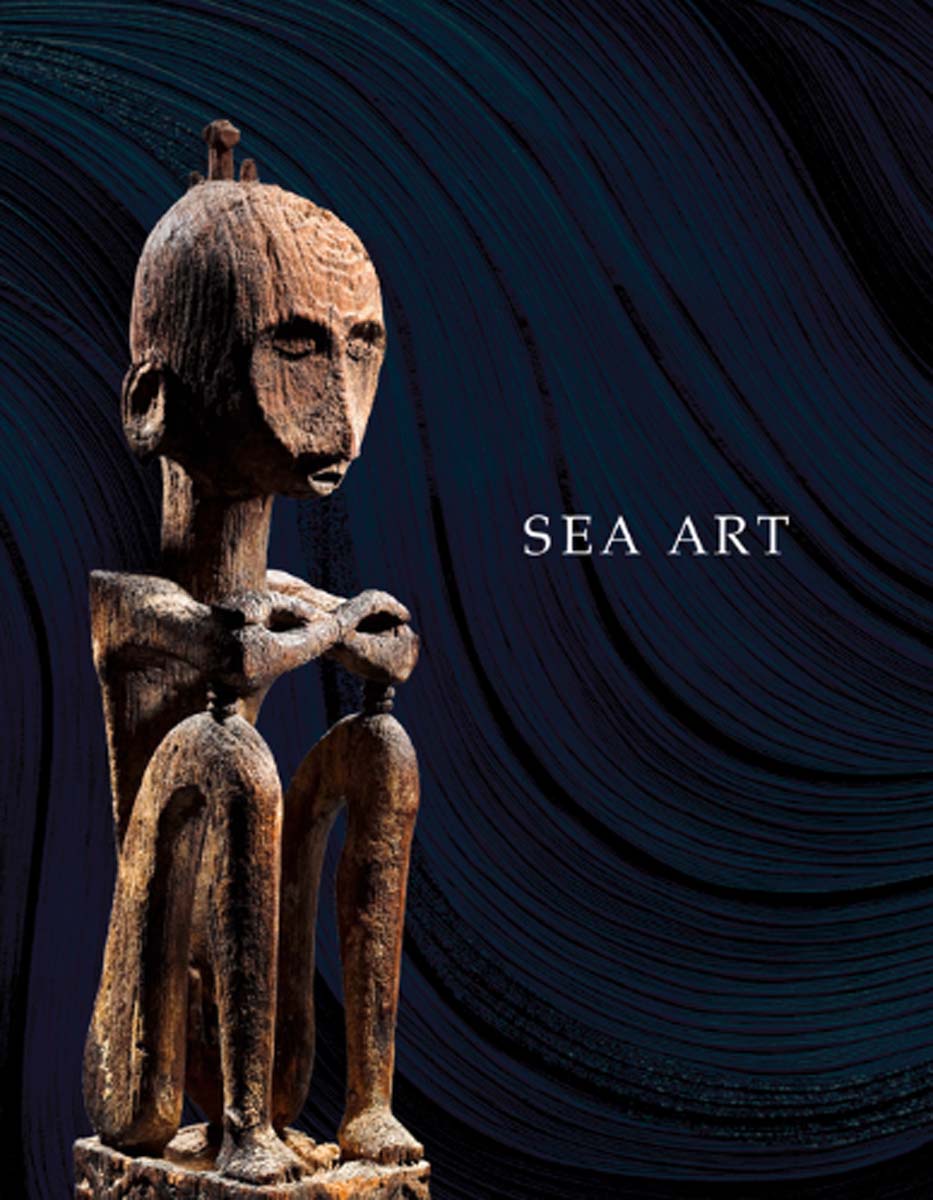
Authors: Jerome Feldman, Philippe Bourgoin, Wil Roebroeks, Ana Gaspar and Antonio Casanovas. Photographs by Hughes Dubois. Publishers: Ana Gaspar and Antonio Casanovas, OOA, Singapore. Arte y Ritual; www.arteyritual.com. Quarto, 404pp. €350.
Review by Bill Rathmell
Ana and Antonio Casanovas have recently published this lavishly illustrated volume which is an indispensable reference companion for all those interested in the aesthetics of the material art of Southeast Asia and Oceania and in the evolution of the earliest known human cultures. It focuses on the genius of the animistic, ancestor-worshipping peoples that had migrated out of Africa to Sunda and Sahul towards the end of the Pleistocene epoch – places now called Indonesia, the Philippines, Papua New Guinea and parts of mainland Southeast Asia. With the slow influx of later spiritual and material influences, first from India and China, from west and north, eventually from Islam and Christianity, the area became an “incubator” for cultural evolution and a corridor for further expansion eastwards into island Oceania.
These peoples devoted much of their energy to artistic and cultural expression – as they still do in some of the remoter areas, such as Toraja (Sulawesi, Indonesia) where animistic beliefs and ancestor veneration are still practised. Traces of the original cultures are still to be found in many places, even when overlain by the new beliefs and practices.
In his essay, “Earliest Art of Island South East Asia”, Wil Roebroeks (of Leiden University and an eminent Dutch archaeologist) puts this “incubator” into a global context – “the modern hunter- gatherer [peoples] that had reached Sahul by about 50,000 years ago”. The area was home to at least four hominid populations some of whom almost certainly interbred with the ancestors of the modern humans that produced the earliest known figurative artworks (also in Sulawesi).
In the next essay, “Patterns that Connect”, Jerome Feldman (University of California, Berkeley) uses over 160 images to trace the many style elements and affinities that are apparent in the otherwise isolated cultures of the area. Tribal traditions related to initiation, headhunting, animal sacrifice and funeral rites are associated with the spread of impressive architecture and sculpture, as well as jewellery, grave goods and decorations. Motifs such as “soul ships” and displayed female figures appear in widely separated cultures throughout the region and into the remotest parts of island Oceania. Beginning with the bronze age, Buddhist and Hindu influences start to appear in the last millennium BCE as an extension over the indigenous cosmic beliefs. “The early arts from island southeast Asia and Oceania give us a glimpse into the philosophy, cosmology and values of cultures that were isolated from the major religions and politics that arrived [later from] the outside world”.
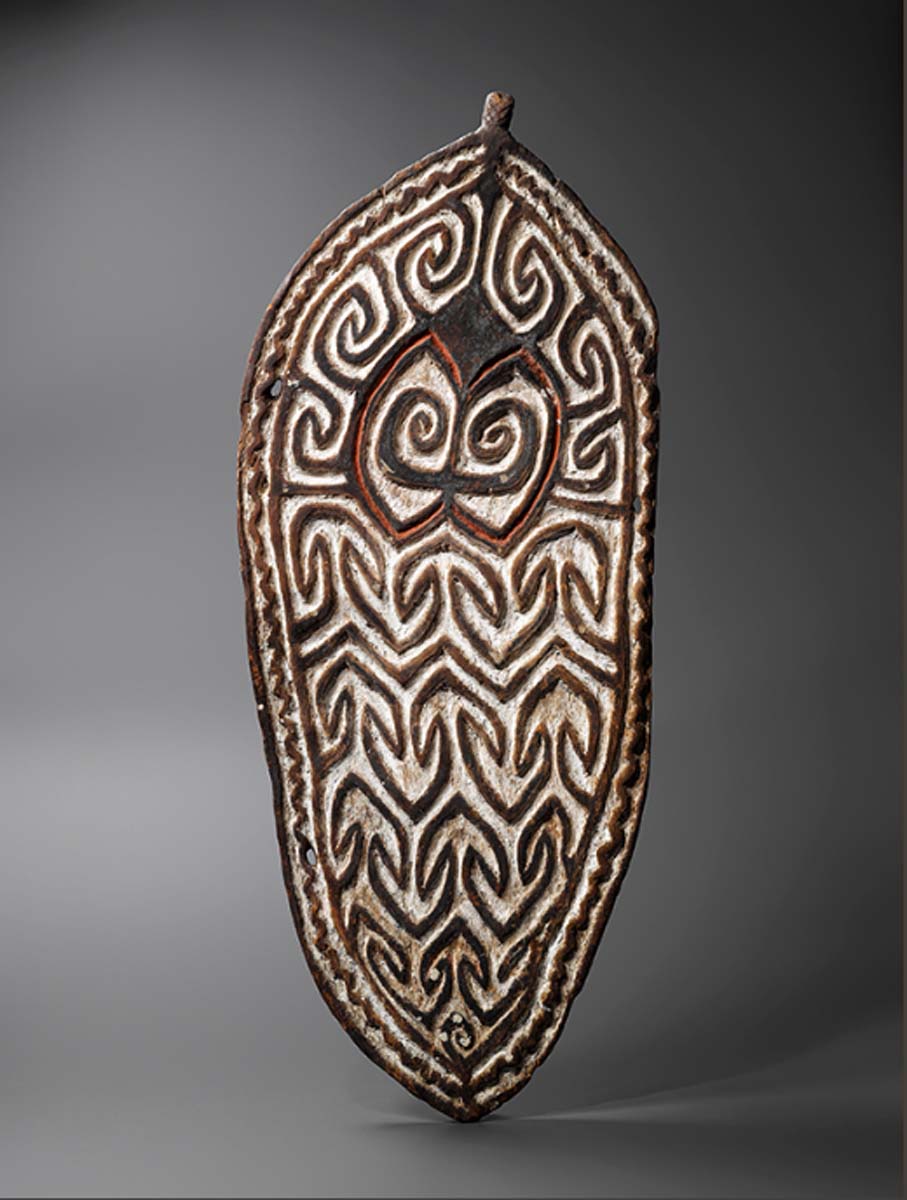
Almost 250 pages of superb images of material art then follow in two sections. The first section comprises artwork from what is now Indonesia, the second from surrounding islands and parts of mainland southeast Asia: Maluku, Papua, the Philippines, with a few images of items from what are now Bengal (Nagaland), Nicobar, Taiwan and Vietnam. Almost all these photographs were taken by the celebrated art photographer Hughes Dubois.
Philippe Bourgoin, journalist, author and art historian, also contributes two sections within the book. “South East Asian Art and the Avant-Garde” and “Collectors In Situ” cover the history of the adoption of motifs from the material art by early twentieth century artists in Europe, notably Matisse and Picasso and Die Brücke. These eclectic sections contain biographies, mostly brief, on selected artists, gallery owners and collectors and describe the part they played.
This book is an essential addition to the library of bibliophiles interested in the evolution of Oceanic and southeast Asian Art and its origins in the ancient continents of Sunda and Sahul. In particular, the number and scope of books previously published with a strong aesthetic focus on Indonesia has been somewhat lacking, and the Casanovas’ superb contribution fills an important gap.