At the National Gallery of Australia. Previewed by Dan Toua
After generations of colonial rule, the free nation of Papua New Guinea (PNG) was established in 1975. The period leading up to and immediately following this moment was marked by a surge in creativity, showcasing the new forms of expression that Papua New Guinean artists were using to respond to their contemporary world. At this time in PNG history there was a concerted movement towards nationhood expressed in all forms of the arts. In this supportive political and intellectual climate, local writers, academics and leaders encouraged the development of contemporary visual arts in post-independence PNG. Artists began to formulate a new national identity through their art, illustrating what it meant to be a Papua New Guinean.
To mark the 50th anniversary of PNG’s independence from Australia, (preceded by British and German rule since 1884), BILONG PAPUA NEW GUINEA showcases the National Gallery of Australia’s impressive collection of Papua New Guinean art across diverse media – sculptures, prints, paintings, bark-cloth, and bilums.
This exhibition celebrates the country’s rich cultural tapestry while examining the impacts of westernisation and the subsequent evolution of Papua New Guinean identity through post-independence artistic perspectives. The National Gallery holds the largest collection of PNG urban art in the world, and this exhibition delves into themes of cultural continuity and change by presenting 100+ works from over 40 artists including Timothy Akis, Mathias Kauage, Yuriyal Bridgeman and others.
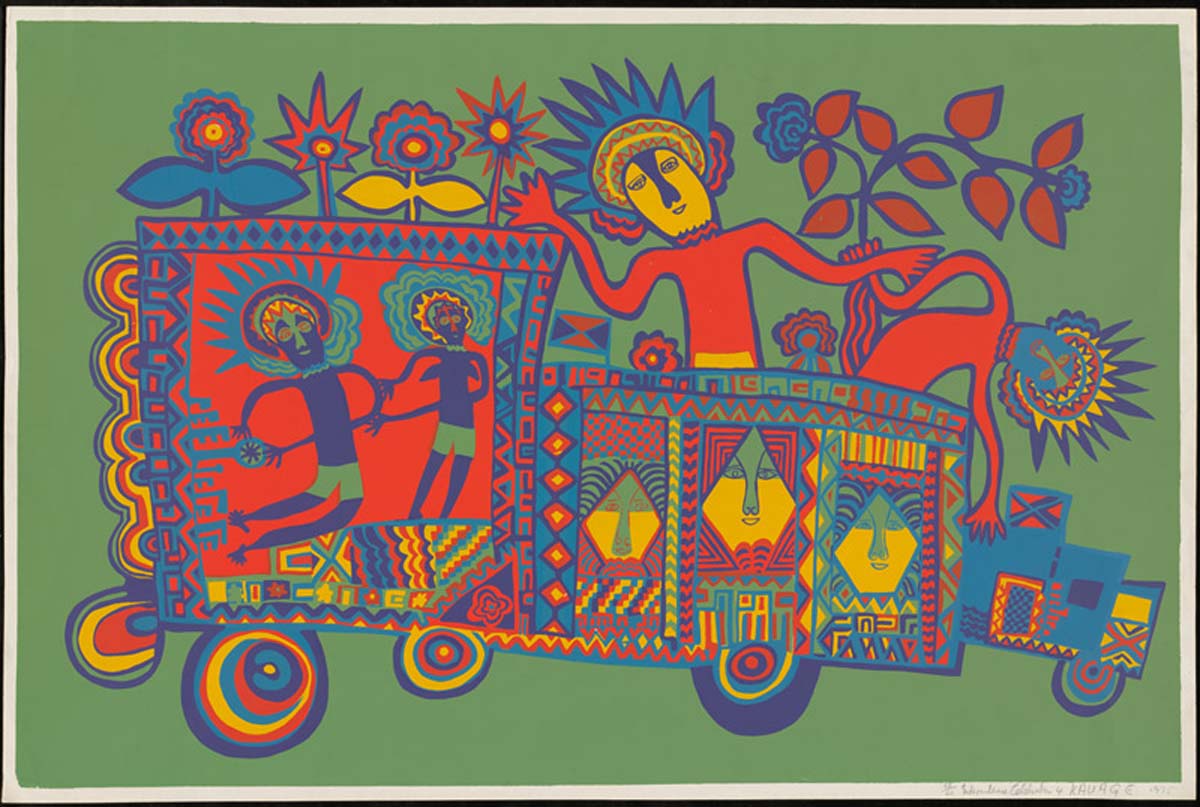
Some key works are from internationally renowned Mathias Kauage OBE. Born around 1944 in a remote village in Chimbu Province, Kauage is celebrated for his vivid paintings depicting the major changes of the late 20th century. Trained in printmaking, copper-beating, drawing and painting under English artist Georgina Beier, Kauage witnessed significant societal shifts, both during Australian colonial rule and after independence in 1975. His art reflects these transformative periods, often depicting the juxtapositions and tensions of his two worlds; the life of his village tied to the rhythms of nature and the ceremonies of traditional culture and the Western influences of Christianity and technological advancement.
A recorder of (and social commentator upon) the collision between pre- and post-independent life in his home country, Kauage was prominent in the contemporary arts movement in the late 1970s, exploring themes of national identity in the newly independent nation. His Independence Celebration screenprints, with their strong lines, dynamic movement and bold colours perfectly express the vibrancy that impending nationhood was energizing the country. Since Kauage’s death in 2003, his distinctive style has been widely adopted by Chimbu painters in Port Moresby and Goroka, collectively known as the Chimbu School. Members, including his wife Elisabeth Kauage (whose work will also be on display in the exhibition), son Andrew Kauage, and others, have embraced Kauage’s vibrant, cartoon-like aesthetic.
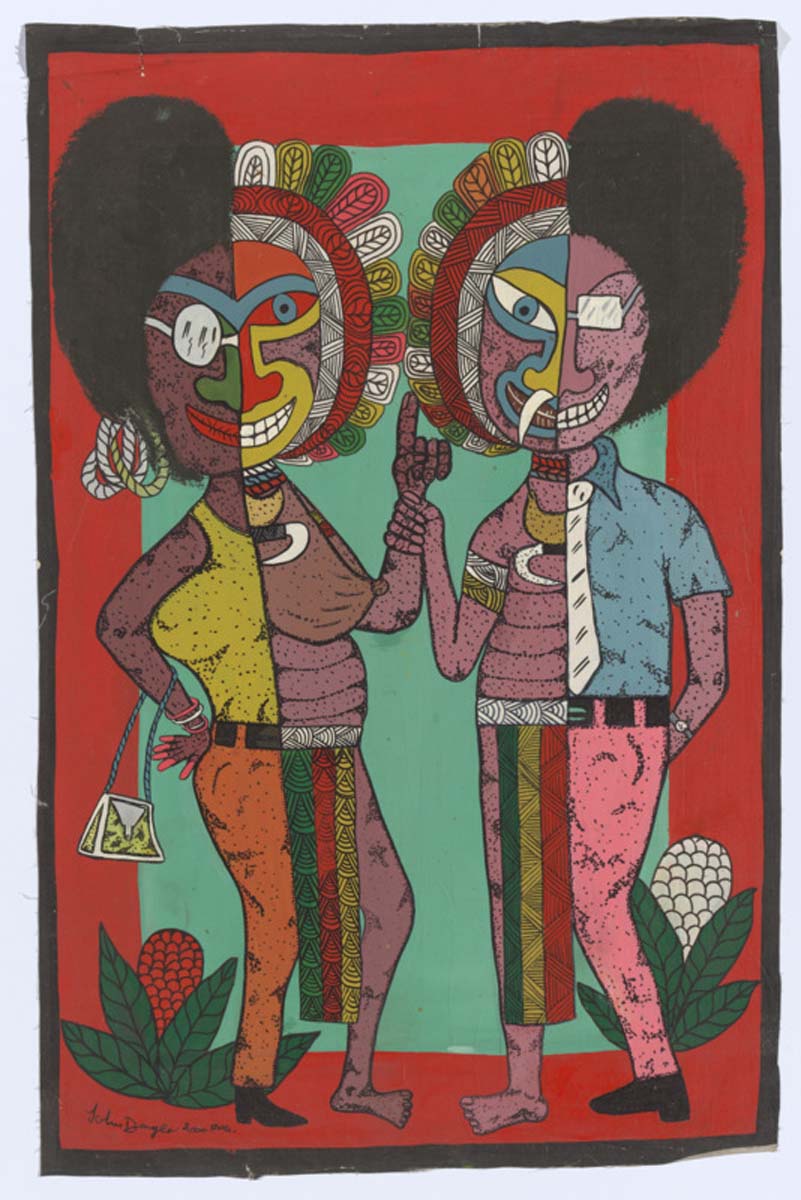
Another key work in the exhibition is Untitled (man and woman), by John Danger (also known as John Denga). Born in the Gembogl District of Simbu, Danger started his artistic practice in Port Moresby in 1999, without any formal training. Growing up in a family of coffee and tea plantation workers, he spent his early childhood in Banz, now part of Jiwaka Province. Danger’s artistic journey began at Bundun Primary School, where he nurtured his talent through home decoration, as there were no commercial outlets for art in his province.
In 1999 at the age of 30, Danger moved to Port Moresby. His paintings, characterised by a simple and two-dimensional style, vividly depict the social landscape and cultural narratives of PNG. Reckoning with themes of transformation, Danger portrays the evolving social landscape of PNG, from the Gulf Province to the Highlands. This concept is perfectly encapsulated in Danger’s work Untitled (man and woman). The painting, done on an old roller blind, features two figures, both split into two versions of themselves: one half representing contemporary PNG, dressed in Western clothes, and the other representing traditional PNG, decorated with colourful bilas (body decoration).
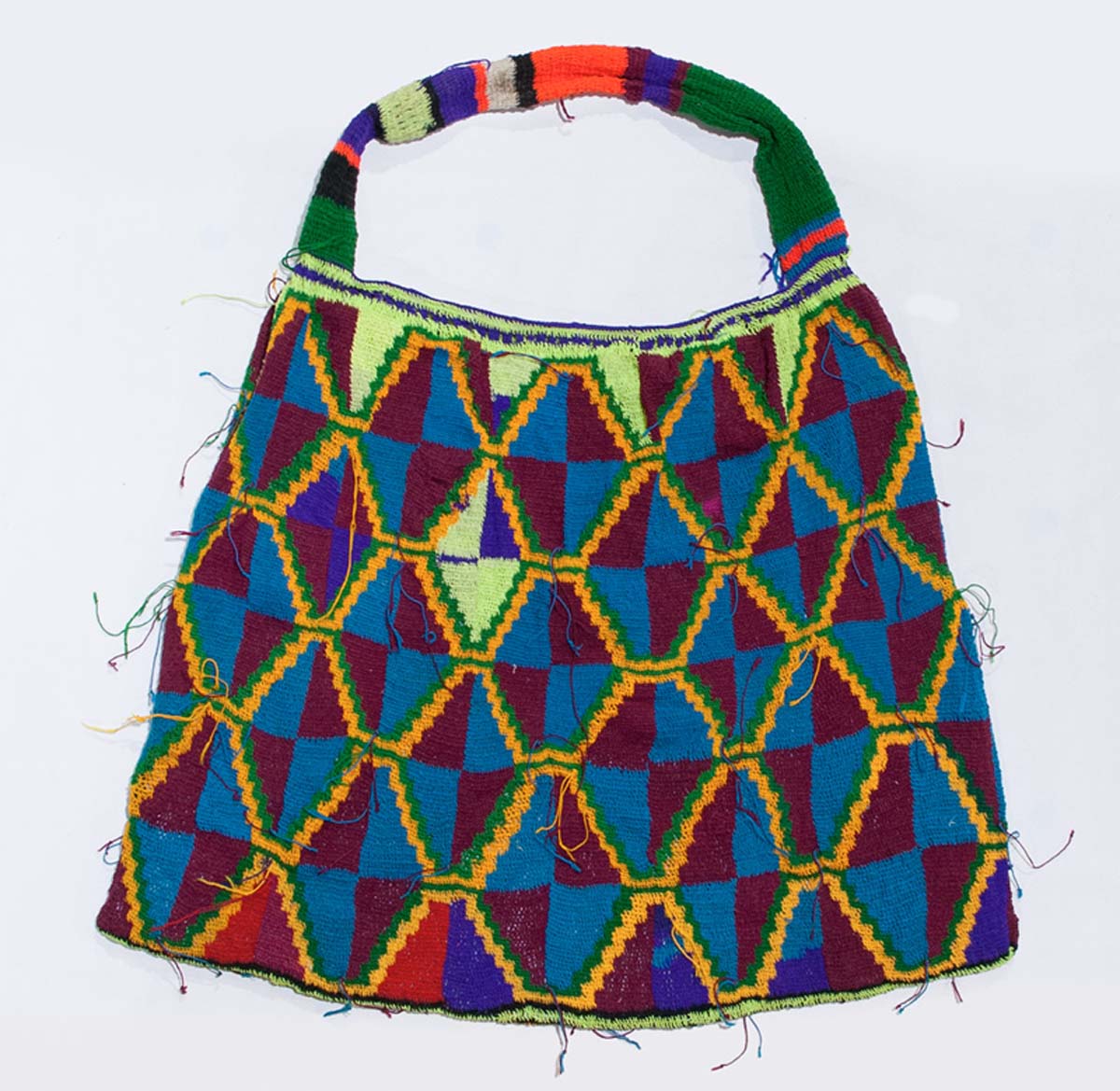
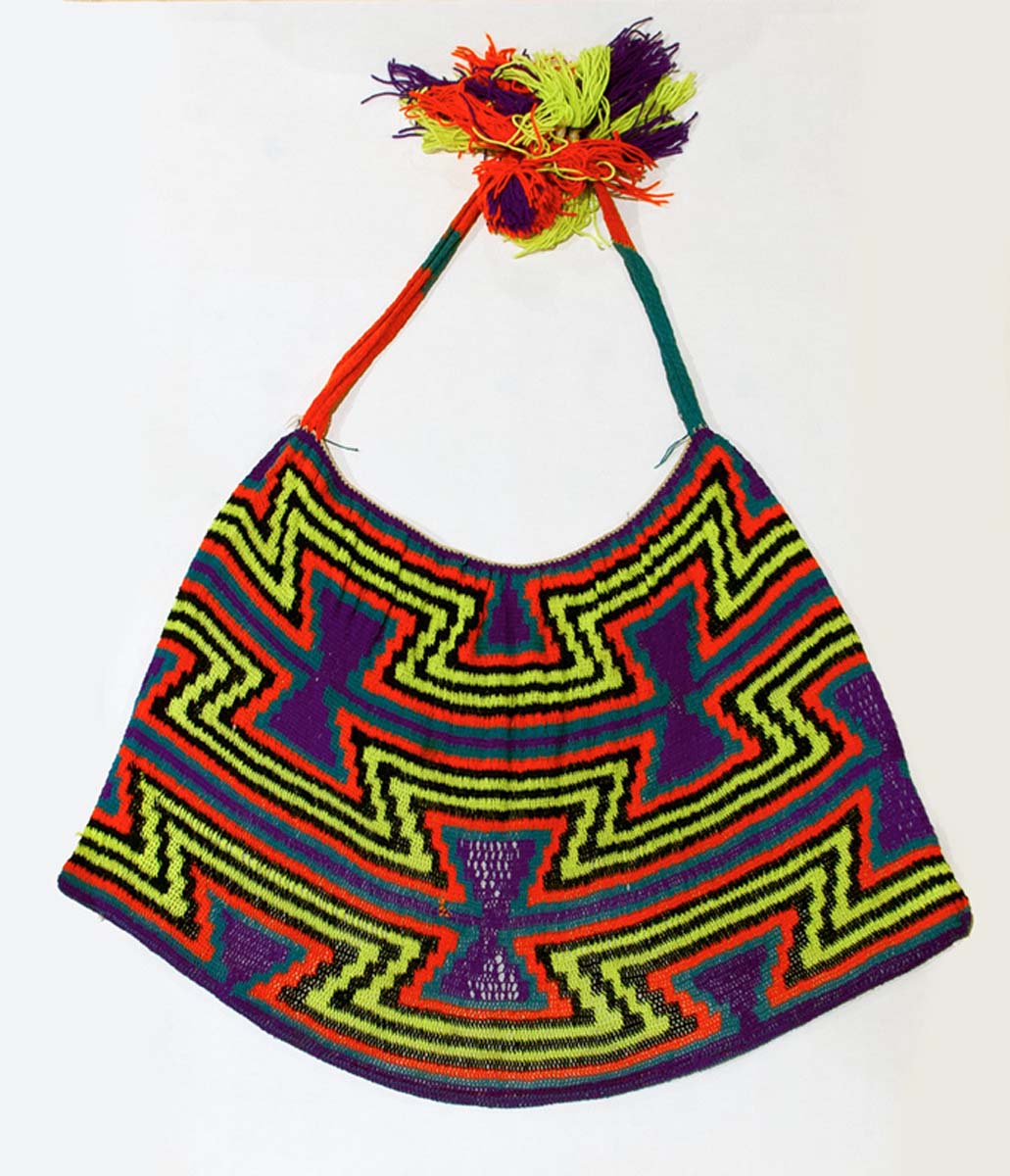
The exhibition also includes a barkcloth and bilum focus, increasing representation of contemporary female artistic practice in PNG. Born from traditional crafts, barkcloth and bilum making has become an independent source of income and empowerment for many women across PNG and they are now internationally recognised as contemporary art forms of their own.
The barkcloths on display are from the Oro Province in PNG and feature a diverse range of designs and methods. The barkcloth holds profound cultural significance, recording, preserving, and expressing all aspects of local heritage. This sacred practice, primarily carried out by women, involves creating and painting designs used in important ceremonies such as marriages, funerals, and initiations, and remains integral to everyday village life. The barkcloth serves as a medium for passing on cultural law, ancestor stories, and environmental knowledge. The designs of barkcloth are richly decorated with family and tribal motifs specific to each clan, often depicting mountains and animals, the compositions of which are like those found in carvings and tattoos. Tattooing was banned by missionaries to the area in the 1950s, so to covertly preserve their culture women would transfer these designs onto barkcloth instead.
Like the barkcloth, the labour-intensive process of bilum making requires a high level of skill and patience. Made from carefully prepared pandanus or sisal, weavers employ a knotless netting technique which results in a seamless, stretchy fabric that is both strong and flexible, and allows for the creation of complex patterns and designs, which can vary significantly depending on the region. The bilums on display are modern adaptations of traditional methods, with a broader range of colours and textures. While traditional bilums are made from natural fibres, since the 1980s makers have increasingly incorporated synthetic materials such as nylon and artificial dyes, evolving past practical items into functional fashion accessories.
Reflecting on 50 years of national identity through artists’ perspective post-independence, BILONG PAPUA NEW GUINEA delves into a nation’s journey towards, and post-, independence. The exhibition is open from Saturday 13 September to Sunday 20 July 2026, at the National Gallery of Australia, Canberra, and will include a series of public programming including artist and curator talks, and cultural performances.
Dan Toua is a Curator of Pacific Arts at the National Gallery of Australia.