by Ross Bowden
This article is an edited version of a talk I gave at the Oceanic Art Society Forum in Melbourne in 2023. The purpose is to raise, very briefly, some of the ‘big picture’ questions about art cross-culturally.
The ethnographic illustrations are drawn mainly from the Kwoma of the Sepik River region of Papua New Guinea but they could equally well have been drawn from any other indigenous society, in the Pacific or elsewhere. As an anthropologist I had the great privilege of doing a total of two years of fieldwork among both the Kwoma and five other Sepik peoples over a 36-year period from 1972 to 2008.[1]
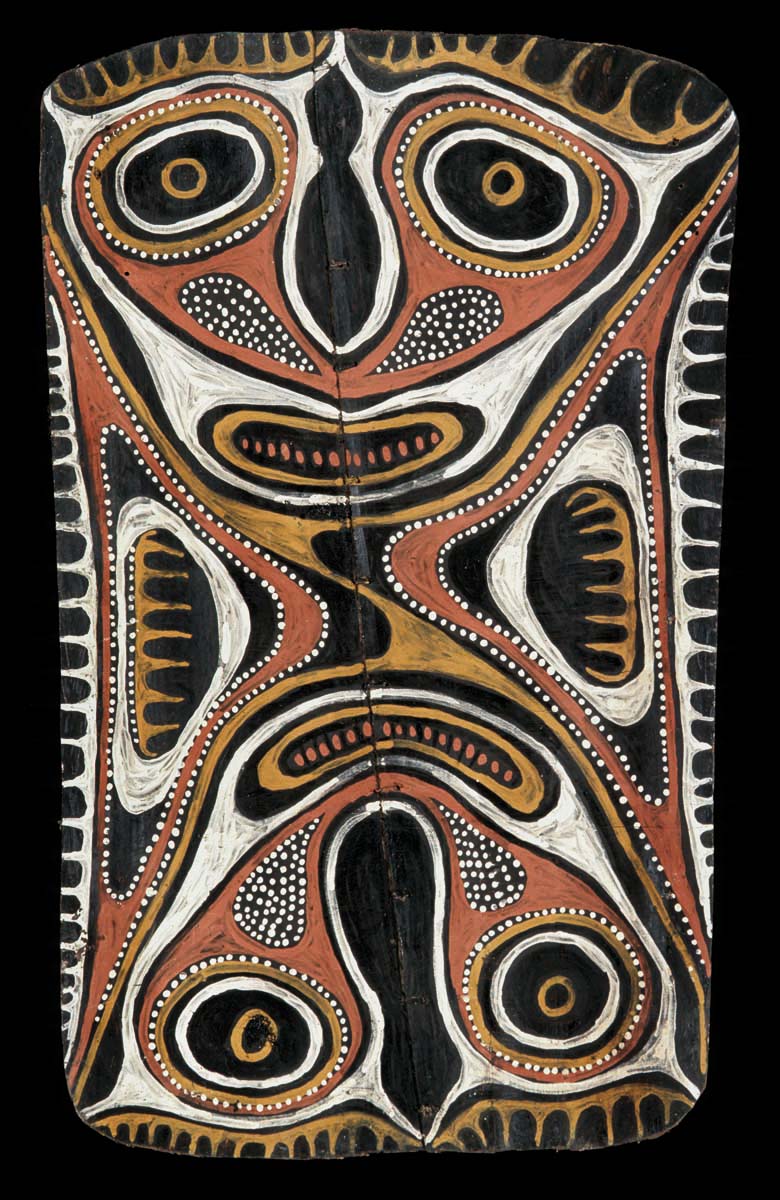
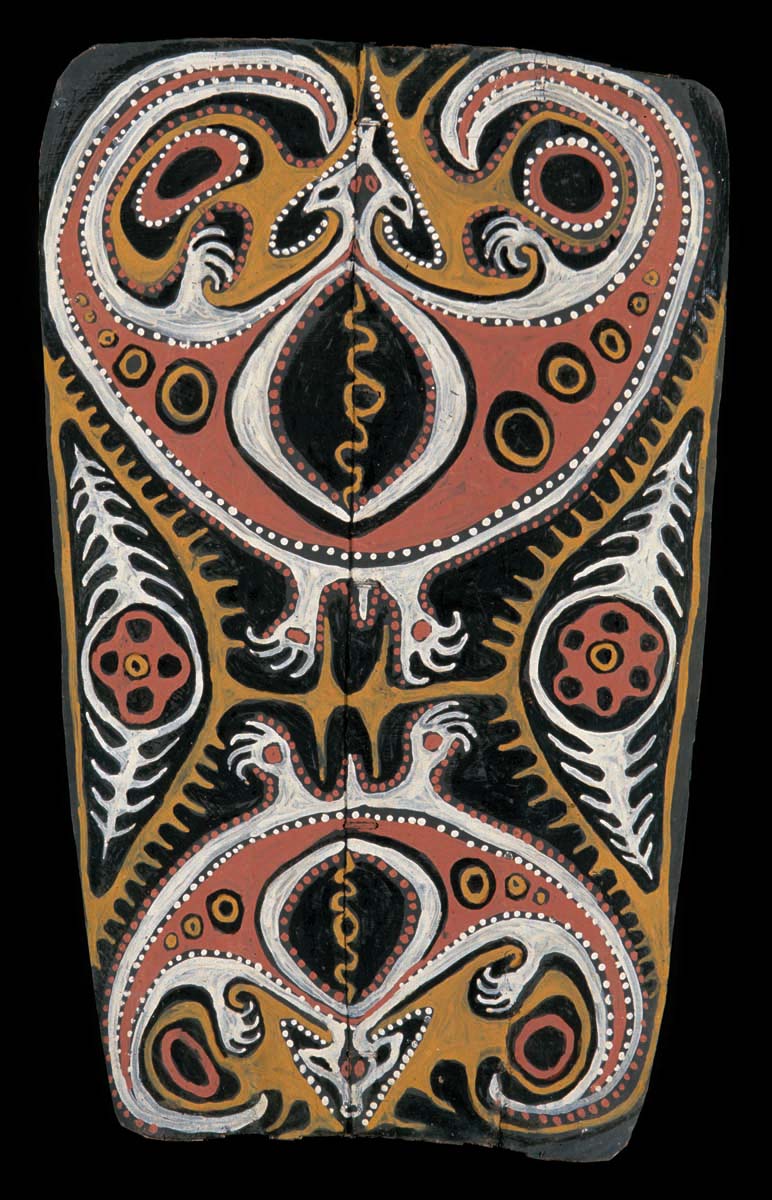
Leaving aside for the moment how the term is best to be defined, most of us I think would agree that ‘art’ in one form or another is found in all societies. Among the many forms this might take are stencils of hands pressed against cave walls made by unknown palaeolithic artists in southern France more than ten thousand years ago, or a design on bark depicting a totemic plant or animal of the kind Kwoma use today to decorate the ceilings of their men’s ceremonial houses (Figures 1-2, 6-7).
However, the fact that art in one form or another might be found in all societies entails nothing necessarily about how people in any particular society understand what in the modern West would be called their ‘art’. For example, it entails nothing about:
- whether people think of their art as being different in kind in some significant way from other objects they produce, such as undecorated clay cooking pots;
- how they understand the role of the artist;
- whether they believe artists possess talents or abilities that are different in kind from those possessed by other members of their communities;
- how they judge quality in art;
- or whether they even classify paintings, sculptures and so on by a term (or terms) that corresponds closely to the modern Western concept of art (see below).
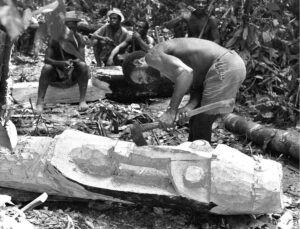
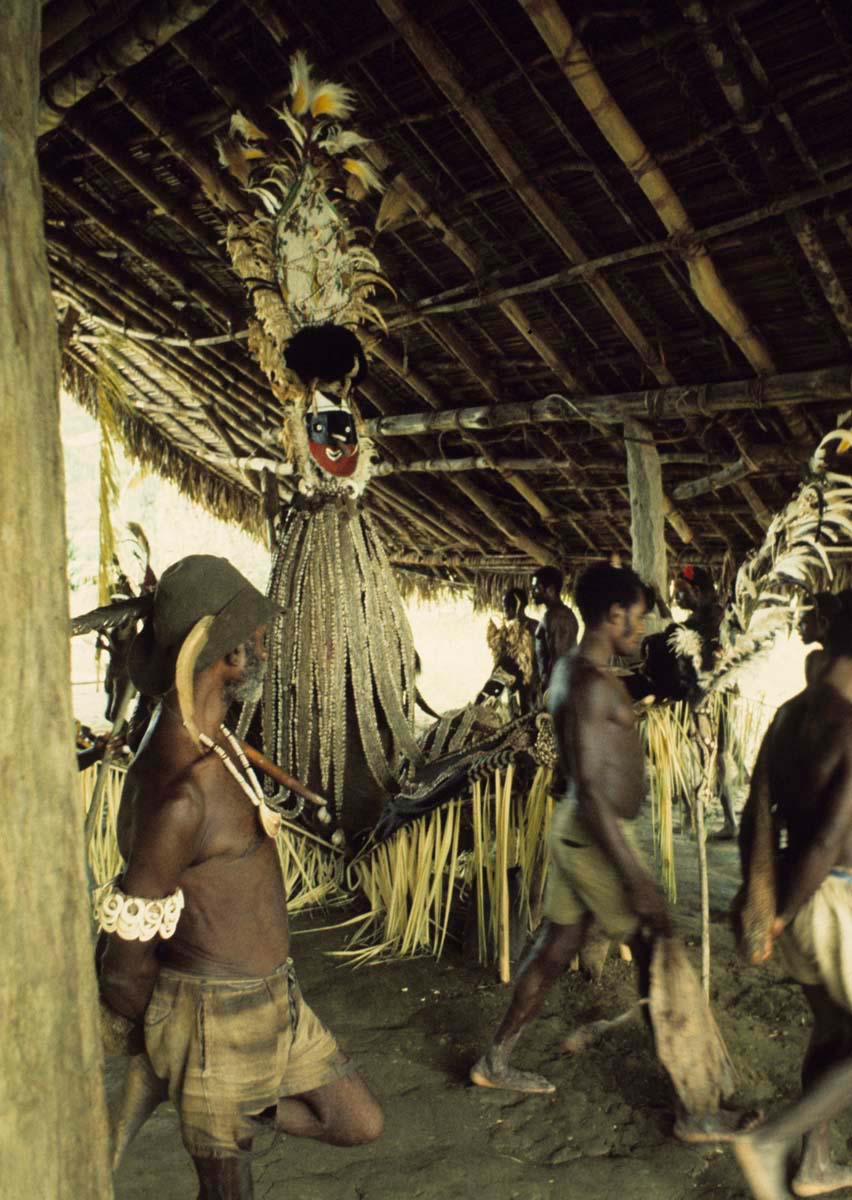
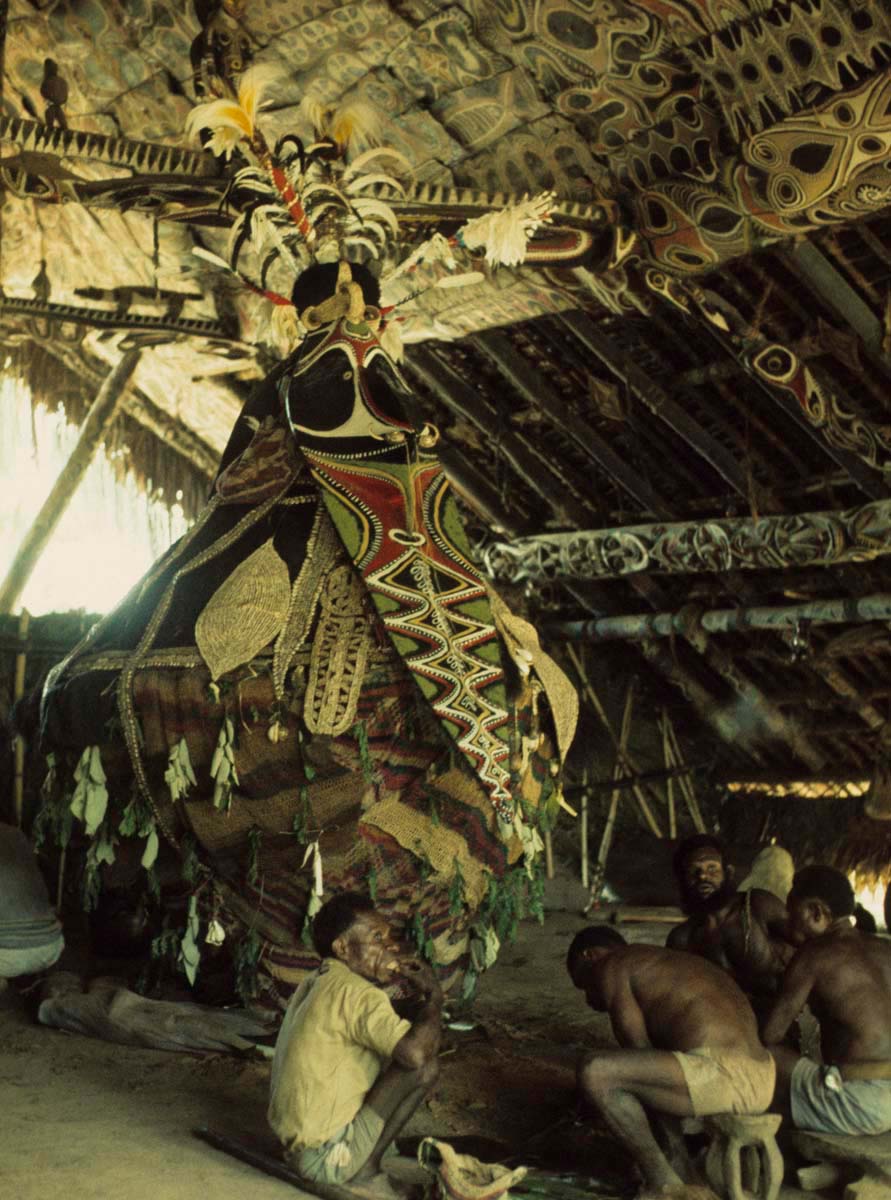
Very soon after I began research among the Kwoma I realised that people in this society did have a radically different understanding of art as a cultural phenomenon from what is found in the modern West. This became apparent in the first instance in the way people treated artworks that had begun to decay and could no longer be used for the purposes for which they had been made. When a painting, sculpture or piece of finely incised pottery had begun to decay Kwoma had no compunction about making a replica of it and then discarding the ‘original’ – either by taking it into the forest to decay or, today, selling it to a visiting art collector. This was the case even with the most ‘secret and sacred’ sculptures of the kind that were displayed in their secret men’s rituals – which were still being performed when I began fieldwork but have since been given up. These were the two yam-harvest rituals named Yena and Minja and the female spirit cult named Nokwi (Figures 3-5).[2]
The bulk of the sculptures displayed during these ceremonies were made of a relatively soft wood that has a fine straight grain and is easy to carve but is vulnerable to termite attack and decay. In the village in which I was based, named Bangwis, the people had not performed these ceremonies for over twenty years because of mission opposition. But in 1973, when Papua New Guinea achieved self-government and was preparing for independence, village people became more confident about asserting traditional values and the Bangwis people decided to revive their rituals. But when they inspected the set of ceremonial carvings that had been kept in storage since they were last displayed they found that many had decayed to the point where they could no longer be used. They therefore decided to carve a completely new set (Figure 5). It was this new set that they used in the ceremonies they performed at the end of 1973 and during the following two decades before they were eventually given up.
What was most striking to me was that once the older sculptures had been replaced their owners lost all interest in them and quietly disposed of them. Their owners lost interest in them for the reason that they saw the new carvings as being just as authentic and just as valuable culturally as the older works. This was the case even when the replacements, in my view, were markedly inferior artistically to the works they replaced.
Kwoma take exactly the same attitude to men’s houses as they do to individual portable figures (Figures 6-7). It takes several years to build and fully decorate one of these astonishing structures. But despite the immense amount of time and energy it takes to construct them, these buildings only have a life-expectancy of about twenty to thirty years. After that time the thatch will have decayed to the point where it is letting in the rain and the structural timbers will have begun to decay, making the building unsafe. In this society the convention is that once a men’s house has been completed and formally opened minor repairs may be made to it, such as repairing a leak in the roof, but the building may never undergo a major refurbishment. Bark paintings, for instance, may not be replaced however much they have faded. Once a building has seriously begun to decay it will therefore be demolished and a new structure built on the same site. This is the case even if the older building, such as the one illustrated in Figures 6 and 7, was a masterpiece of vernacular architecture. The owners of such a building do not regard its decay and disintegration as a loss to them or their society artistically, for they take the view that a replacement is just as authentic artistically and just as valuable culturally as the older structure.
The Kwoma understanding of cultural creativity
The Kwoma belief that they can replace older artworks with new copies without loss to them culturally derives from their understanding of the origins of their art. In marked contrast to the modern West, where all works of art, especially the greatest, are thought to be the unique products of uniquely creative individuals, Kwoma take the view that their art – like all other major aspects of their culture – is not the product of human creativity but is based on supernatural prototypes that spirits created at the beginning of history. How spirits came to create these prototypes, and what they created, is described in myths.
This understanding of the origin of their art, and their culture more generally, applies not just to portable objects like sculptures and paintings but to their ceremonies and the men’s houses in which they performed these rituals. For example, all Kwoma believe – and will tell you if you ask – that the three ceremonies they performed until recently, named Yena, Minja and Nokwi, were not originated by humans but by spirits in the form of wildfowl, a type of bird that builds large mounds out of leaves and other debris on the forest floor and in which it incubates its eggs.
A myth tells how humans first learned of these ceremonies when a man out hunting in the forest purely by chance came across spirits performing them. The man had shot an arrow at a bird high up in a tree but missed. While searching for his arrow he heard a ceremony being performed nearby. Investigating further, he discovered that the singing was being performed by spirits in the form of wildfowl. Keeping his distance at first, he listened intently to the songs and watched how they danced on and around one of their mounds. In time he witnessed three rituals: Yena, Minja and Nokwi. He eventually approached the spirits and introduced himself. The spirits proved to be friendly and informed him that now that a human had learnt how to perform their rituals he could take his knowledge back to his own community and perform them there. When men in the hunter’s community performed them, they used sculptures to represent the spirits, and a hollow stage filled with yams, the mound on which the spirits had danced and contained their eggs. In explicit recognition of the origin of these rituals, during the performances I witnessed men referred to the yams inside the hollow stages as ‘wildfowl eggs’.
Entailments of the belief that art is based on supernatural prototypes
The belief that all of their art is based on supernatural prototypes has major entailments for the way Kwoma talk about their art and behave in relation to it in the widest terms. I have already mentioned that when older artworks begin to decay people have no compunction about replacing them and discarding the older pieces (Figure 5). They have no compunction about doing so because they believe the replacements have the same cultural value as the older works, provided they accurately reproduce the forms of their supernatural prototypes. This applies even to ‘secret and sacred’ objects that might once have had the highest cultural significance to their owners, such as sculptures displayed in the Yena, Minja and Nokwi ceremonies. This point is worth emphasising here because it gives the lie to the widely held but mistaken view that just because an artwork was once of great cultural significance in a particular indigenous society it remains so in perpetuity, and that its removal to a museum or private collection (even if sold voluntarily) represents an irreplaceable cultural, even spiritual, loss to the society of origin, and that it should therefore be repatriated.
Anonymity in art
Another entailment, as difficult as it might be to believe, is that in Kwoma society artists are not attributed with culturally significant creativity. By this I mean no artist – however great by Western standards – is thought to contribute anything of themselves of cultural significance to the work they produce. This belief is shared by artists themselves. The same applies to the full range of objects women produce, such as decorated netbags.
One consequence of this belief is that Kwoma make no effort to preserve the names of the great sculptors and painters of the past, or memory of which works they produced. The reason is that for Kwoma this knowledge is culturally irrelevant. In fact, all memory of the great artists of the past and which works they produced is very quickly lost.

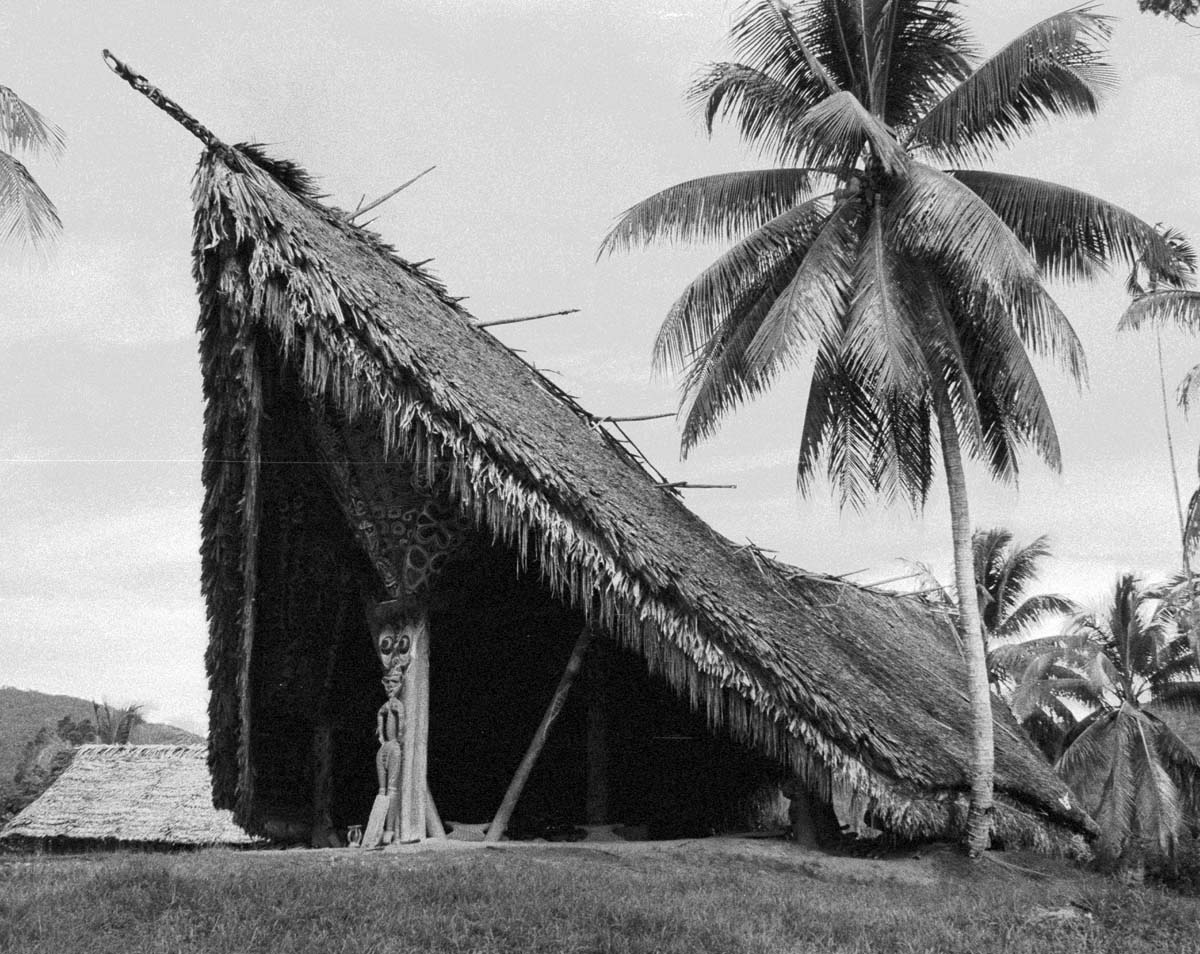
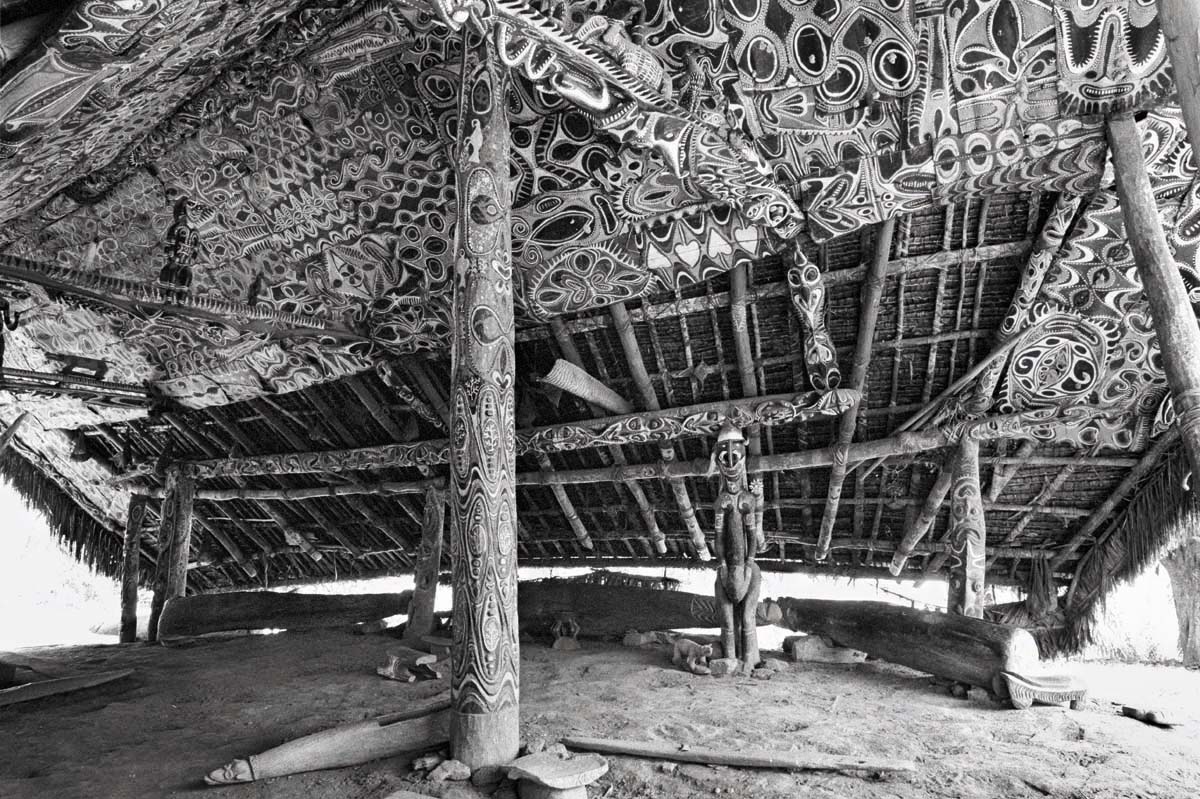
I discovered this when I began documenting the bark paintings on the ceiling of Wayipanal men’s house (Figures 6 and 7). Although this building was less than ten years old at the time, and many of the men who had contributed paintings and sculptures to it were still alive, I found that even leading artists had forgotten who had produced the majority of the works on display. In some cases, more than one man claimed to have painted the same bark.
The fact that in this society no effort is made to preserve memory of outstanding painters and sculptors, or who produced which works, means that artists, in this sense, are anonymous. This is not a minor matter ethnographically or theoretically, for cultural critics such as Sally Price and Marianna Torgovnick in their books Primitive art in civilised places and Gone primitive have denounced Western museum curators for not identifying by name the artists who produced the indigenous works on display in art museums in the way they routinely do Western artists. What these two critics fail to understand is that the identity of the persons who produced many of the objects in Western art museums, especially the oldest, might not have been known to the people from whom they were originally acquired.
In saying that in this society artists are, in an important sense, anonymous I am not saying that the leading painters and sculptors are not known to other members of their communities. On the contrary, while they are active the most skilled sculptures and painters are men of great prestige. But once they have died the names of even the most prolific and admired artists are quickly forgotten, along with memory of which works they produced.
Artists distinguished on the basis of their technical skill, not creativity
The fact that Kwoma do not attribute artists with culturally significant creativity does not mean that in this society people do not distinguish between more competent and less competent sculptures and painters. They do distinguish between them, but they do so not on the basis of their relative creativity – as in the modern West – but on the basis of their technical skill.
For Kwoma, technical skill means two things: 1) the range of a person’s knowledge of the supernatural prototypes on which their art is based, and 2) the ability to make replicas of these prototypes quickly and competently. The most admired artists are those who have the greatest knowledge of prototypes, and can reproduce them quickly and without making mistakes.
The criteria used to judge quality in art
Another entailment of the belief that all of their art is based on supernatural prototypes relates to the way quality in art is judged. Artworks are judged exclusively on the basis of whether they reproduce supernatural prototypes ‘correctly’. Significantly, the term Kwoma use for ‘correct’ – kepi – is also the word for ‘good’. For Kwoma, therefore, an artwork that has been made ‘correctly’ is, by definition, also a ‘good’ sculpture, a ‘good’ painting, and so on. Who judges whether an artwork has been produced ‘correctly’ or not? The senior and most experienced artists.
One corollary of this way of judging quality in art is that the Kwoma have a very limited ‘aesthetic’ vocabulary. The anthropologist Anthony Forge, who worked among the neighbouring Abelam, makes exactly the same point. He even reports that the Abelam lacked an equivalent of ‘beauty’.
No term for ‘art’
The Kwoma belief that all of their art is based on supernatural prototypes and owes nothing to human creativity also explains why they have no term equivalent to the modern concept of ‘art’. The Kwoma are not alone in this, since close equivalents of ‘art’ are not found in any indigenous society, or even pre-modern complex societies such as ancient Egypt or Europe before the Renaissance.
In the modern West, where humans are attributed with culturally significant creativity, the term ‘art’ in practice (in contrast to what theoreticians might think) refers to:
- assemblages of images (visual, verbal, acoustic)
- made by humans (as distinct from unmodified natural objects)
- of human origin conceptually
- that reveal in new and penetrating ways some aspect of the world – the physical world, the social world, or some combination of both.
In the modern West, the greatest works of art, without exception, are those that reveal aspects of the world in the most original and penetrating ways. For Kwoma, on the other hand, there are no objects characterized by the three criteria listed above. The reason is that in their view no artefact owes anything of cultural significance to human creativity. Not surprisingly, they have no term that is a close equivalent of ‘art’. However, they do have a term that overlaps with it. This is jembwa. This term is used for any intentionally made meaningful mark, such as a painting depicting a clan totem, or a carving depicting a clan spirit. But the parallel with the Western understanding of ‘art’ is only partial, for Kwoma also use this term for a much wider range of objects that Westerners would include under this heading. This includes the letters of the alphabet and words that people inscribe on paper when writing. Like paintings or sculptures, these are intentionally made meaningful marks.
Creativity in art not absent in this society
In arguing that the Kwoma do not attribute artists with culturally significant creativity I am not saying that creativity in art is not found in this society. It is, and relatively speaking there is probably as much scope for it as there is in any other society. Painters, for example, pride themselves on never depicting a totemic entity in a painting on bark in exactly the same way twice. They take delight in embellishing the form of the supernatural prototype on which the design is based by varying its size relative to that of the overall picture surface, and by varying the supplementary motifs included. The key point, however, is that Kwoma do not recognize these individual embellishments as new in any culturally significant way and make no effort to preserve them. For Kwoma, they are no more significant than variations in personal handwriting styles in the West.
However, the Kwoma do recognise that artists can introduce genuinely new and culturally significant motifs into their repertoire of designs. For instance, all people randomly encounter spirits, usually in the form of images seen in forest streams or in dreams. If a painter or sculptor sees a hitherto unknown spirit he will make a painting or carving of it to record its distinctive appearance. But when an artist in this way does introduce what people acknowledge is a genuinely new design based on something he saw, the design is not attributed to any special creativity on his part. Rather, it is attributed to the fact that he, purely fortuitously, witnessed an entity that anyone else might have observed, and that he, unlike most people, had the technical skill to make a record of it in the form of a painting or sculpture.
The more general point here is that although the Kwoma believe that all of their art is based on supernatural prototypes, this belief is compatible with change in their art. Although we lack the evidence to prove it, there can be no doubt that Kwoma art, like that of all other societies, has changed in both minor and major ways throughout its history.
The future
At the beginning of 2008 on my last trip to the Sepik a Kwoma man I knew well from Washkuk village, named Kowspi, invited me to his house to see a set of paintings in acrylics on canvas that he and his two adult sons, Agatoak and Chiphowka, were preparing for an exhibition in Paris later that year. The paintings had been commissioned a year earlier by a visiting freelance French curator and collector of Pacific art. Stylistically the paintings were a mixture of traditional and European imagery and subjects of Kwoma and Western origin. The exhibition took place as planned and by all accounts was well received. All three men attended its opening. In 2024 the two sons returned to Paris for a residency at the Cité International des Arts and also held several exhibitions of their more recent work. (A review of these exhibitions can be found in Volume 30 No 1 of this Journal). Western influences on Kwoma art have been discernible from at least the 1960s (see my book Creative Spirits), but to the best of my knowledge village artists today still operate with an understanding of what they are doing in keeping with that described in this article. But if a thriving commercial market ever develops for paintings and sculptures from this society, and other Kwoma follow the lead of Kowspi and his sons and become actively involved in the wider art world, it is inevitable that people’s understandings of art as a cultural phenomenon will gradually change in a modern Western direction – though how quickly is impossible to predict. Eventually this will entail accepting that humans, not spirits, are the ultimate source of their society’s style of painting and sculpture; that the works of the leading artists are unique historically and worth preserving; and that it is the creativity of individual artists, not revelations from the supernatural world, that accounts for any changes that might take place in their art.
Ross Bowden is an Australian cultural anthropologist who has written four books on the Kwoma and one on the neighbouring Kaunga-speaking Yalaku. E: [email protected]
[1] All of the topics I raise here are discussed in much greater detail in my book Art and creativity in a New Guinea society: the Kwoma in cross-cultural perspective (Lexington Books, 2022).
[2] For an account of these ceremonies see my books Yena: art and ceremony in a Sepik society (1983) and Art and creativity in a New Guinea society (2022).