
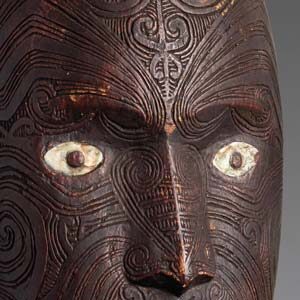
2021, 180 pages, Robert K. Paterson, 5 continents
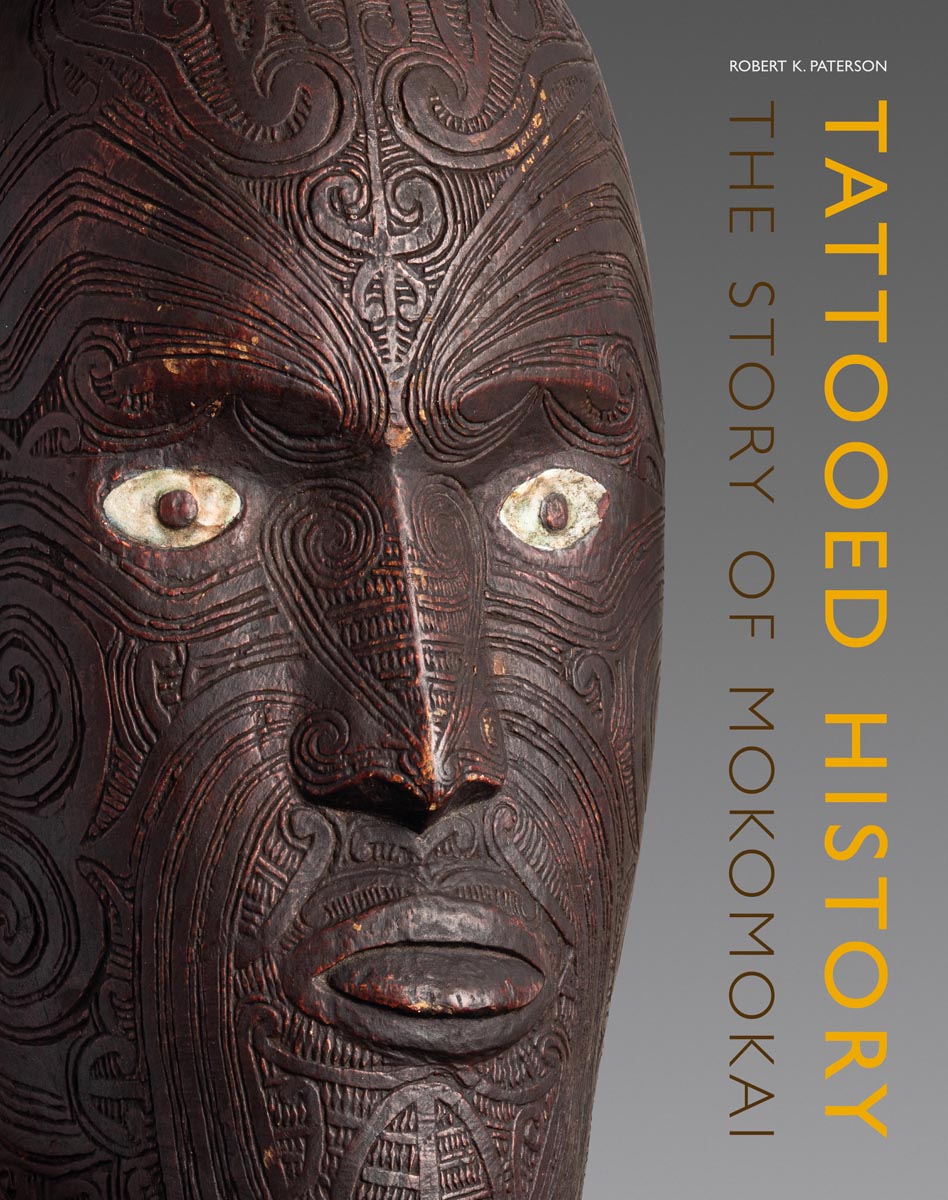
Reviewed by Crispin Howarth
Every once in a while, a publication comes along which deep dives into a specific Pacific subject. This is one of those rare publications and it is likely to be the sole reference for these cultural objects for some time to come. It is equally rare for being a project of an individual; in this instance, it is Robert Paterson (Professor emeritus of Law at the University of British Columbia, Vancouver). As an ex-pat New Zealander, Paterson’s motivation for the research and staging of this publication comes from genuine passion for a particular subject matter. In this case it is the fascinating and spiritually important art form of Mokomokai, the preserved heads of individuals with moko skin markings. This book documents the cultural need for, and usage of, Mokomokai and then deftly follows the history of these objects since colonial settlement of New Zealand up into the present day.
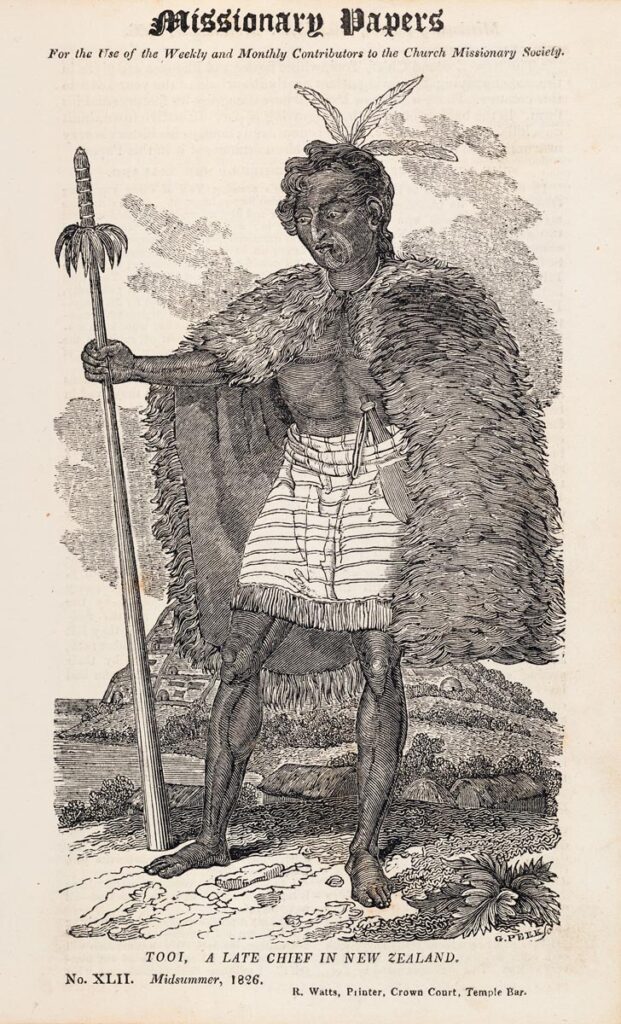
The subject matter of human remains of ancestors and enemies; those made for cultural purpose and those for profit through trade with outsiders in the early 19th century is a difficult one. Conscious throughout his research of the importance to tell the many strands of the Mokomokai histories. Paterson has approached the subject with an appropriate level of understanding and respect. Not one photographic image of a Mokomokai is shown within the book, this is not detrimental to the writing at all as there are numerous drawings and other supportive images from historical sources that prove more illustrative to the information provided here.
Tattooed History weaves the story of Mokomokai through the 19th and 20th century, from the first written accounts by outsiders of Māori moko and Mokomokai. There are insights by Pakeha Māori, white men who became members of Māori communities such as Englishman John Rutherford and early visitations to New Zealand by Russian, French, American and British scientific expeditions. Making certain to capture as much detail as possible of the cultural roots of Mokomokai from these sources there is a great deal of information which is presented in a clear and readable format.
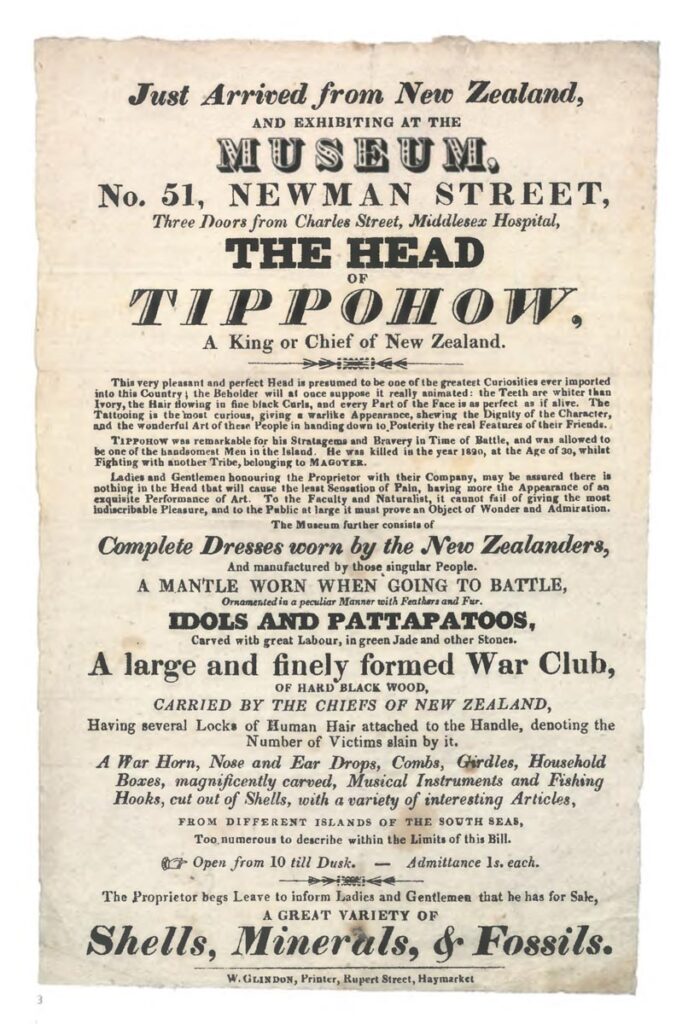
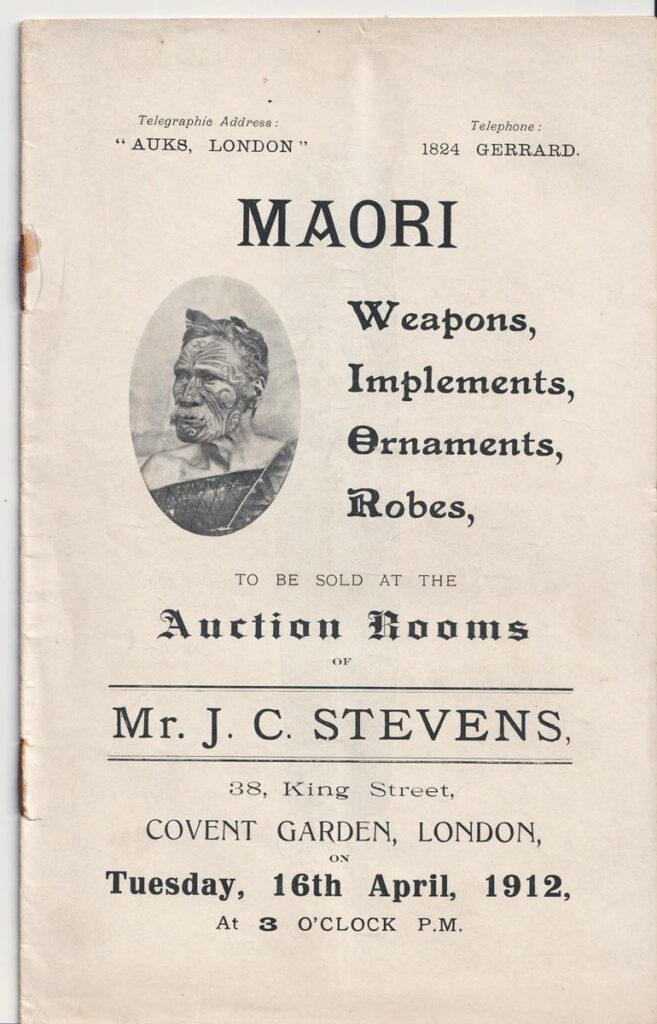
The Musket Wars of the early 19th century are noted as a critical factor in the transition of Mokomokai from cultural objects to grisly trade commodities, ‘curiosities’ in return for munitions and firearms. The production of post-mortem Ta Moko (skin markings) to create Mokomokai from dead and unfortunate captured live enemies is grim.
The trafficking of Mokomokai from New Zealand effectively ended with their prohibition as an import to Port Jackson, Sydney, in the 1830s. This Australian customs law brought their status as a valuable trade good to an end. Continuing the story of Mokomokai beyond the 1830s, and, across the world Paterson tracks their subsequent trade as specimens of culture and as curios through private collectors and museums. The shifts in how Mokomokai were displayed, interpreted, and, perceived by museums in following 170 or so years are fascinating as is the information provided here on the major collectors and dealers of ethnographical material in the 19th and 20th century such as Kenneth Webster, James Hooper and Horatio Gordon Robley. An entire chapter focuses on Robley, the British soldier and artist who fought against Māori in the conflicts of the 1860s. Robley built a sizable collection of Mokomokai and wrote the first history of skin marking in New Zealand ‘Moko, or Māori Tattooing’ in 1896.
Expanding upon the story of Mokomokai Paterson writes a chapter on Mata Rahui – carved wooden versions of Mokomokai. These are described as portrait or memorial masks yet their usage is likely to have multiple contexts. It is suggested they are replacements for lost or damaged Mokomokai and six examples plus an exquisite forgery are shown. As far as my knowledge extends, Paterson’s research in drilling down into what is currently known about these remarkable wooden heads is unique. Highly important are the chapters ‘Mokomokai and the Law of Human Remains’ and ‘The Repatriation of Toi Moko to the Museum of New Zealand Te Papa Tongarewa’ In studying and articulating in a very accessible manner the potential legal issues around Mokomokai since the 1980s when Dalvanius Prime and Maui Pomare led the way in indigenous repatriation work right up to the industry of repatriation in the 21st century.
To write a book upon cultural objects considered indigenously to be deeply spiritually charged and highly contentious within museum circles is a credit to the author’s dedication to these objects and the histories that should be told. Paterson has laid out a wealth of clear historical information that moves across the centuries providing the richest resource to date regarding Mokomokai. The subject matter in this publication is quite unique and will undoubtedly become the standard reference for researchers in the future. Mokomokai are historically and ethically problematic objects, even to call them objects is problematic. I personally found Mokomokai unapproachable in my work for an exhibition on the art of Moko several years ago. However this is not always the case – Mokomokai can be shown and spoken upon when it is done appropriately, with integrity, dignity, and respect. I believe this book ‘Tattooed History: the story of Mokomokai’ does just that.