2023, 384 pages, John Carty & Luke Scholes, Upswell Publishing.
Review by Margaret Cassidy
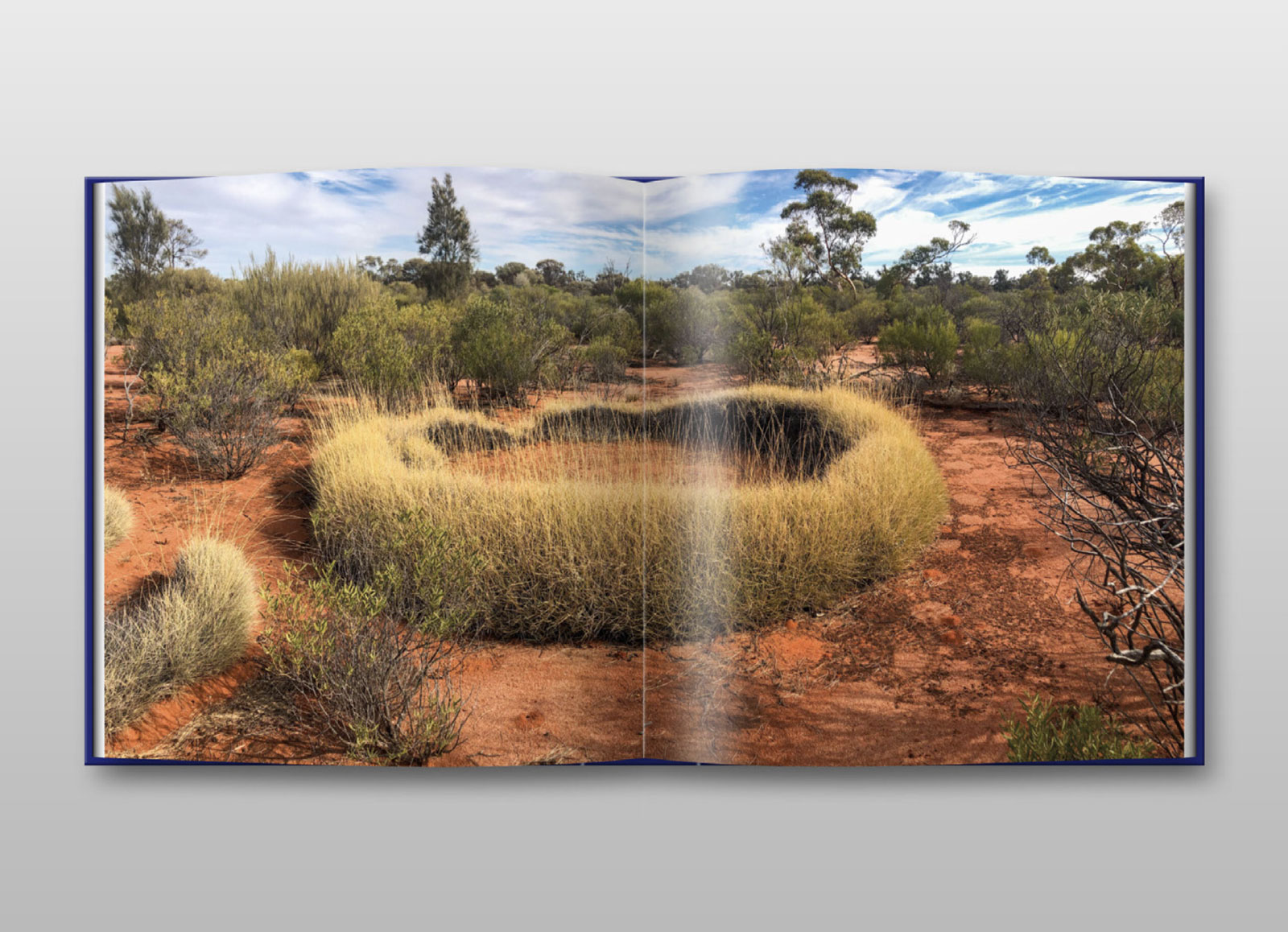
Opening this dark blue bound book launches the reader forth into the colour and patterns of both the ancestral homelands of the Spinifex People (Pila Nguru) or Anangu, of remote eastern Western Australia and also their vivid, expressive and enigmatic paintings of Country. A photograph as frontispiece showcases the bright colours of Killykillykari (budgerigars) at the Ilkurlka rockhole, north of Tjuntjuntjara, a small town 650 kilometres east of Kalgoorlie in the Great Victoria Desert. Tjuntjuntjara is one of the most remote Aboriginal communities in Australia, founded by the Anangu when they returned to Country after years of displacement following nuclear weapons testing at Maralinga and Emu Field and their removal, first to the Cundeelee Mission and later to a government funded housing settlement at Coonana station.

The rockhole Ilkurlka is also where a family of seven, now known as the Rictor family, were tracked down and found by Anangu family members in 1986; they are regarded as the last known Indigenous people to emerge from the desert in Australia. The youngest of these ‘first contact’ Aboriginal people, Noli Rictor, has become a leading artist, his mesmerising dot painting of songlines of Kamanti, a significant site for the Pila Nguru, winning the 2024 National Aboriginal and Torres Strait Islander art awards (NATSIAA) in August 2024.
This is a book that shares the stories of the artists, their people and also their art. It is first and foremost an art book with essays focused on the style and meaning of these works of art from editors John Carty, Professor of Museum and Curatorial Studies at the University of Adelaide and former Head of Humanities at the South Australian Museum, and Luke Scholes, an Associate Research Fellow at Deakin University based in Mparntwe (Alice Springs) and former Curator of Aboriginal Art and Material Culture at the Museum and Art Gallery of the Northern Territory. Both have extensive experience working in remote Indigenous Art Centres as well as Art Galleries and Museums and they have assembled an illustrious list of contributors including Gaye Sculthorpe, former Curator Oceania at The British Museum and Professor Cultural Heritage and Museum Studies at Deakin University, and Nhanda and Nyoongar man Glenn Iseger-Pilkinton, Curator at the Fremantle Arts Centre.
The art of the Spinifex people pre-dates the development of commercial art centres in the APY lands with the first acrylic paintings created in response to the documentation process required for the Spinifex Native Title Claim, where the nascent artists mapped out their Country, their birthplaces, and the individual and collective boundaries of Country. Through these early paintings, the Spinifex people directly showed their ownership of Country.
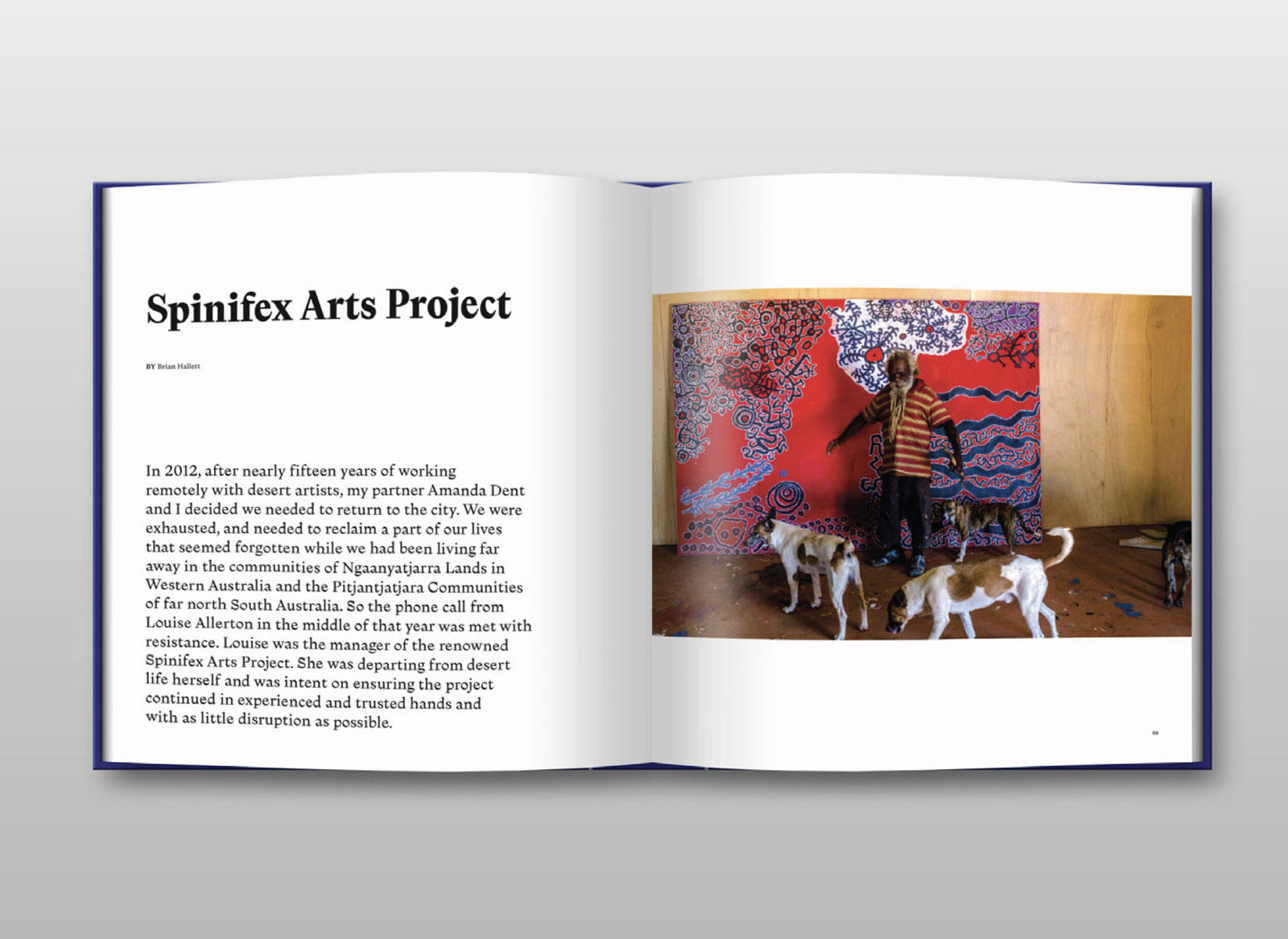
Many large colour photographs accompany the reproductions of artworks, demonstrating that painting for the Spinifex People was about being on location, on Country, not in any art centre for many years. It was only with the challenges of camp dogs owned by the artists interfering with the paintings that drove to the final development of a physical art centre.
The story of Spinifex art is also the story of collaboration of multiple artists to create enormous acrylic paintings with Australian artist/photographer and arts worker Louise Allerton outlining the development of the first grand works by the women in the summer of 1997 as they introduced the tracks of the Seven Sisters (Minyma Tjuta) into other significant story elements.
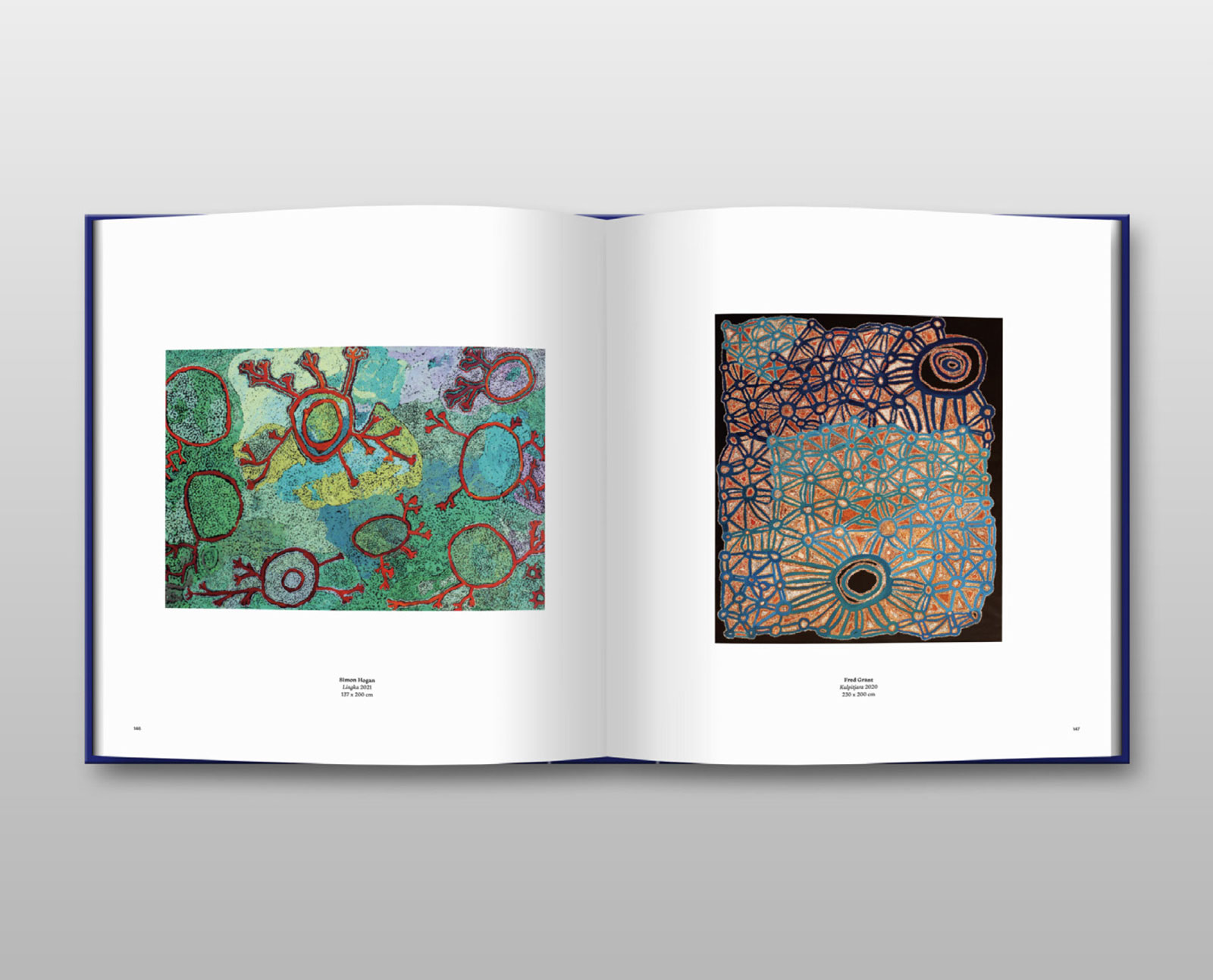
It is also a history book with Anthropologist Scott Cane providing the history of their dispossession and renewal, being the first to be granted Native Title using acrylic art as documentary evidence as well as the first consent native title determination in Western Australia following commencement of the Native Title Act 1983, as well as the story of brothers Nguramuta and Kungaru and their older brother emerging from the desert to become artists Fred and Ned Grant.
As well Pila Nguru Aboriginal Corporation general manager Ian Baird writes about the first trip led by the old men into the northern spinifex from the Yakatunya camp in 1986 leading to the reuniting of the extended Rictor family, bringing back to camp the last known group of Aboriginal people to live a traditional nomadic life in Australia. Long term Art Manager Brian Hallett tells the story of Imo Hogan who was announced the overall winner of the NATSIAA in August 2021 in the midst of COVID lockdowns.
While the Spinifex People speak Pitjantjatjara and some live in the Ngaanyatjarra Lands, they don’t regard this as first and foremost their linguistic, geographic or historical identity; instead, they see themselves as Anangu Tjuta pila nguru (people from the spinifex) and associate with this Country. John Carty has written “The origins, politics and aesthetics of their painting practices reflect his localised cultural orientation” (p.131).
The art sings throughout the book, drawing the reader forward through the stories of the artists. While the art is identifiably desert art, with expressive and minimalist qualities, it remains also the art of their Country, with the recognisable huge snakes, ancestral feet, trees and rockholes; it is the painting of their place. Place remains central to the evolving art of these last known Indigenous people to emerge from the desert.