
by Nicolas Garnier
Biographies of Pacific artists usually focus on contemporary artists and artists coming from wealthy Pacific countries, especially Australia. Scholars or museum curators have devoted substantial biographies to key recent Aboriginal or Torres Strait Islander artists including Mirdidingkingathi Juwarnda Sally Gabori, Queenie McKenzie, Emily Kame Kngwarreye, John Mawurndjul and Dennis Nona.
In a relatively more distant past, biographies are scarce with only relatively short publications devoted to Tommy McRea and William Barak resulting in detailed biographical accounts still missing for these two pioneer artists. In contrast, Albert Namatjira has received greater and more consistent academic and museographic attention.
Outside Australia, Pacific artists’ biographies are rare, although some are particularly remarkable. In 1967, Adriaan Gerbrands wrote a book that is an inspiration for many of us: Wow-Ipits, eight Asmat woodcarvers of New Guinea. Gerbrands is the first author to extricate individual figures of artists from the cultural matrix in which non-Western art had until then been stuck as it was studied (and appreciated) as cultural production. Until Gerbrands, style, in non-Western art, is linked to a collective production in which the individual dissolves into the group. However, Gerbrands’ approach relies little on principles but on ethnographic observations and the comments of Asmats themselves. It is therefore not a question of proposing a discourse on Asmat art which would aim to isolate the individual personality of each artist. Rather, it highlights the discourse of the Asmats themselves and the way in which they appreciate the work of each of the sculptors and the way in which local discourses establish distinctions and differences.
Other biographical accounts shed light on Pacific Islands’ artists whose life intertwined local and global history, Pacific values and colonial hegemony. Roger Neich’s account of Rotorua’s carvers (especially the personality of the carver Eramiha Kapua) details the way the New Zealand colonial administration acknowledged the talent of Maori carvers and in return how the latter redirected their art to address the changing political, religious and economical context. The historical novel devoted to Tupaia, a Raiatea political leader who embarked the HMS Endeavour on James Cooks’ return travel to Europe (Druett, 2011) highlights the diplomatic and navigator’s skills of this Polynesian great figure but also devotes a few pages to the main material testimonies of Tupaia’s voyage through the Pacific, his drawings. Long considered the naïve production of anonymous sailors navigating with Cook, they were recently attributed to Tupaia. They are today considered the earliest artistic production that embodies Pacific Islands values and knowledge within a context of early European expansion. They are regarded as the earliest Pacific Islands artistic expression employing European materials (paper and ink). Somuk’s use of drawing can be partly compared to Tupaia’s ambitions. Both were considered great chiefs by their fellow countrymen as European recollections of their life emphasise their visual creations.
This study takes more direct inspiration from another innovative experiment that borrows from Art History, Colonial History and, to a lesser extent, ethnography. Harry Beran shed light on a Melanesian personality named Mutuaga who is known thanks to a few missionaries’ archival records. They mentioned him as a carver, and some documents link this name with a certain number of carvings (small standing figures and lime spatulas), many of which once belonged to the Black Collection today housed at the Science Museum of Buffalo.
This paper presents a person named Somuk, Herman Somuk, or Hermano Somuk. We know Somuk thanks to a double set of testimonies which are independent from each other. Some are the living memories of his relatives, collected in the last decade by myself and a group of my students at the University of Papua New Guinea. The others are much older and were written by French Marist priests, Paul Montauban and Patrick O’Reilly. The first was appointed a missionary priest likely a few months before the outbreak of the First World War in the West of Buka Islands while the second was not a missionary, based in Paris, where he followed the ethnography courses of Marcel Mauss.
Before the commencement of the Second World War, Patrick O’Reilly was sent to Bougainville by Paul Rivet to collect artefacts on behalf of the Musée d’Ethnographie du Trocadéro (future Musée de l’Homme). He spent a whole year travelling across Bougainville and Buka between June 1934 and June 1935. In January 1935, he spent a few weeks in the village of Gagan, right in the centre of Buka, likely upon the invitation of his fellow countryman, Paul Montauban. French narratives and contemporary narratives coincide and agree that a Marist priest trained a young Gagan man named Somuk. Not only was he likely the first Melanesian to read and write in Buka, but Somak was also the first appointed catechist. Montauban and O’Reilly described him as an excellent narrator and storyteller.
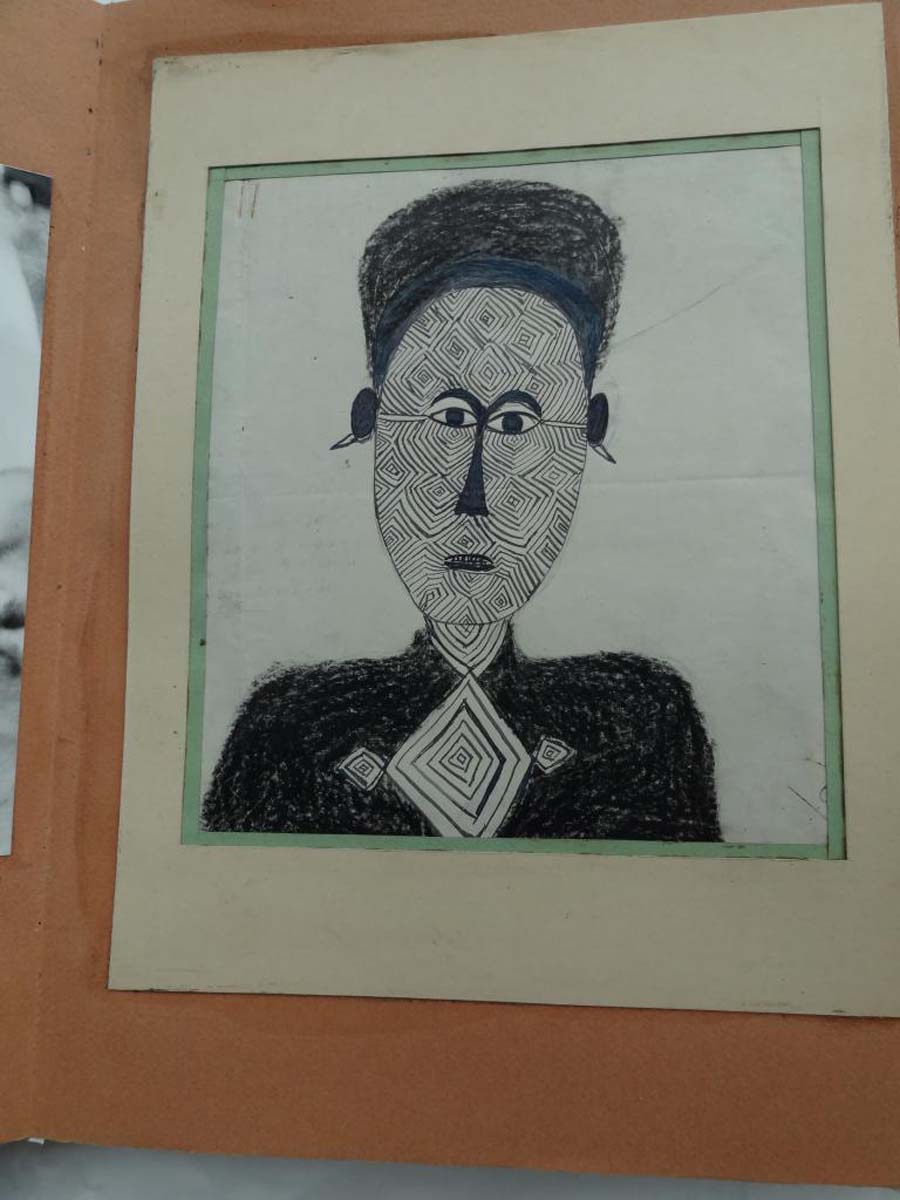
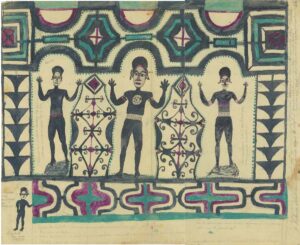
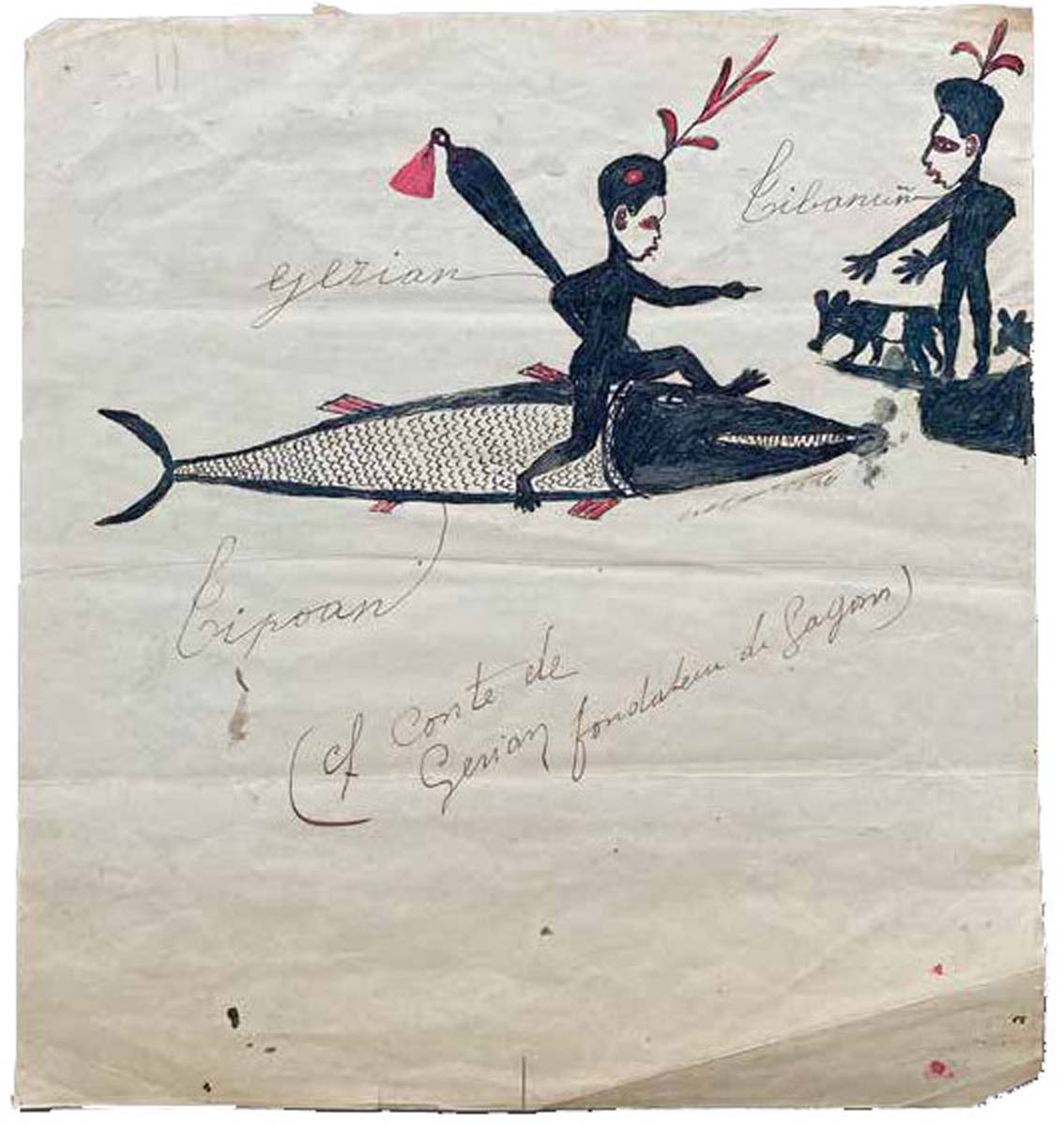
One day, Father Montauban and I had the idea of giving him a pen-holder and three coloured pencils, asking him [Somuk] to illustrate the tales he told with such brilliance and which I collected during the evening. On the back of old bills of lading or off-the-shelf official forms – and too bad if the paper absorbs the ink – he gradually brought us a series of drawings which, presented with intelligence, would form like the Bayeux Tapestry of this Solomon Islands archipelago.». (P. O’Reilly, 1951 : 10)
The French testimonies on Somuk are abundant and although they bear the mark of a colonial mentality, they shed light on some aspects of his personality as well as they detail some key aspects of the cultural context in which Somuk made his drawings:
He was a pupil of the Catholic mission of Burunotui, from 1912 to 1945, first under the rule of Father Flaus, one of the first Marists, at the time of the Deutsche Neue Guinea. He suffered more than others from the overly harsh pedagogical method originating from the other side of the Rhine [Germany] and willingly rallied to the more benign regime of his successors, Fathers Binois, Montauban and Boch, to whom he had a filial and unwavering attachment” (Montauban, P. & O’Reilly, P., 1952 : 41-42).
or;
“Of course Somuk was able to see here and there reproductions of European works… He was keenly interested in the vignettes that decorate the matchboxes, and he was not without noticing – he pointed it out to me – the watermarks adorning the back of the playing cards. There is also in the mission chapel a St Michael slaying the dragon in the purest Saint Sulpice style – Why, thinks Somuk, is the devil always a black man? – and before rolling his cigarette in a page of the London Illustrated News, he was able to take a look and take an interest in the latest paintings exhibited at the Tate Gallery. Note also that they seem to him as interesting upside down as they are right side up, which would tend to prove that his mixed eye has a virginity that our art critics have long since lost.”
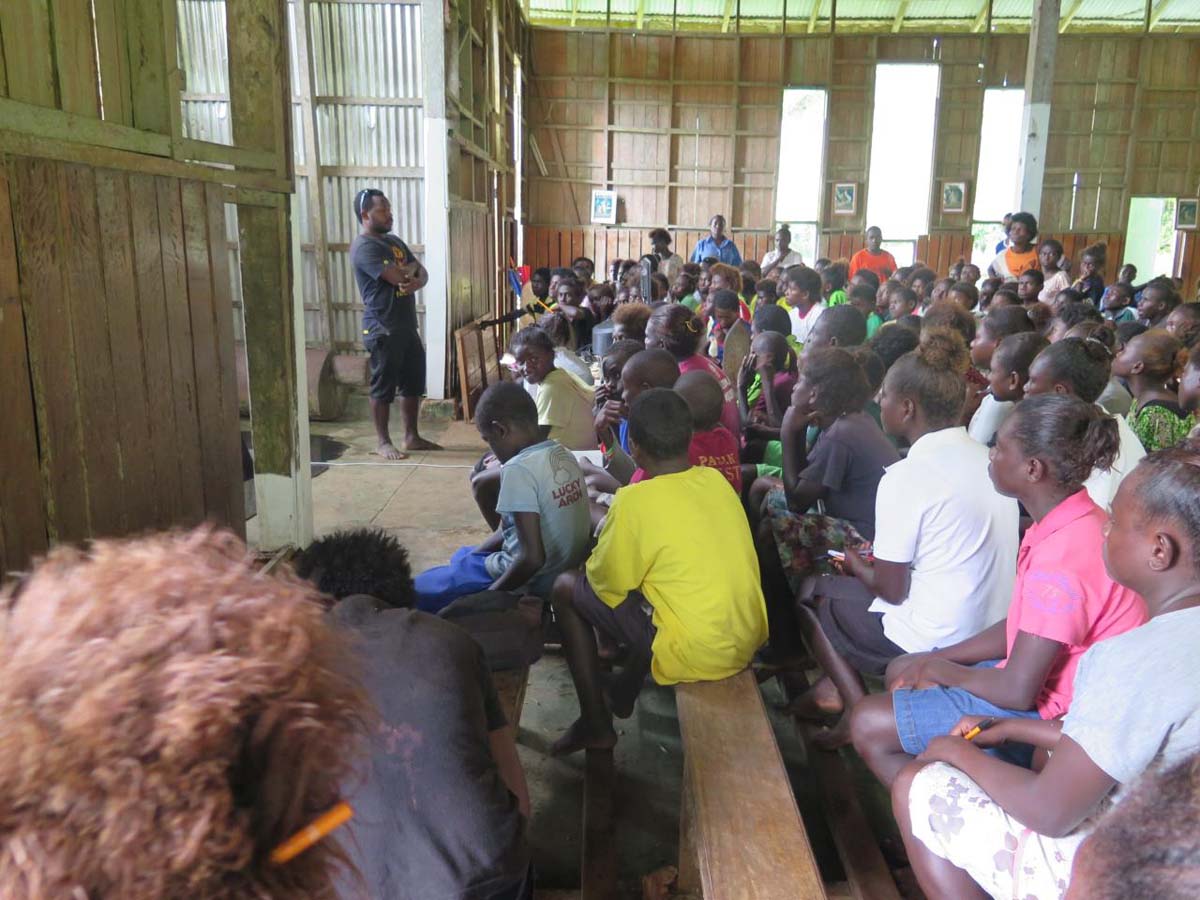
Contemporary testimonies from the Somuk family, although they are all apocryphal (they were collected between 2011 and 2019), offer an alternative vision of Somuk as an artist. According to the testimonies of the inhabitants of Gagan today, Somuk would have continued to draw until his death. According to Julian Nahis, a resident of Gagan, he drew on behalf of passing visitors, especially members of the Catholic Church:
“Somuk did not make these paintings on his own initiative, it was in fact the priest who asked him. The priest had seen these paintings which he found interesting as they showed the culture we have here. This is why the priest had asked Somuk to paint. The Catholic nuns had put everything in notebooks. It was the sisters who had given him these notebooks. When a notebook was finished, he left with it. These stories were also told in Sohano, and the colonial officers were also interested. They wanted Somuk to go and paint there too so they could take those paintings too. But Somuk knew what to expect, so he didn’t do this too often”[1].
One of his sons, Peter also remembers the close relations he had with the religious authorities:
“My name is Peter Pako. I am the penultimate of Somuk’s children… I was six years old and I remember my father. I was starting to go to school. I was in kindergarten here in Gagan. I saw him when he was engaged in artistic activities. Most of the time, he drew around the house. In the house, there was his own room. Catholic nuns and missionaries then came to visit her and look at her artistic work. This is the only thing I remember about his artistic activities”[2].
The two types of narratives sometimes contradict each other but usually complement each other. Patrick O’Reilly proposed the date of his birth (1900 like O’Reilly himself), while the date of his death is commonly accepted by his relatives as 1965. However, for some of his relatives, he was born much earlier than 1900, which is a little unlikely. O’Reilly for example does not mention Somuk’s death even in his late research (the Quai Branly “album” which contains a 1981 account of his life recalls the period of his life prior to the Second World War).
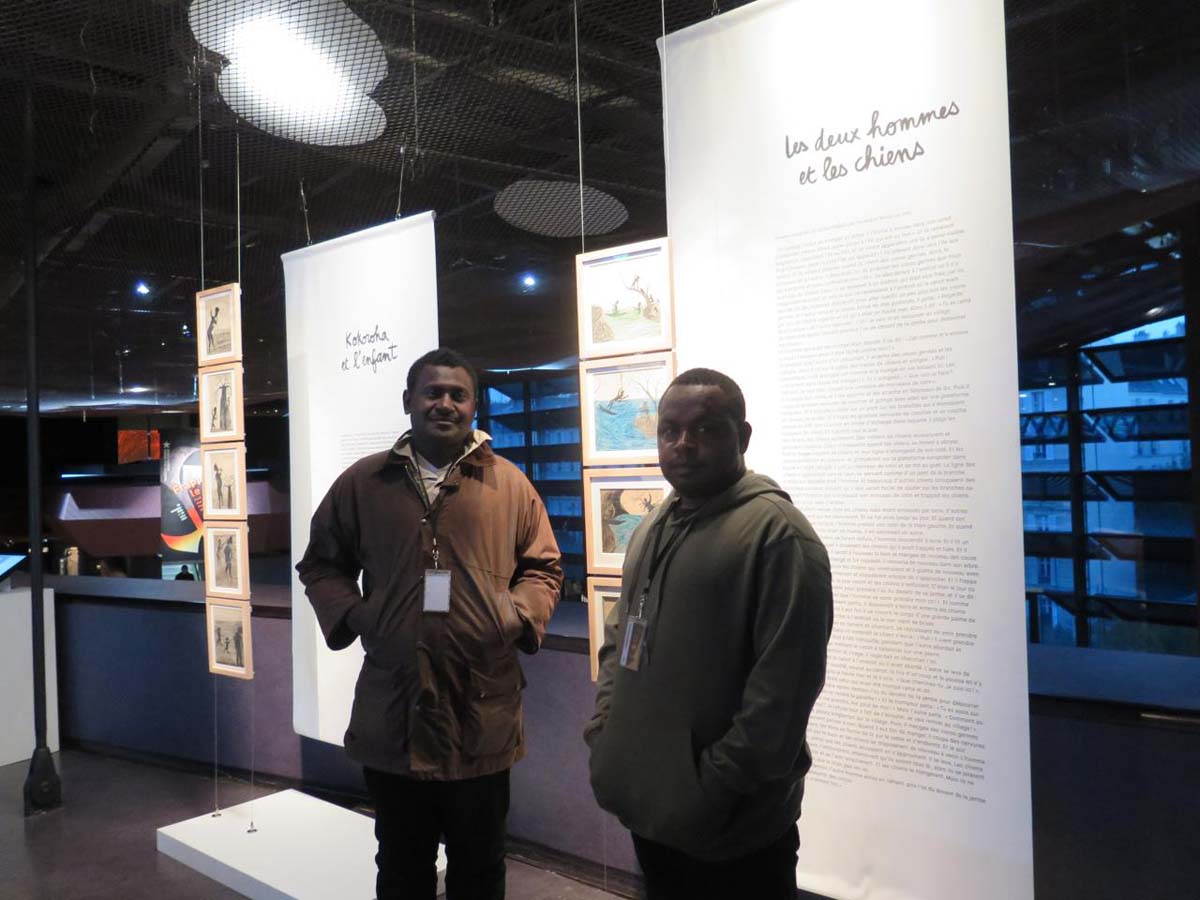
The book on Somuk (1900?-1965), an artist living in Bougainville in the beginning of the 20th century is the result of almost fifteen years of research. It bridges together unpublished archival documents found in Europe and contemporary testimonies and sheds light on one of the most interesting personalities of the colonial history of Melanesia. This research offered the occasion of a first retrospective of his drawings that was held at the musée du quai Branly – Jacques Chirac in Paris (2019-2020).
Somuk is an exceptional artist. He is one of the only Pacific artists from whom a significant number of artworks have survived. He is also one of the rare Pacific artists of the early 20th century whose career we know about thanks to the writings of Patrick O’Reilly (1900-1988). The latter published several documents that referred to Somuk, and these writings constitute the first coherent set of texts relating to a 20th century artistic personality in the Pacific. Fortunately, the documentation of his work is not limited to the writings of a Western scientist. We also know his personality thanks to the contemporary testimonies of the inhabitants of Gagan, his native village, north of Bougainville, although they are posthumous.
Born in the beginning of the 20th Century, he grew up in his native village of Gagan, in the north of Bougainville (east of Papua New Guinea). He soon learnt to read and write. There are several inscriptions that he himself drew on his drawings. All the inhabitants of Gagan today agree on this and also consider that he was the first man in the region to have received a Western and Christian education. His time with Catholic missionaries led him to become a catechist and to gain a growing ascendancy with the inhabitants of the region.
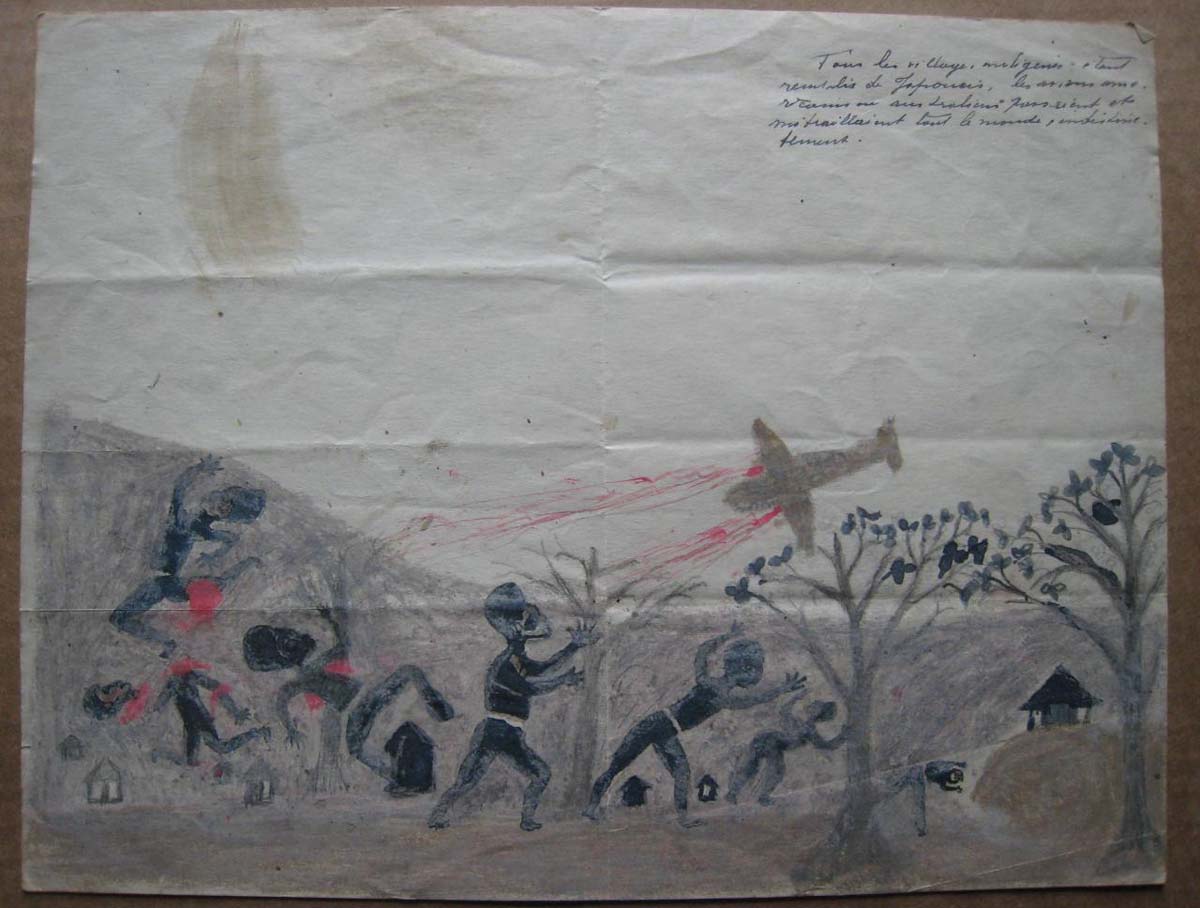
So far, ninety-nine drawings by Somuk have been identified and located. They are kept in four different institutions except for one drawing in a private collection. The Musée de l’Art Brut (Lausanne) owns three drawings by Somuk. The Musée de l’Océanie at La Neylière, near Lyons has eleven drawings, three of which are exceptional and depict battle scenes during the Second World War. The musée du quai Branly – Jacques Chirac purchased 30 drawings, including 24 pasted in a large album compiled by Patrick O’Reilly and 6 bought in 2021 in auction. The most important collection of drawings by Somuk is in Rome, in the Marist Archives in which fifty-six have been identified. This is an archival fund collected by Patrick O’Reilly.

Somuk’s drawings are also known through fifty copies commissioned from a certain Mrs. Olivers who “worked at the Beaux-Arts”. These drawings, more contrasting than the originals, were intended for printing. Some publications also mention drawings of which there are no longer material traces.
For the people of Gagan, Somuk was a prolific draughtsman and sculptor who continued to create until his death in the mid-1960s. However, apart from the drawings collected by Patrick O’Reilly, nothing is known of his later production.
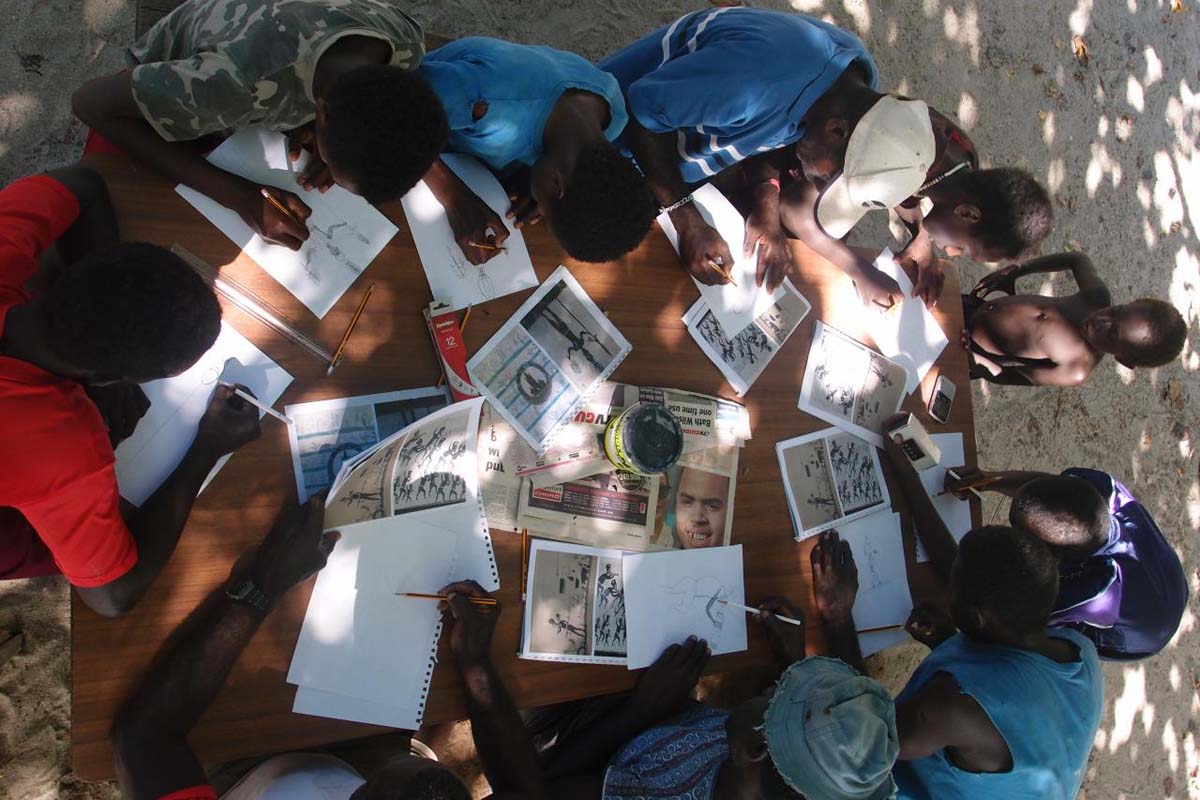
The ninety-nine drawings identified represent a considerable corpus unparalleled in Melanesian artistic production prior to the 1970s. The existence of a large collection of drawings makes it possible to approach key questions related to artistic practice in the colonial world from a new angle. Faced with questions related to the representation of myths, daily activities, on the links that exist between oral tradition and imagery, on the meaning that these works could have vis-à-vis other Melanesians, working on a corpus of nearly a hundred works is an incomparable asset. These same questions arise vis-à-vis many other known drawings, be they drawings created for other anthropologists such as Haddon, Seligman, Blackwood or Bernatzik in the end of the 19th century or the first half of the 20th century. However, the limited number of works produced by each of the authors constitutes often insufficient or isolated analytical material. Moreover, for Somuk, precious biographical information has been recorded and they allow, in conjunction with the drawings themselves, to sketch a biography of these drawings considered as a Melanesian cultural production. One of the drawings found in early 2021 even depicts a small character identified as a portrait of Somuk himself. This small self-portrait shows that Somuk was perfectly aware of himself as a draughtsman. A unique case in Melanesian graphic representations of the 20th century, he wished to leave an image of himself.
Furthermore, the figure of Somuk left a deep impression both amongst the French artistic avant-gardes of the immediate post-war period and in his village. While the artist Jean Dubuffet made Somuk a key figure in Art Brut, the latter acquired the status of a hero in his village. After being the first inhabitant of Buka to know how to read and write, he was also the first catechist. This status of scholar and man of the Church gave him an exceptional status in his village and in Buka Island. According to a testimony from a resident of Gagan given in 2012, he would have isolated himself from the world and would have lived as a hermit in a secret cave which would be under the church of Gagan. There he would have disappeared without leaving any material traces. This story is disputed today by most members of his family, but it reveals the almost mythological dimension that his personality has reached. As the first accomplished Melanesian painter according to the French O’Reilly, Leenhardt and Dubuffet, he was also the first modern man for the inhabitants of Bougainville. This book explores the dual career of this artist and this chef.
This book offers a double portrait of Somuk, a singular character: a paragon of an “outsider ” artist to use the name used by Dubuffet, and at the same time, but elsewhere, the prototype of a modern Melanesian politician for the inhabitants of his region.
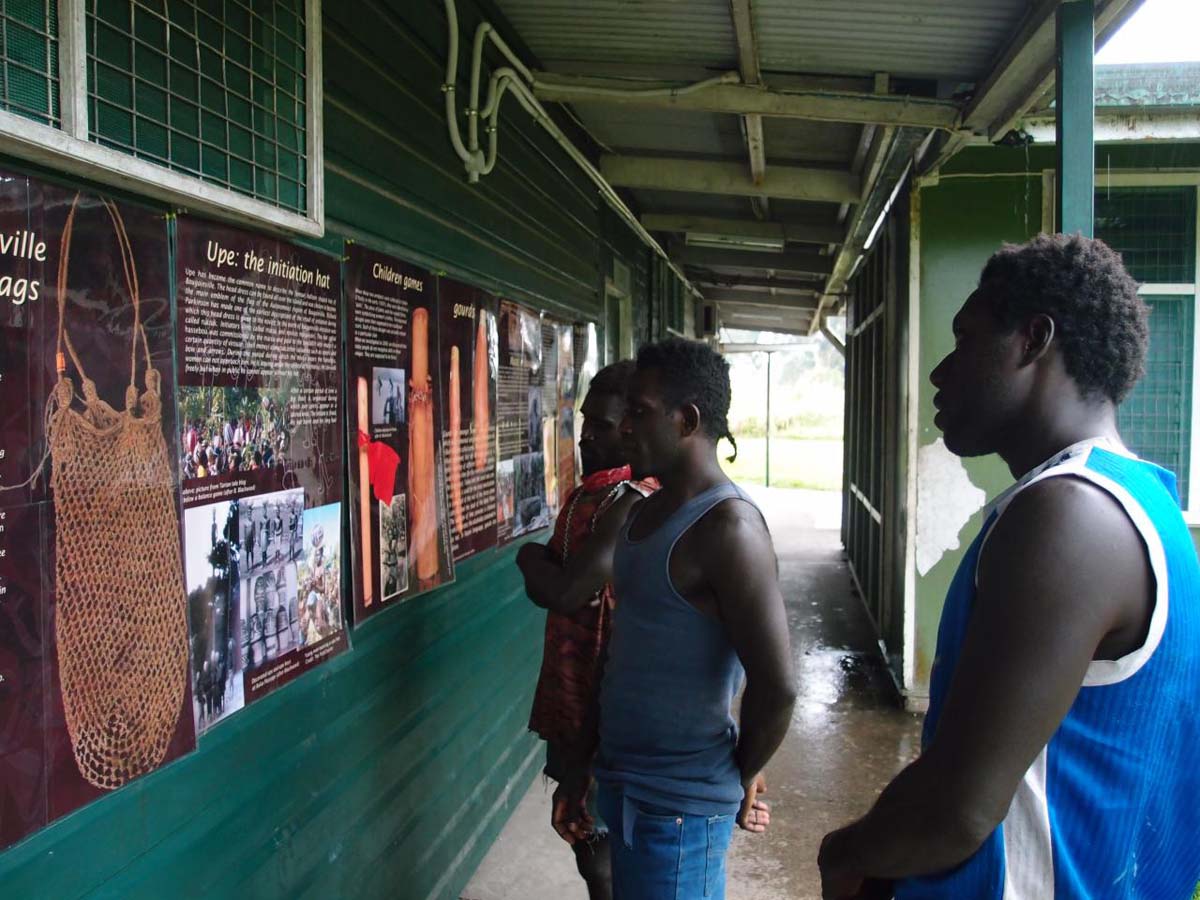
The violence of colonial history and the tensions generated by the approach of the referendum on the independence of Bougainville also give their orientation to the documents which have been brought together more recently with and from the Bougainvilleans. This particular context permeates many comments, in particular because many participants in the project wanted to see this publication as an opportunity to assert their views on the distinct Bougainville identity. Writing about Somuk has also been a way of constructing a specifically Bougainvillean heroic figure. Taking an interest in Somuk gives the occasion to elaborate an ideal figure and politician in a country that seeks to find historical heroes to build a liberated future from Papua New Guinea. For the inhabitants of Gagan, organising an exhibition in a national museum in Paris, as it was the case during the winter of 2019-2020, was an opportunity to put themselves forward and obtain international visibility. For the inhabitants of Gagan, it was a source of prestige as they herald their Bougainvillean identity and history on an international platform, but also because they can compete with neighbouring villages, other cultures of Buka, and claim their primacy upon them.
Bibliography
Beran, H., 1996. Mutuaga: a nineteenth-century New Guinea master carver. Wollongong: The University of. Wollongong Press.
Blackwood, B., 1934. Both Sides of Buka Passage: An ethnographic Study of Social, Sexual, and Economic Questions in the North-Western Solomon Islands. Oxford, Oxford University Press.
De L’Etoile, B., 2007. Le Goût des Autres : De l’Exposition coloniale aux Art Premiers. Paris, Flammarion.
Druett, J., 2011. Tupaia: The Remarkable Story of Captain’s Cook Polynesian Navigator. Auckland, Random House.
Field, J.J.. 2008. Written in the Land: The Life of Queenie McKenzie. Melbourne, Melbourne Books.
Garnier, N, 2019. “Somuk, first artist of the Pacific”, in Tribal Art (Winter 2019, WWIV, 1): 142-151.
Garnier, N., 2023. “Artefacts without Fieldnotes: the Bougainville collection from Patrick O’Reilly”, Journal de la Société des Océanistes, vol; 155, pp. 311-326.
Gerbrands, A.A. 1967. Wow-Ipits. Eight Asmat Woodcarvers of New Guinea. Paris, The Hague, Mouton
Guiart, J., 1988. “Patrick O’Reilly”, Journal de la Société des Océanistes, n°86-1, pp. 91-97.
Isaacs, J., Smith, T., Ryan, J., Holt, D., Holt, J., 1998. Emily Kngwarreye Paintings. Craftsman House, Smith, T. (Ed.). North Ryde, Sydney.
Laracy, H., 1976. Marists and Melanesians: A History of Catholic Missions in the Solomon Islands. Canberra, Australian National University Press.
Mauss, M.l, 1967 [1947]. Manuel d’ethnographie. Paris, Payot.
Montauban, P. & O’Reilly, P., 1952. « Mythes de Buka, Iles Salomon, 1», Journal de la Société des Océanistes 8, pp. 27-80.
Montauban, P. & O’Reilly, P.,, 1955. « Mythes de Buka, Iles Salomon, 2, Cycle de la Tubun », Journal de la Société des Océanistes 11, pp. 37-95.
Montauban, P. & O’Reilly, P.,, 1958. « Mythes de Buka, Iles Salomon, 3, Mythes d’origine », Journal de la Société des Océanistes 14, pp. 50-86.
O’Reilly, P., 1940. « Description sommaire d’une collection d’objets ethnographiques de l’île de Bougainville »,
O’Reilly, P., 1946. « Sur un conte mélanésien », Les Cahiers de la Pléiade, pp.95-107.
O’Reilly, P., 1951 a. Art Melanesien: Somuk, Hikot, Tsumomok, Tsimes, Ketanon. Paris, Nouvelles Editions Latines.
O’Reilly, P., 1951 b. “Somuk un artiste mélanésien occasionnel”, Mission des Îles, pp. 71-74.
Rarrk: John Mawurndjul Journey Through Time in Northern Australia, 2005. Exhibition Catalogue, Musée Tinguely, Basel. Crawford House Publishing, Schwabe Verlag.
Séjourné, Abbé P., 1982a. “ Le R.P. Mariste Paul Montauban (c.1905), Missionnaire aux Îles Salomon. Deuxième partie”, Bulletin des anciens élèves du Collège de Combrée – de Vacances, pp. 12-18.
Séjourné, Abbé P., 1982b. “ Le R.P. Mariste Paul Montauban (c.1905), Missionnaire aux Îles Salomon. Troisième partie. A l’écoute des Salomonais : l’ethnologue”, Bulletin des anciens élèves du Collège de Combrée – de Vacances, pp 31-40
[1]Interview with Julian Nahis, March 2017.
[2]Interview with Peter Pako, March 2017.