by Carolyn Leigh
Ron (Roland Lewis) Perry grew up in Tucson, Arizona, USA during the 1930s Depression. Both his grandfathers died young. Their widows and extended families instilled an early work ethic. Ron bought and sold before he was old enough to get a paying job: vegetables, rabbits, chickens and eggs, whatever helped buy things his parents couldn’t afford. He collected, traded and sold stamps. Sometimes he found fragments of Native American pottery in the desert. Tucson dealers bought whatever he picked up.

In summer heat, his grandmother and great-aunt loaded the family kids in a car, drove to California and the beach – a real treat for desert kids. That love of travel, fun and adventure stuck. Hard work and a ready smile would get him “on the road again”. He left his University of Arizona studies in Range Management and Anthropology to surf in Hawaii.
Ron served with the U.S. Army in Korea. His ability to type and keep accounts got him assigned to an Army commissary – and may have saved his life. After Korea, Ron hitchhiked through India, Iran, Pakistan, Afghanistan, Nepal, and a good portion of Southeast Asia, before he immigrated to Australia.
He met Barbara Hockey at Surfer’s Paradise. They married and lived on her family’s sheep station. Ron worked with her father while Barbara managed the accounts. They had a daughter, Michelle, and a son, Scott. Ron and Barb convinced her father to sell the Dubbo station so they could all move to Sydney. They invested in various enterprises. Social life in Sydney was whirl. It was all great fun, but he was bored.
In 1964, his artist friend from Hawaii, Flo Chang, came to visit. Her ticket took her to Port Moresby where she bought as much New Guinea art as a small woman could carry back in bilums. Flo told him, “I’m sure they have much better art in the villages, better prices, too.”
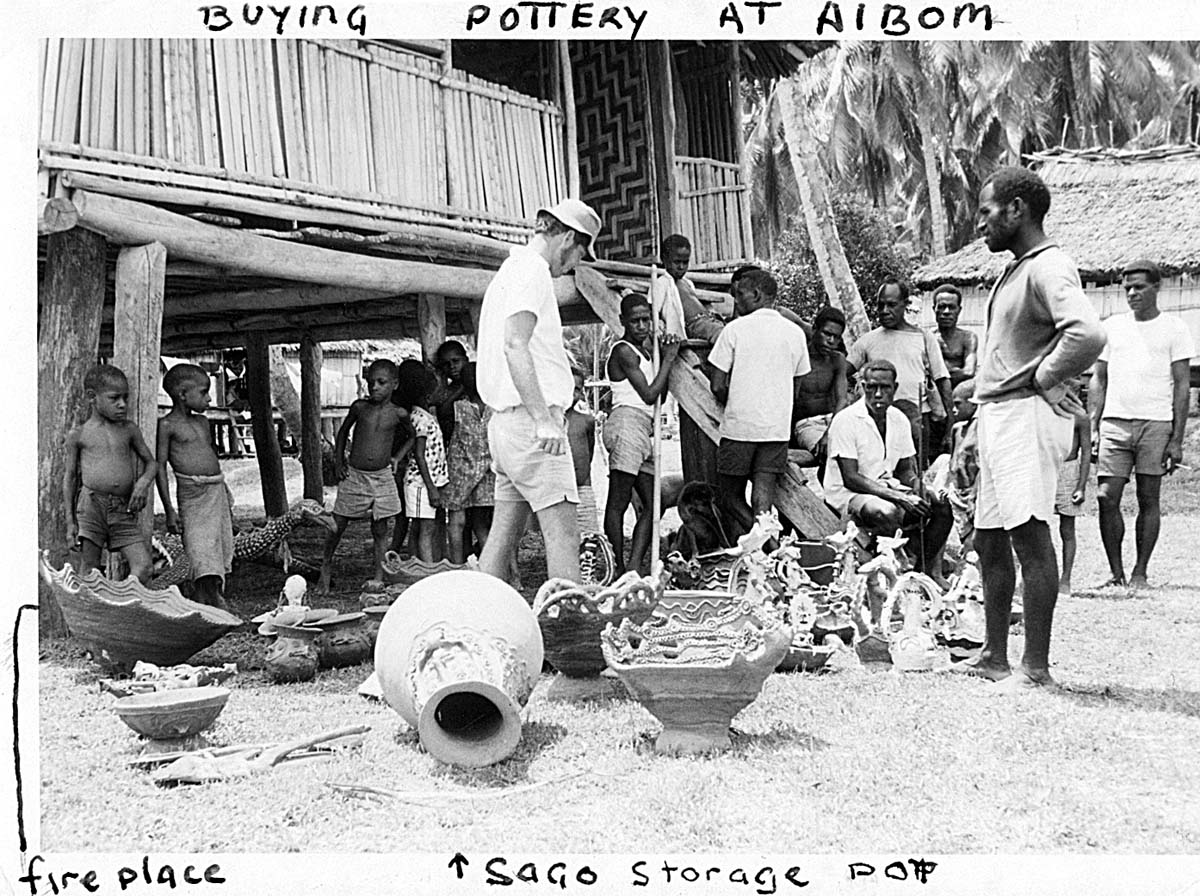
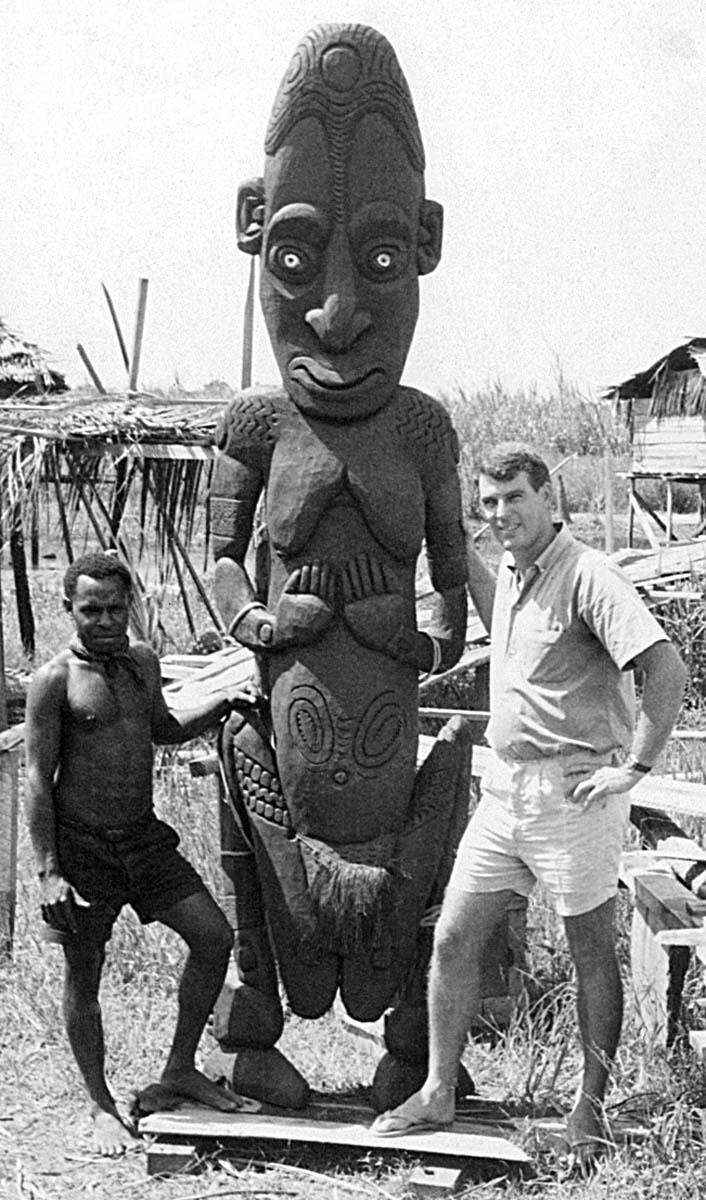
Ron booked his first ticket. Papua New Guinea was still under Australian administration. It wasn’t hard to get a visa and a job. He worked there off and on for 14 years: surveying, managing a sawmill and trade store in Angoram, running the first tour boat on the Sepik River. He loved the expat congeniality, lifelong friendships of the Clubs: Angoram, Maprik, Hagen, the Wewak Yacht Club.
He also bought and sold artefacts to help pay for his trips. Morris Young was an early, influential friend who introduced him to Australian galleries and collectors. Ron sold to private collectors. However, his main clients were art galleries, craft shops, and others whose customers and collectors looked for the unusual – something exciting to enliven and enrich their lives. Openings often included a slide show and enthralling stories of his adventures.
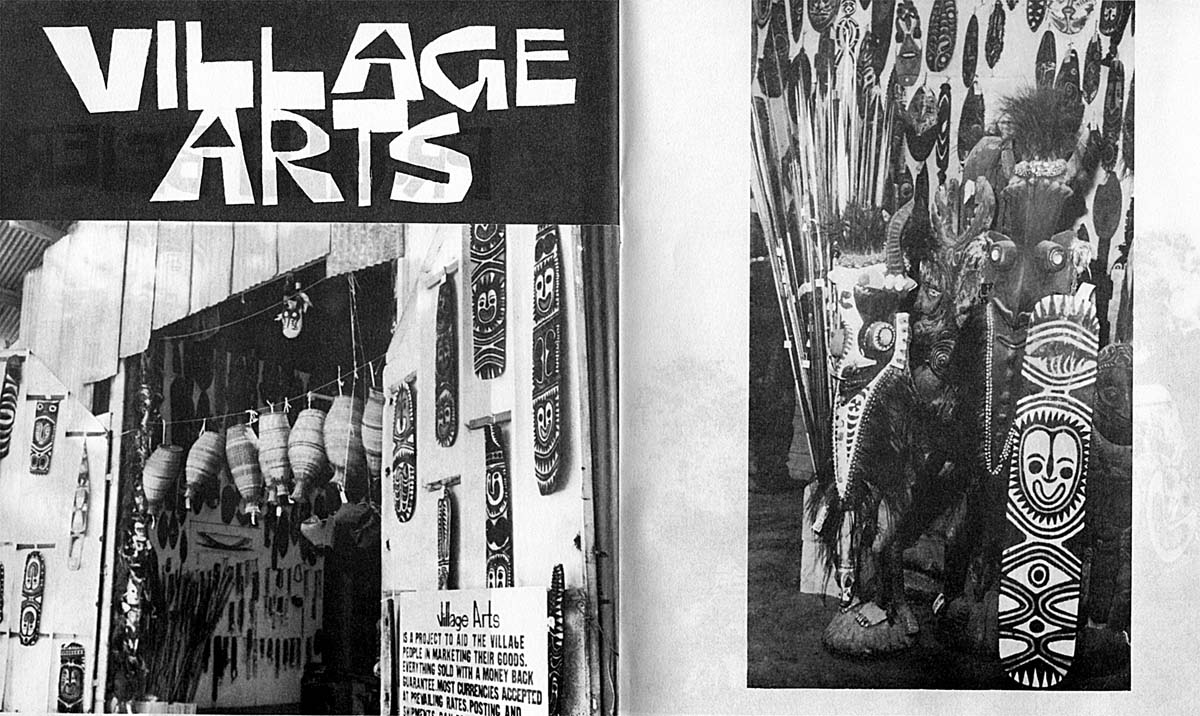
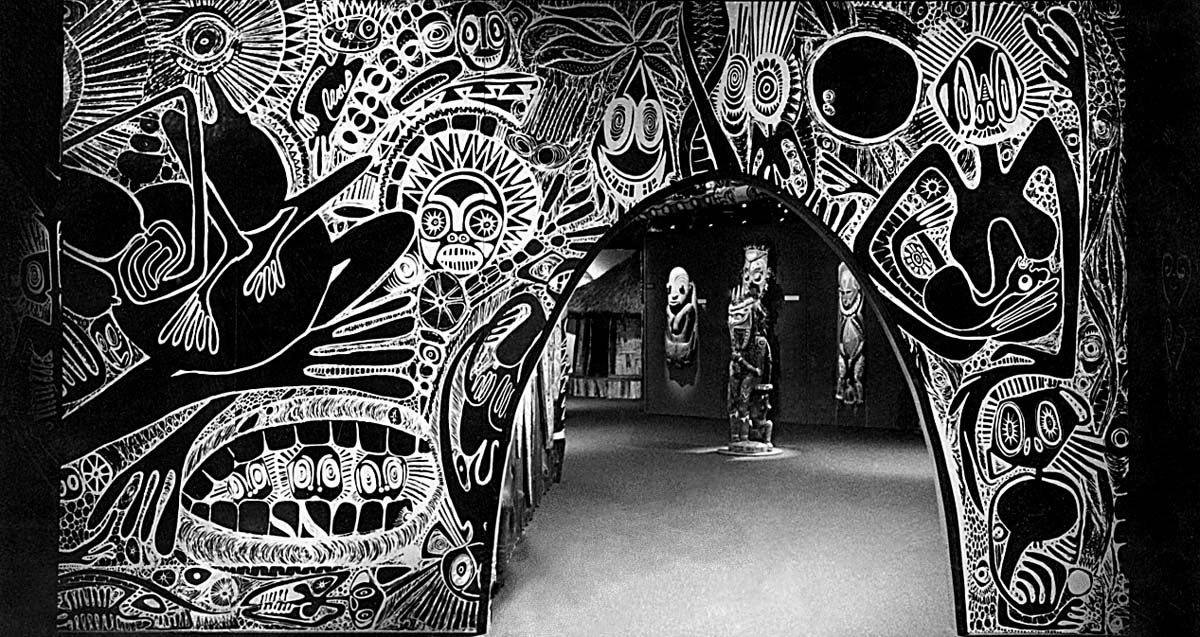
After Independence, Ron managed Village Arts for the Papua New Guinea National Cultural Council. In 1978, he accompanied a collection of PNG art to the American Museum of Natural History in New York. Anthropologist Margaret Mead served as guest of honour to open the exhibition.
When Ron and Barbara divorced in 1979, he returned to Tucson. He travelled extensively through Mexico, Central and South America, but New Guinea always drew him back. With initial financial backing from his cousin, Kelley Rollings, he continued yearly trips to Australia and Papua New Guinea, especially the Sepik River – “man belong Sepik tru.”
Ron, his Tucson partner and wife, artist Carolyn Leigh, along with friends, Frank and Donna Patania, fulfilled his lifelong ambition to explore Irian Jaya (now Papua), as well as the rest of Indonesia in 1988, adding over several trips to their extensive inventory. Other trips took them to New Zealand, Australia’s Tiwi Islands, China, and the Solomon Islands.
Carolyn created their website, Art-Pacific.com, and wrote Art Dealer in the Last Unknown, an account of Ron’s early years, 1964 -1973, in PNG. Ron and Carolyn, along with their long-time manager, Doug Mehaffey, continued, and still continue, the family art business.
Carolyn: I landed in PNG on my 40th birthday – wow! We headed for the Sepik River. Word went out ahead of us from Wewak. The Angoram Haus Tambaran still stood, full of men and their carvings, women outside with bilums and food for sale. Garamut drums beat out news of our arrival. Ron bought from everyone. He knew what it was like to get some money – to buy rice, tobacco, fish hooks, maybe a beer in the hotel bar. Ron always paid cash. We carried thousands of kina in small bills. My job became to keep records of what we bought (for our museum export permit, plus take the photos), count out money for each buy, and run the tally in our logbook as he completed dozens of buys in a day. We never carried a gun or other weapon beyond our crew’s bush knives. The village people kept us safe. They wanted us to come back. If we had any trouble in a place, we never went back. Most were our longtime friends, locals and expats alike.
Tenkyu tru to all our wonderful family and friends, including the art dealers, their staff, and collectors, too numerous to name, around the world, living and deceased, who helped make our amazing adventures possible – all the way to the unexpected, sudden end of Ron’s life.
Scott Perry says it well: Dad was more than a father; he was a pioneer, adventurer, and a renowned tribal art dealer with an unparalleled passion for Papua New Guinea. His journey took him from the deserts of Tucson to the lush landscapes of New Guinea, where he spent over 50 years immersed in its rich culture and history. His life’s work was not just a career but a love affair with the art and people of this incredible region.
His legacy is vast, marked by his extensive travels and deep connections with the communities he so dearly cherished. He was a storyteller, a cultural bridge, and an inspiration to many. We will forever miss his adventurous spirit, his stories of far-off lands, and his unwavering passion for life and art.