By Krisztina Turza
Parcours week saw some unusually soaring temperatures, a contrast to the expected somewhat cool, often rainy September in Paris. This may have also contributed to the celebratory vibe felt around Rue des Beaux-Arts, Rue Visconti, Rue Mazarine, Rue Jacques Callot and Rue Guénégaud. The area was abuzz with art, music, food as Parcours coincided with the Paris Design Week. This year’s art fair attracted some 60 galleries, including many newcomers selected under one gallery space by Parcours management as part of the “Showcase” exhibition. Perhaps these young dealers will soon have a shot at Parcours?
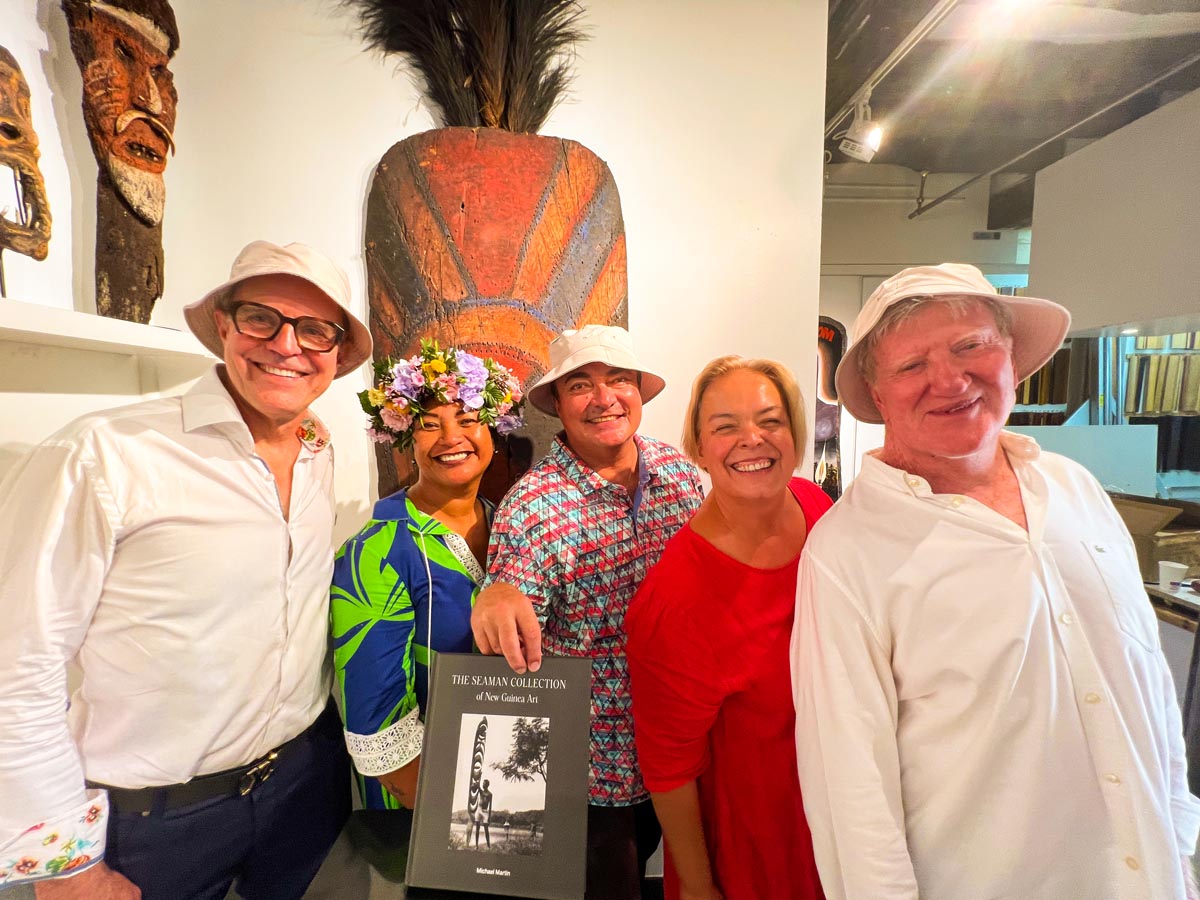
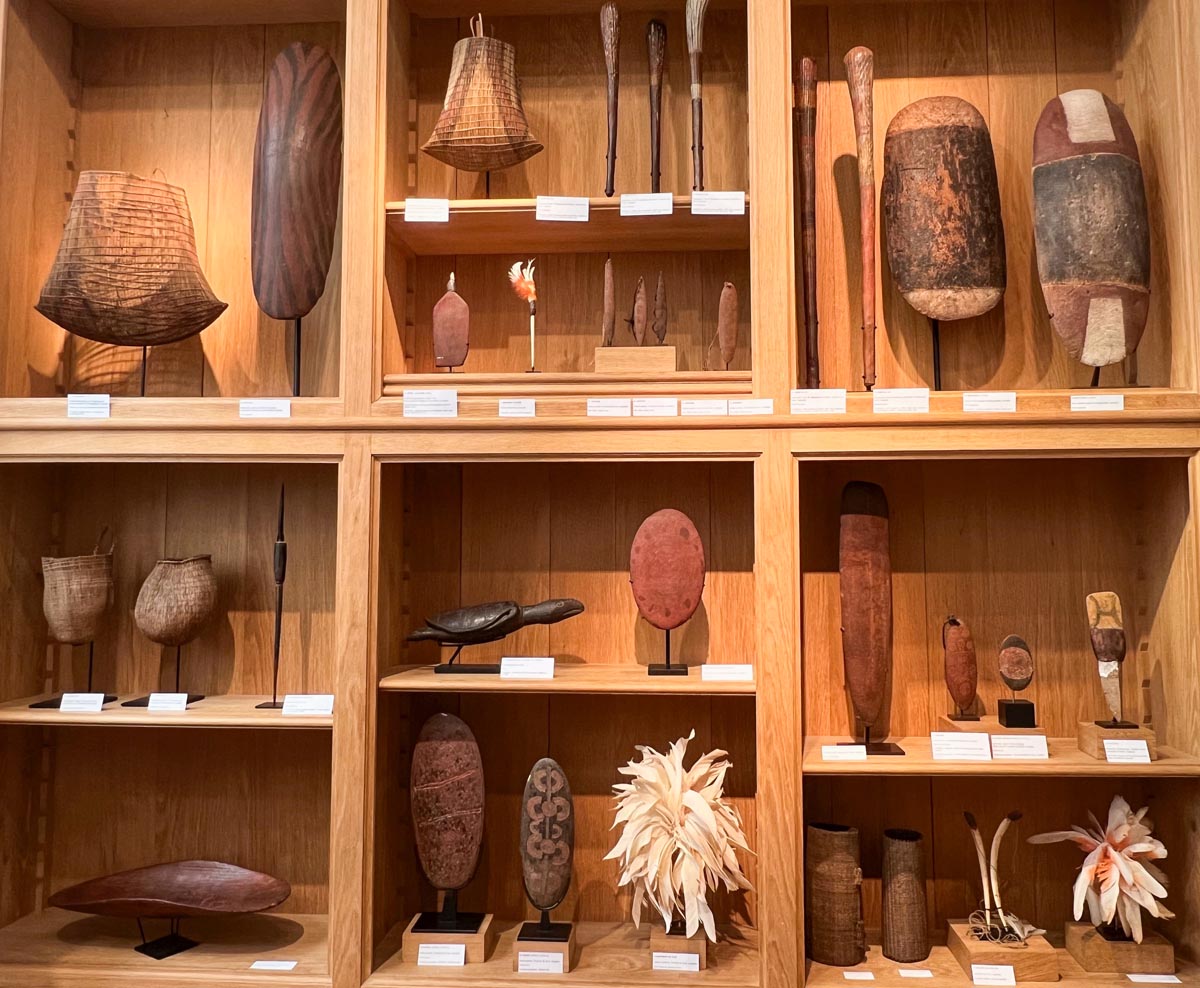
Oceanic art was particularly strong presented by the ‘usual suspects’ such as Anthony Meyer, Chris Boylan, Franck Marcellin and Martin Doustar. One of the highlights for me was the launch of Dr. Michael Martin’s book at Chris Boylan’s Paris gallery space. The Seaman Collection of New Guinea Art is dedicated to the memories of Bruce and Ramine, Terii Seaman’s parents. Terii and his lovely wife from Bora Bora were also present at the event, with ukulele, bubbles and laughter.
What I adore about Parcours is that every year I seem to find genuinely new areas in tribal art. I distinctly remember the first time I discovered the Hopi kachina dolls at a previous Parcours many years ago. It was Siberian Kulai in 2023! I must confess that I spent the lion’s share of my time at the Grusenmeyer Woliner Frozen Magic – Time Before Time exhibition, described as “an immersive sight that takes you on a journey into the mystical realm of Siberian shamanistic art”. And it certainly did that. As Maria Wrońska-Friend, an archaeologist from James Cook University, Australia once told me: “you Hungarians have always been exploring and searching for the origins of the Magyar (Hungarian) tribes in the Ural Mountains and elsewhere in Central Asia, you are no strangers to adventures in this region” and she was right.
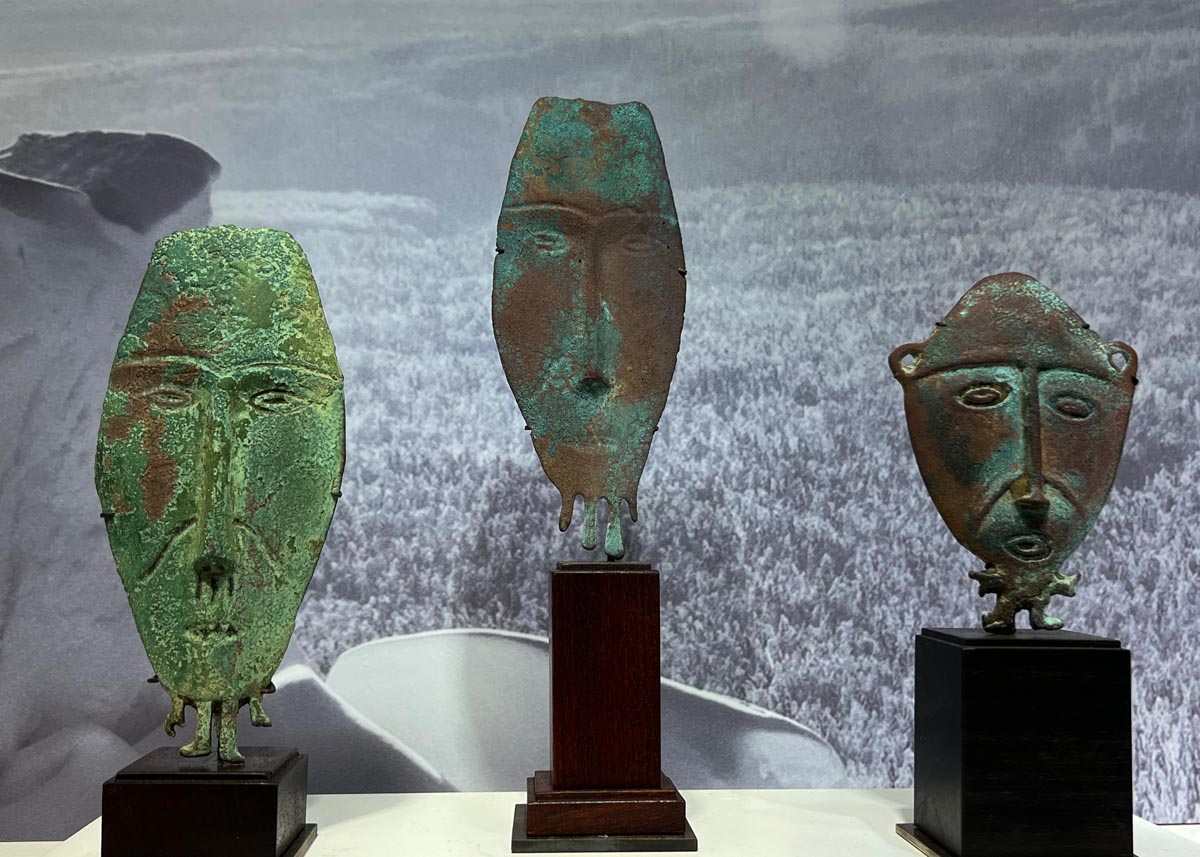
I felt an instant connection to these Siberian anthropomorphic bronze figures. I recalled reading about them in a previous Tribal Art Magazine but seeing them made a difference. Indeed, that is why I encourage everyone to visit art fairs and exhibitions because often pictures do not have the same effect that a powerful piece can have on you.
Back home I looked up the article, which started “Long ago a mysterious civilisation left its mark on the banks of the mighty Ob River and its tributaries in Western Siberia”, just like a fairy tale. The Kulai culture developed during the Iron Age (between the fifth century BC and fifth century AD) in an area full of streams and marshes around the Ob River. The Kulai were very skilled in tattooing and in bronze-working. Intertwined with spirituality and totemism, these two skills combined in unique and remarkable artworks. Some scholars claim that these bronze figures had ritual functions and were not meant to be seen by a wide audience; they were made for a particular clan or purpose.
Various scholars draw similarities with other Arctic cultures from Western Siberia to North America in terms of the “protective tattoos” applied. Chin-stripe tattoos were considered ‘feminine’ so we can assume that those enigmatic vertical linear facial tattoos are female representations (in Inuit cultures, linear chin tattoos were a sign of social maturity). This exhibition served as a catalyst for me to do more research, deepening my understanding of the unique Siberian cultures (in the hope, of course, of finding similarities with my own cultural heritage as the Hungarians did originate from the Ural Mountains and the Ob River).
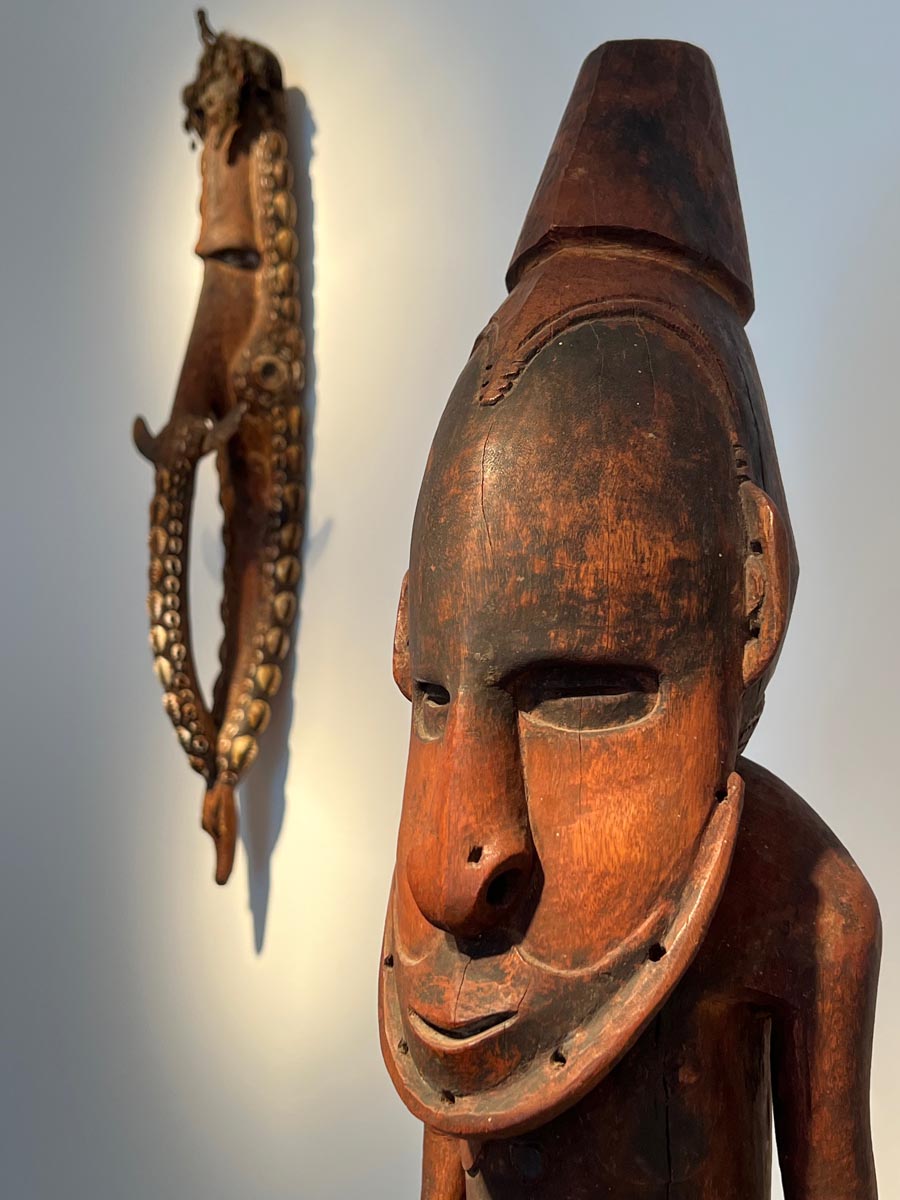
Image courtesy Krisztina Turza.
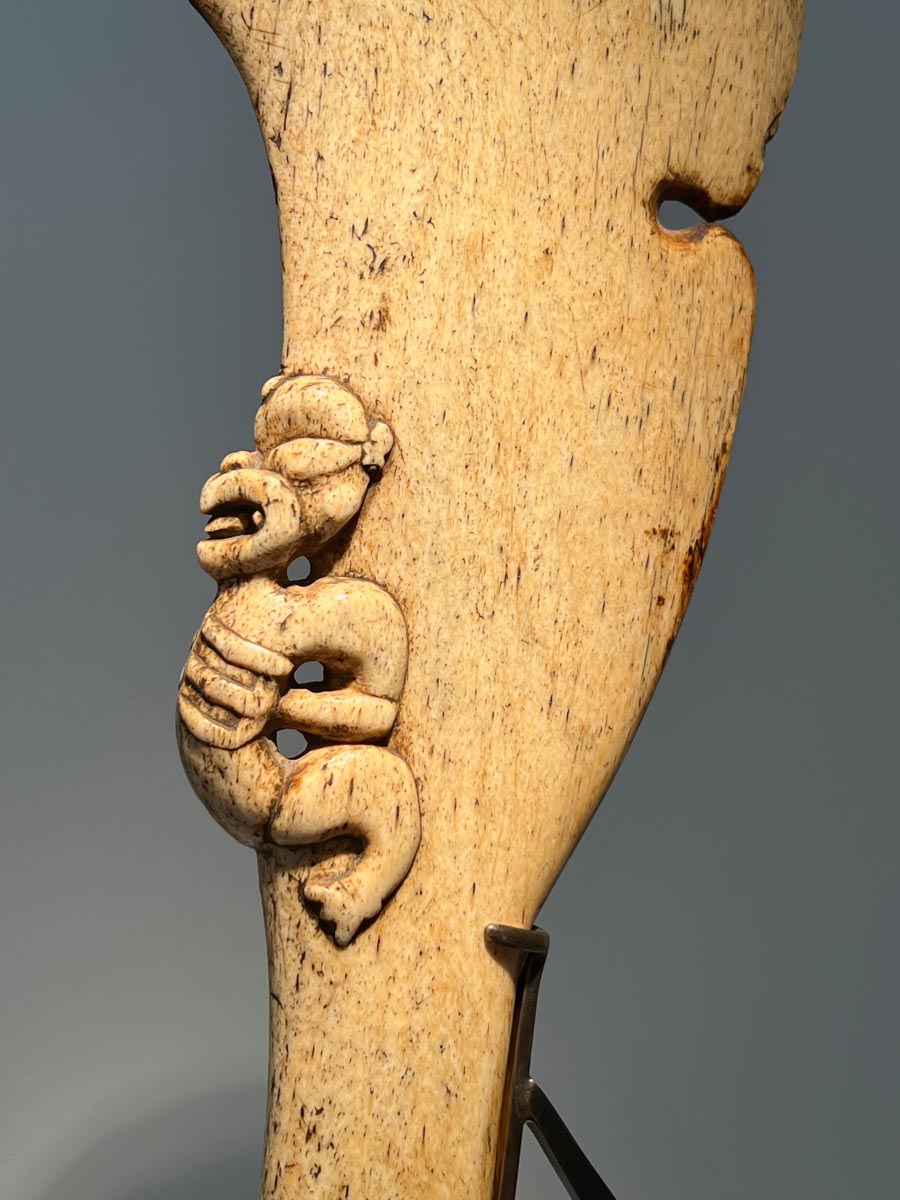
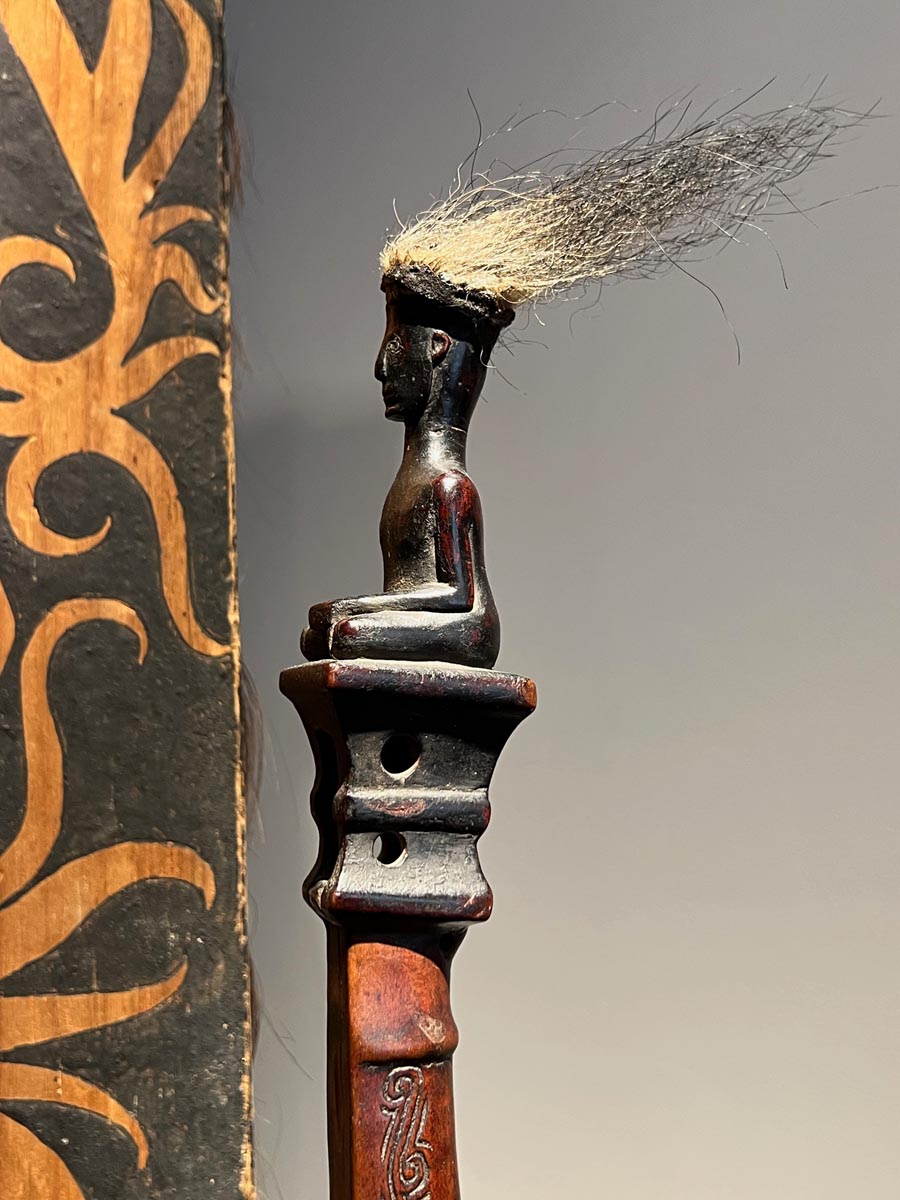
Shaman Staff. Image Krisztina Turza.