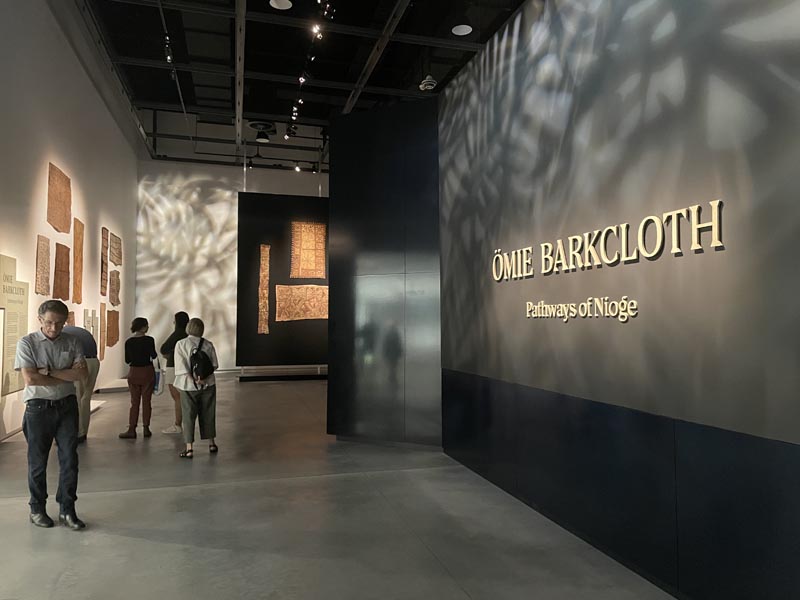
This speech was presented by Steven Gagau at the opening of Ömie barkcloth: Pathways of nioge Exhibition, Thursday 9 February at the Chau Chak Wing Museum

Steven Gagau speaking at the launch of Ömie barkcloth: Pathways of nioge Exhibition, Thursday 9 February at the Chau Chak Wing Museum. Photo: Margaret Cassidy.
Today’s launch is an exciting exhibition of Ömie barkcloth: Pathways of nioge, a showcase of art, craft and culture of my country of heritage, Papua New Guinea (PNG).
Firstly, I acknowledge the traditional owners (and custodians) of this land where the university is located and the event we are attending today – I pay my respects to the Gadigal people of the Eora nation and acknowledge their elders (and leaders) past, present and emerging of this unceded Aboriginal land.
As PNG diaspora and indigenous peoples, we culturally share our respects in showcasing through this exhibition, our culture and heritage of a different country to our fellow First Nations people of Gadigal country and the Australian public.
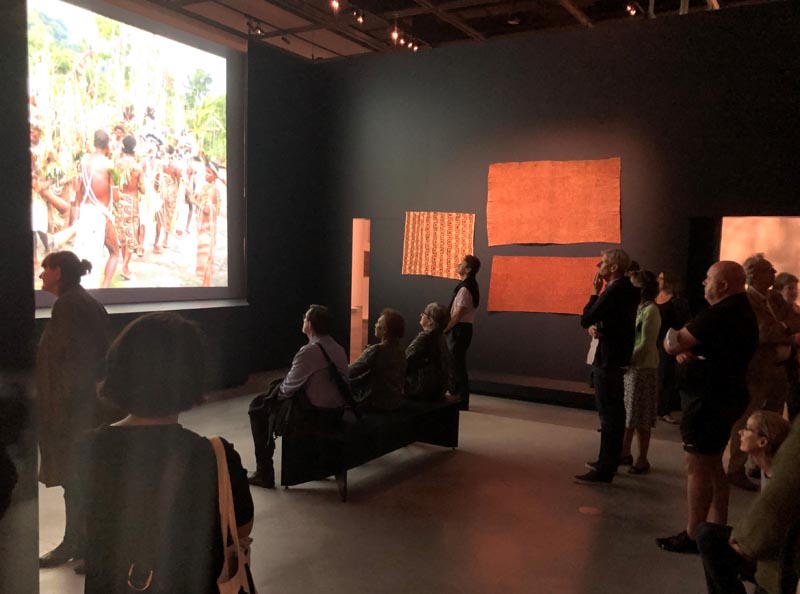
The exhibition makes accessible through interactions of people both within and outside the museum the historical and cultural materials from the south coast of New Guinea held in the Macleay collections. The curatorial team led by Rebecca Conway made it all possible with my involvement in my capacity as an associated curator here at the museum as well as PNG diaspora community leader and President of the Sydney Wantok Association.
My collaborative work with Rebecca and Senior Curator Jude Philp started with the earlier Pacific Views exhibition and Pacific Voices symposium featuring historic photographs combined with the poetry and music of the Pacific.
These collaborations continue with the planned future Sydney-Pacific exhibition which will showcase the histories, lives and homelands of early Papua New Guineans and other Pacific peoples who visited Sydney throughout the 1800s.
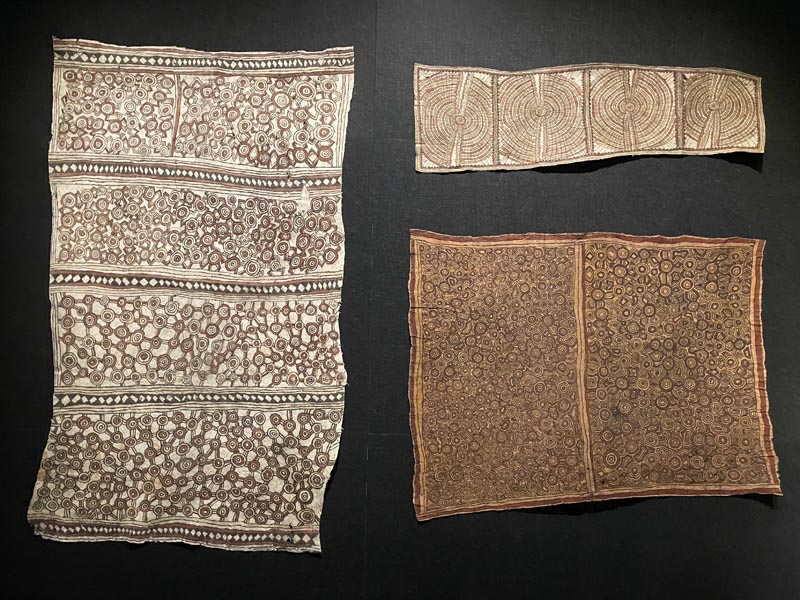
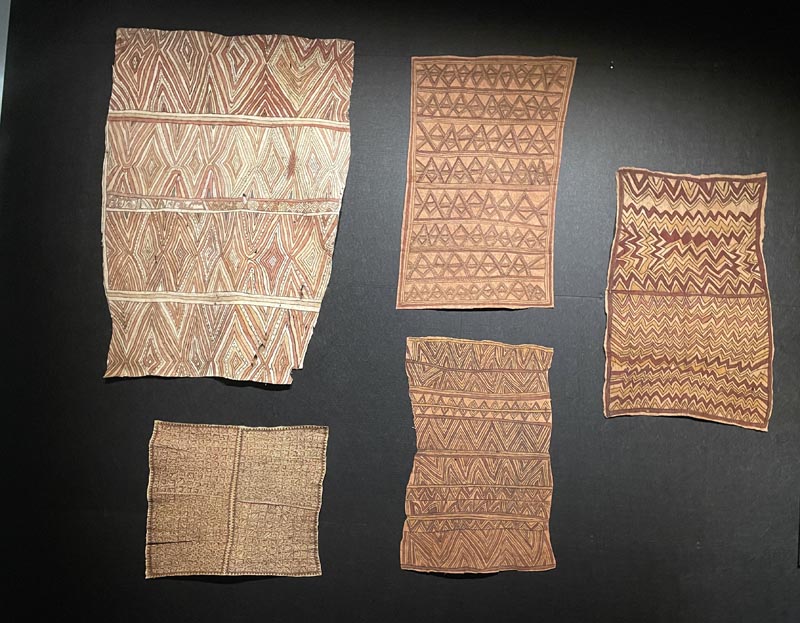
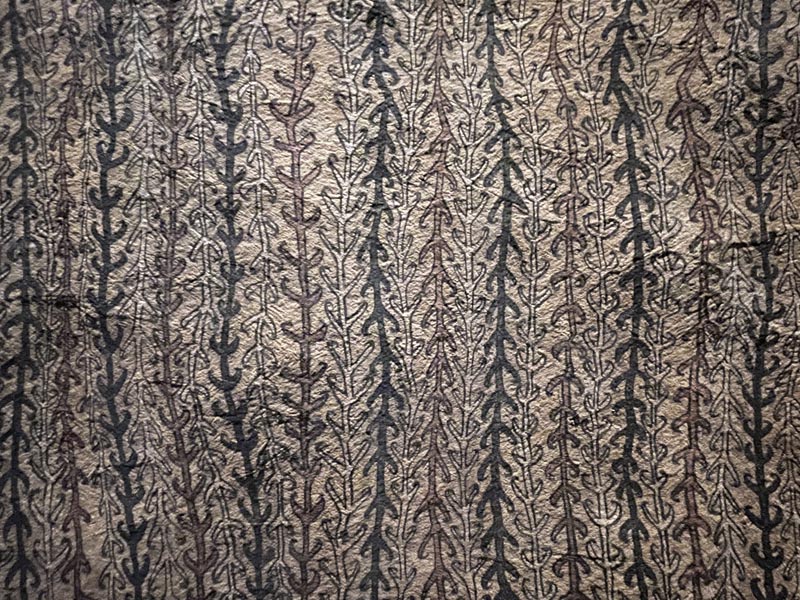
This current exhibition features contemporary inoge (nyo-ge) works from the highlands of Oro Province communicating the artistic life and culture of the 1,800 Ömie (Oou-mi) people who live in the ridgetop rainforest villages.
Today PNG has a population of over 9 million and growing, over 1,000 tribes, nearly 850 languages and represents a land of culturally, linguistically, and environmentally diverse people across the four regions and twenty-two provinces, each having their own unique communities on the highlands and coastal mainland regions and the islands region.
The Oro (formerly Northern) Province has a population of over 180,000 people. The Ömie people live in villages of the remote highlands rainforest area south of Mt Lamington locally known as Huvaimo. Due to its remoteness, some villagers have more than a day’s trek to the nearest road, which links to services in Kokoda and the provincial capital, Popondetta.
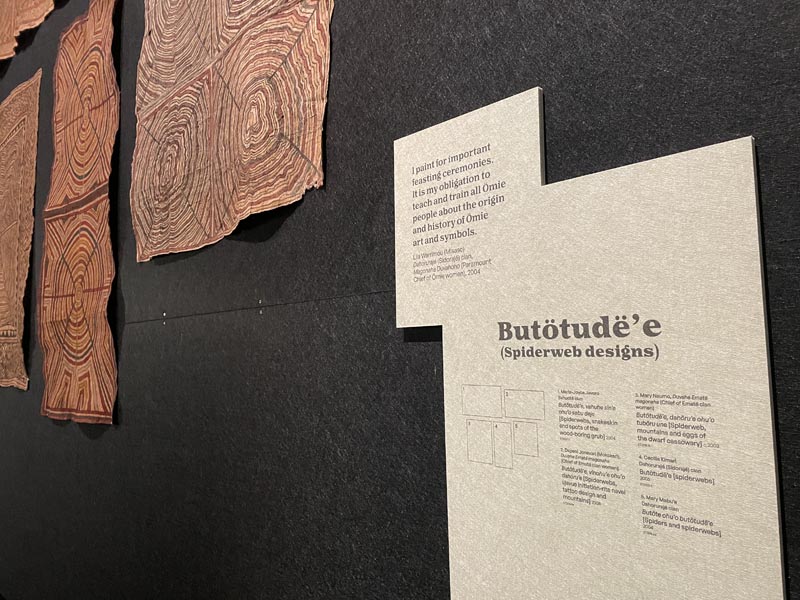
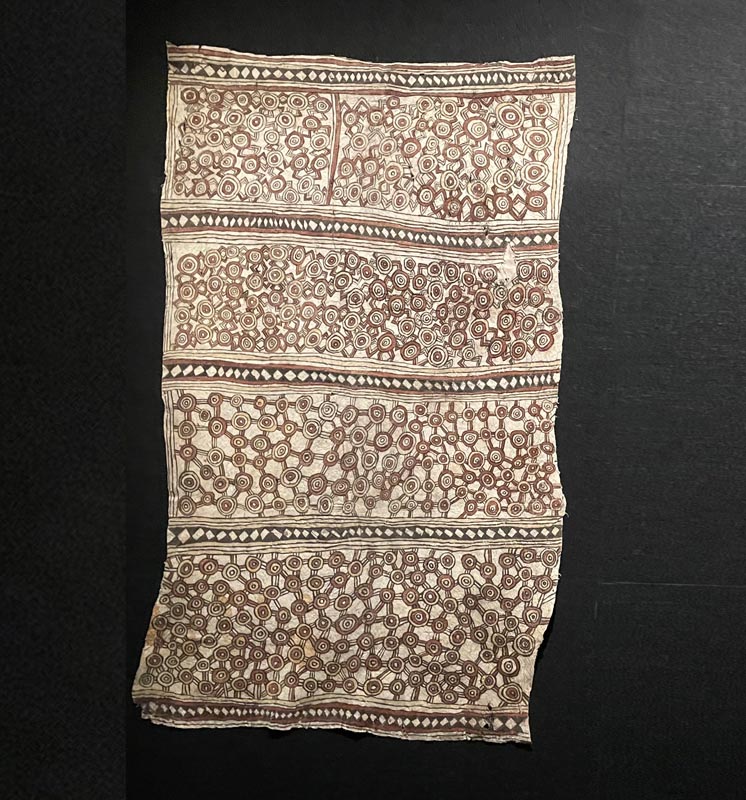
The Ömie world is about their mountain landscapes, the plants and animals of their rainforest and cultural traditions like their historic tattoo patterns. Nioge is the Ömie word for barkcloth with the painted artwork designs and decorations guiding the pathways as in the arrangements in this exhibition. Their unique and dynamic barkcloth art, the vibrant and stylistically distinct works resonate with the cultural law, environmental knowledge, and creativity of their makers.
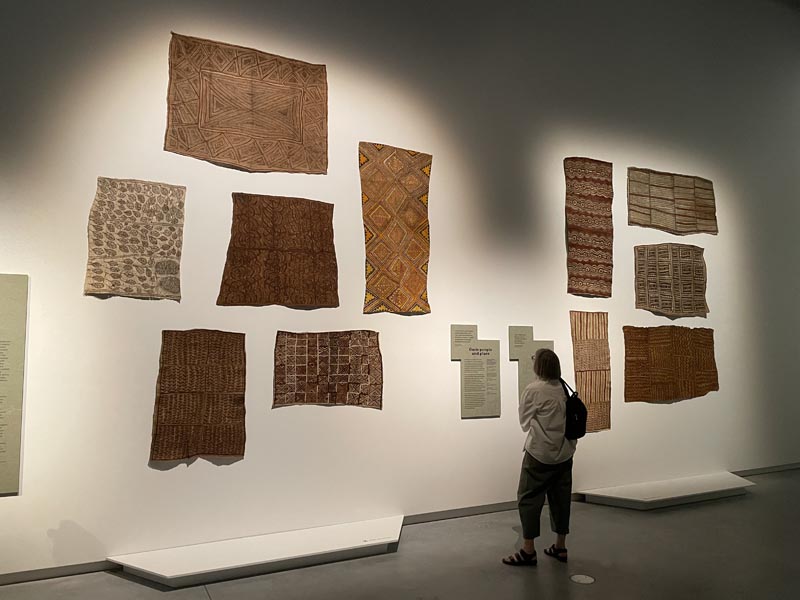
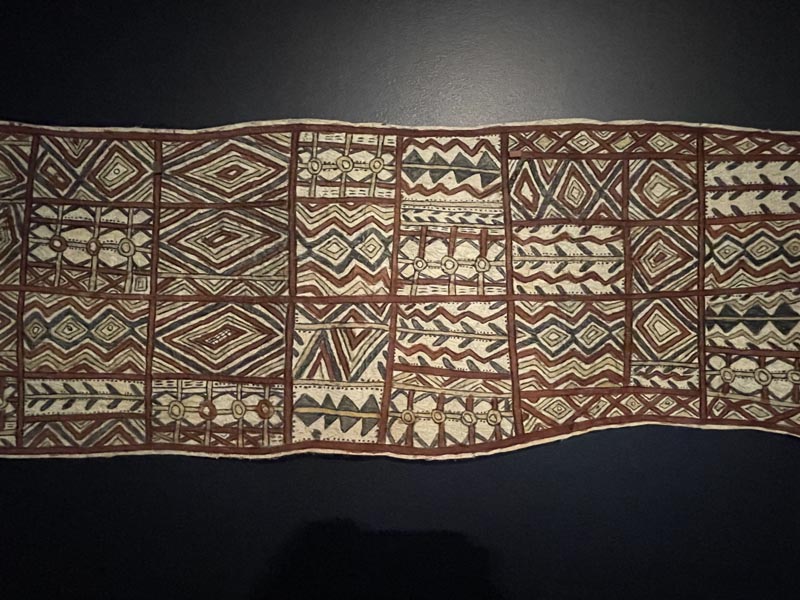
Such exhibitions provide for community engagement and sharing traditional and cultural knowledge of the wider Melanesian “wantoks”, Pasifika peoples or “wan solwara” known to the west and “moana” known to the east and in this context, PNG-Australia relationships for the history, arts, culture, museum spaces.
Both the contemporary and continuity of work in such exhibitions right up to the present, invites us all to learn and understand each other now and moving forward. Through “cultural diplomacy” and dialogue through the exchange of ideas, values, traditions and aspects of culture or identity strengthens relationships and enhances socio-cultural cooperation promoting local, national and international interests.
The best outcomes I can see for the mounting of exhibitions is through an “insider-outsider” relationship incorporating cultural protocols, something that can be developed by museums becoming involved in a dialogue with traditional knowledge owners. Adopting the practice of “talanoa” of the eastern Pacific and “tok stori” of the western Pacific can result, through collaboration, in well curated exhibitions that successfully make use of the two sources of expertise.
Steven Gagau
Researcher, University of Sydney & President Sydney Wantok Association