By Pierre Laffont & Bill Rathmell.
It is easy to fall for the peaceful charm of Rochefort and La Rochelle, two ports on the Atlantic Coast of France only a couple of hours from Paris by the fast train. The 2022 OAS Tour was an opportunity to gain a better understanding of how Oceanic art first made its way into French museums and private collections.
Before 1766, no French ship had ever crossed the Pacific and not much was known in France about this Great Ocean. This was about to change overnight, putting Rochefort and nearby La Rochelle at the forefront of a passion for Oceania. As a result, the museums in this area have the largest collections of early Oceanic objects in France, outside the Musée du Quai Branly – Jacques Chirac in Paris, and this region maintains a closer link with the Pacific than other regions in France.
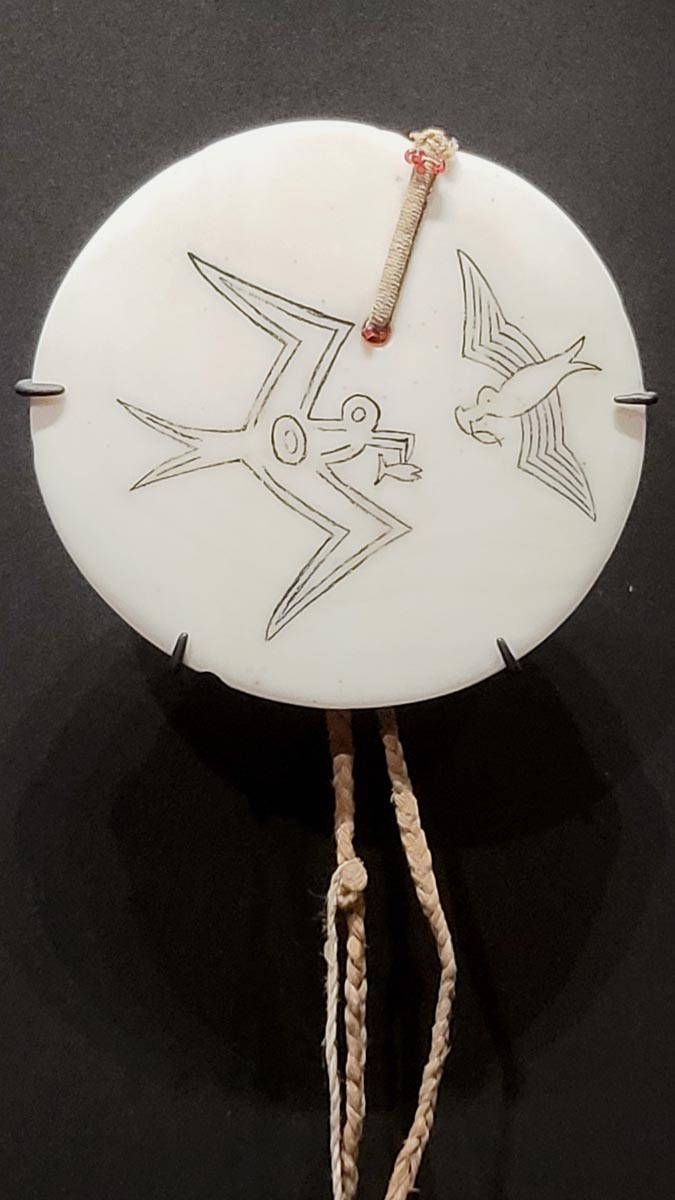
There are three key museums across these close cities, only 35 kilometres apart and less than 30 minutes by local train – the Musée Hèbre and the Muséum d\’Histoire naturelle (“Museum La Rochelle”) in La Rochelle and the Musée de l\’Ancienne École de Médecine Navale in Rochefort. All three have a much larger scope than just Oceanic Art but the museums are headed by scholars well known for their expertise in Pacific related matters, Claude Stefani at Musée Hèbre and Elise Pätole-Edoumba at Museum La Rochelle, which further demonstrates the relative importance of the Pacific.
Founded by Louis XIV in the middle of the 17th century between the much larger French commercial harbours of Nantes and Bordeaux, Rochefort was a military harbour for three centuries, fully dedicated to the military Navy and to the defence of French commercial interests in the oceans. This military presence morphed into exploration voyages, and, in 1766, into the Bougainville voyage. Though Bougainville was the first Frenchman to circumnavigate the earth, aboard Bougainville’s sister ship which left Rochefort at the same time, was Jeanne Baret disguised as the valet of the expedition’s naturalist (who is best known for having named the Brazilian flower Bougainvillea). Thanks to this disguise, which was incidentally revealed during the voyage, Jeanne Baret became the first woman to circumnavigate the earth. Both the naturalist and “his valet” were responsible for collecting. Natural science collections were the top priority in this and all subsequent expeditions with pacific object collections only ancillary. Remarkably, a tapa and an adze from the Bougainville voyage is in the Museum La Rochelle. They are the oldest (1768) Pacific objects in France, with two other Bougainville tapas, also from Polynesia, at Quai Branly and are thought to be the sole remaining objects from the Bougainville expedition. From these modest beginnings, Museum La Rochelle gathered the largest collection of tropical shells and sea mammals in Europe, and one of the top French collections of Oceanic Art with thousands of objects.
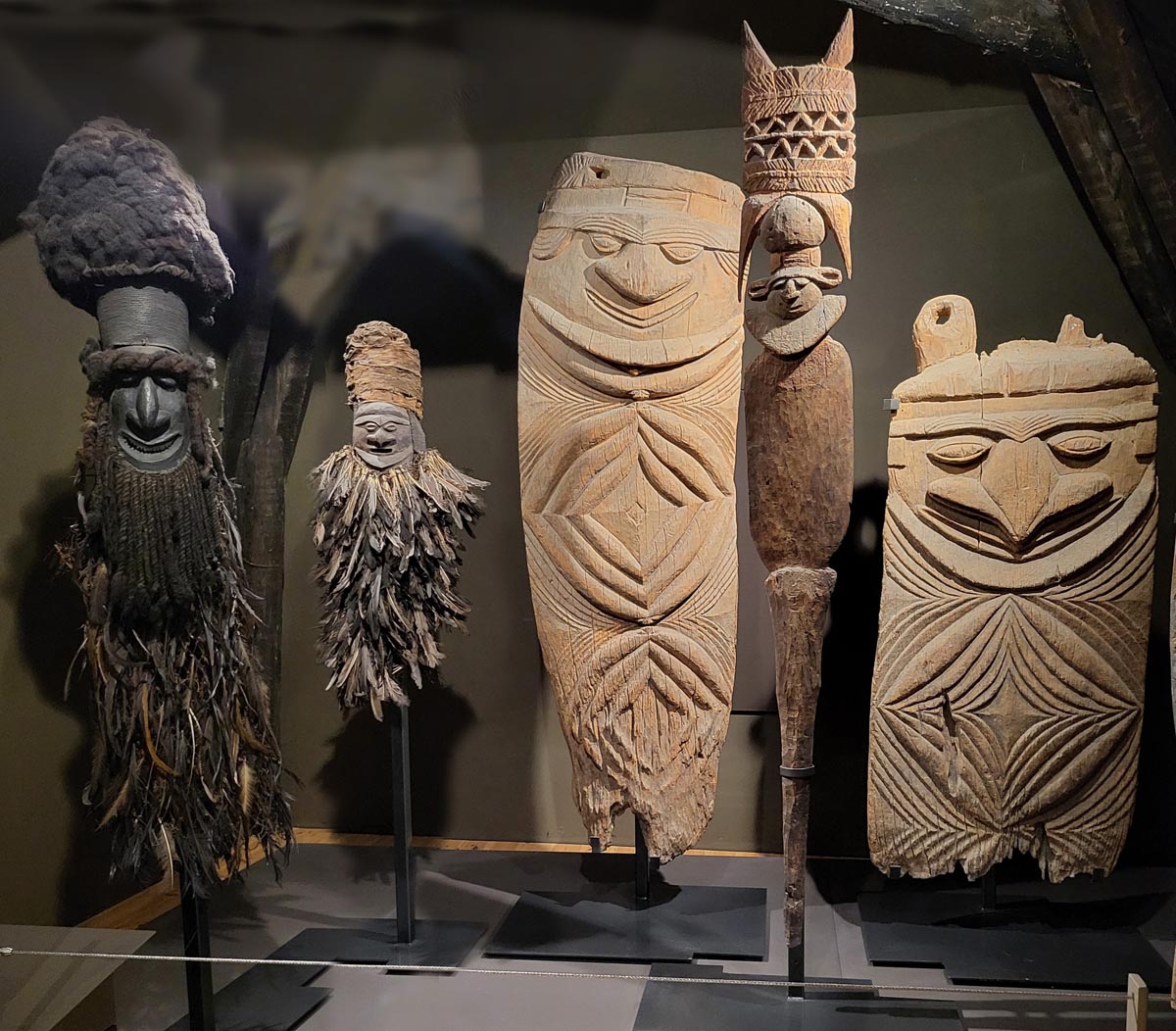
The addition of civilian scientists in subsequent voyages through the 18th century culminated with the unruly 1802 Baudin expedition. Following this, only military men were admitted on board. Collections in the early 19th century became the responsibility of military scientists, in particular surgeons and pharmacists, who had been trained at École de Médecine Navale in Rochefort. This military medical school operated from 1722 until the 1960’s and is now open to the public as a section of France’s National Maritime Museum. Military scientists introduced a more systematic and disciplined approach to collecting and were more thorough with categorization of dates, origin and purpose. Notable amongst École de Médecine Navale alumni were René Primevère Lesson, the Chief Scientist of Duperrey’s round-the-world voyage of la Coquille, his brother Pierre Adolphe Lesson who joined the two Dumont d’Urville Pacific voyages and Jean-René Constant Quoy, Chief Scientist of the Dumont d’Urville voyage of l’Astrolabe of of 1826-1829.
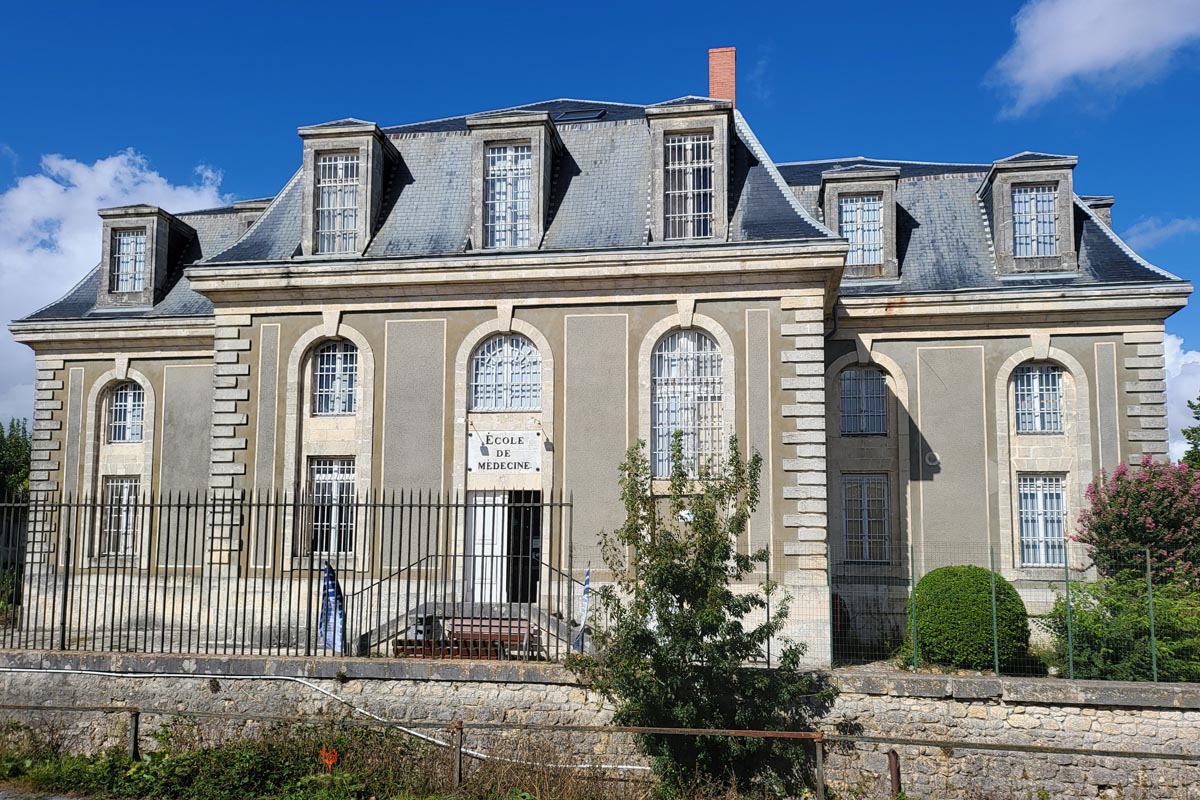
Due to the number of objects collected and the well documented following publications, these early 19th century expeditions were responsible for the diffusion of understanding of Pacific production in France and beyond. Today the École still holds a remarkable library of more than 25,000 books including all the collections of the French voyages, and a museum of objects from these expeditions.
The Lesson brothers, native of Rochefort, left most of their collection to the local Art Museum, now Musée Hèbre. Quoy who also spent a great part of his life in the region left objects with various local institutions which eventually have found their way to Musée Hèbre and Museum La Rochelle. Unfortunately, Dumont d’Urville gifted his collection of more than 220 Pacific objects to Caen where they disappeared in the 1944 bombings.
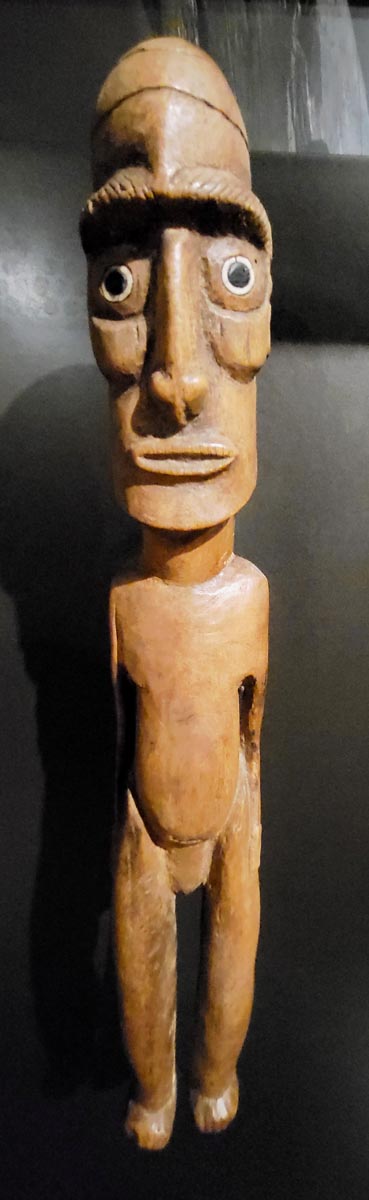
After 1830, the number of French ships in the Pacific increased, culminating with the colonisation of Polynesia (1842) and New Caledonia (1853). The number of Pacific objects dramatically increased in French museums and private collections and were “traded” with other European museums or collectors to “rebalance” the collection. For example, some of the New Ireland objects at the Museum La Rochelle, were “collected” by Count Festetics de Tolna, F. Speiser or A. Bühler, and then exchanged with La Rochelle. However, the focus on Polynesia, New Caledonia and Oceania in general remains to this day in Rochefort and La Rochelle with both museums having large permanent spaces for the historical collections from these areas, but also dedicating resources to temporary exhibitions of contemporary Pacific issues and artists such as Carnets Kanak for Rochefort (reviewed in OAS Journal Spring 2022) and George Nuku’s exhibition in La Rochelle (reviewed in OAS Journal Summer 2021-222).
The OAS Tour 2022 missed some Pacific connections, especially the Rochefort house of eccentric naval officer Pierre Loti (1850-1922), who had a particular fascination for the Pacific as a writer and collector. His influence on French views of the Pacific could be said to be as important as Bougainville’s and Diderot’s “noble savage” or Gaugin’s “last paradise”. His house in Rochefort will reopen to the public next year.
For more information on Jeanne Baret: Clode, D 2020. In Search of the Woman Who Sailed the World. Sydney: Pan Macmillan.


