
Grace Vele, a/Chief Curator Anthropology, PNG National Museum and Art Gallery
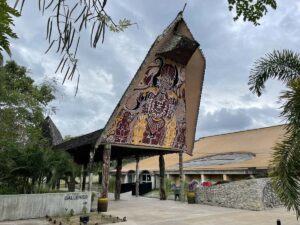
The Papua New Guinea (PNG) National Museum and Art Gallery [NMAG] is a world of its own with multiple surprises on offer every time an object is held in your hands; it tells its own story. I never dreamt that I would work in a country’s national museum.
After working as a Personal Assistant with some private companies following my graduation from school, I joined the PNG NMAG as a Receptionist/Typist on 26 June 1984. Throughout my career I have worked with undivided commitment and sheer determination. I was promoted to serve 35 professional scientists for the Science, Research and Consultancy Division in my capacity as the Divisional Secretary; typing up manuscripts for publications, field reports, preliminary reports, seminar and workshop documents, entering ethnographic data and other duties required of me by the scientific staff, each having their own needs and requirements. During my work life in the Museum I have acquired and knitted the knowledge and used my initiative to work my way up the ranks to my current role. I was appointed the Acting Chief Curator of the Anthropology Department in 2016.
Refurbishment of the Galleries
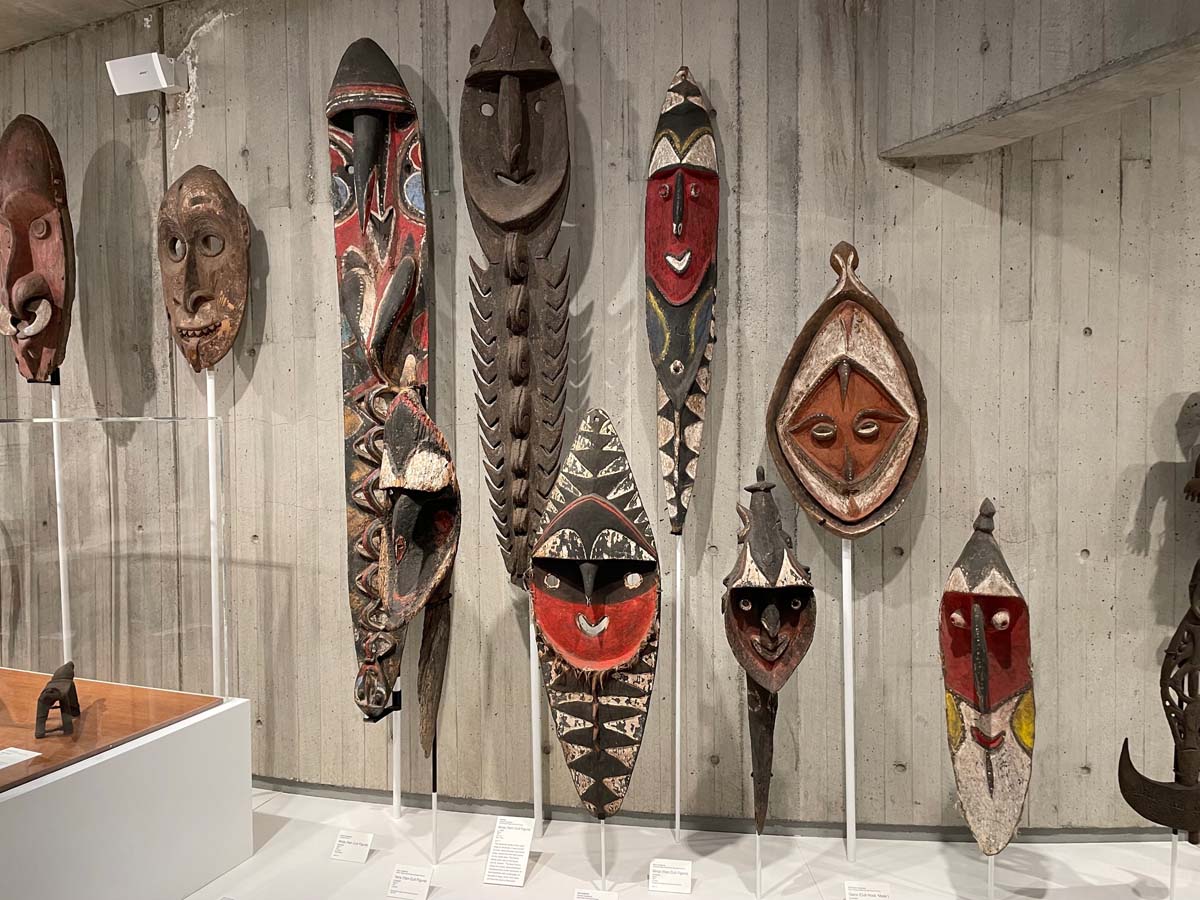
A major project has been the refurbishment of the galleries at the PNG NMAG with the refurbishment supported and funded by the Australian Government.
At a key point in the refurbishment, the National Gallery of Australia (NGA) in Canberra staged the important exhibition Myth and Magic Art of the Sepik River, Papua New Guinea from 7 August to 1 November 2015. The PNG NMAG developed a collaborative relationship with the NGA who borrowed five key artworks from the PNG NMAG’s Masterpiece Gallery (now renamed Tumbuna Gallery) for that exhibition.
The exhibition was a great success; afterwards the works returned to the PNG NMAG in late 2015 and the refurbishment was completed in 2017 in preparation for PNG hosting the Asia-Pacific Economic Cooperation (APEC) Leaders’ summit in 2018.
While these masterpieces were away on exhibition in Canberra a great deal had been happening behind the scenes at the Museum in Port Moresby; storerooms were rearranged, a major inventory of the National Collection had taken place, a significant database project was rolled out, and we had started including images of the collections in the Database.
From Masterpieces to Tumbuna Gallery
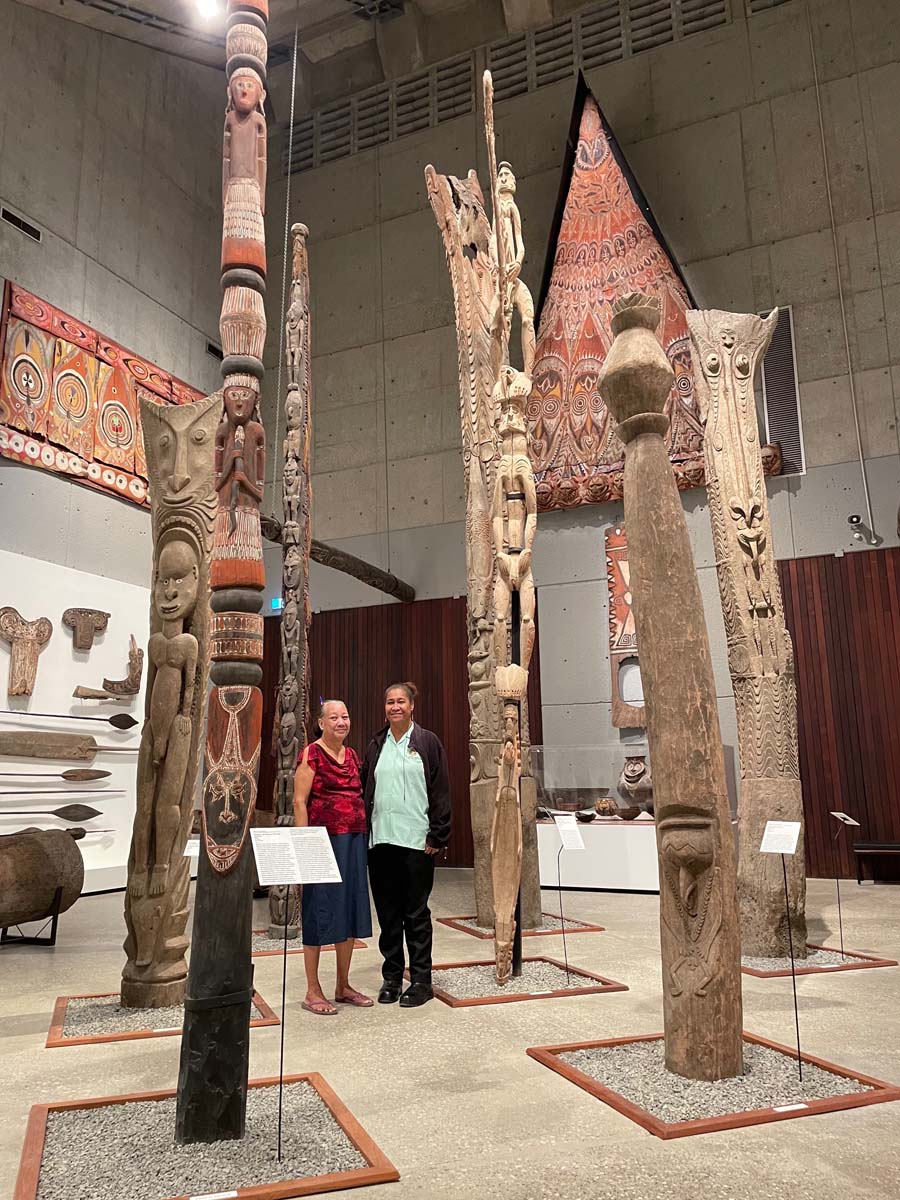
The word tumbuna simply means ancestor and because it is used in many languages that are spoken in PNG, we thought it would best suit the display in the Masterpieces Gallery. In the Motuan language people say Tubuna, in Tok Pidgin it is Tumbuna, it is similar in other local dialects people say tupuna, upuna, and so on; the decision was made to rename the gallery to Tumbuna Gallery.
Repatriation of Collections
Another major project has been the acceptance by the PNG NMAG of a number of objects deaccessioned by the NGA from their collection and returned to their country of origin; we are happy to give them a home back here at the Museum. The collections were deaccessioned in 2020 and donated to the PNG NMAG.
Favourite object
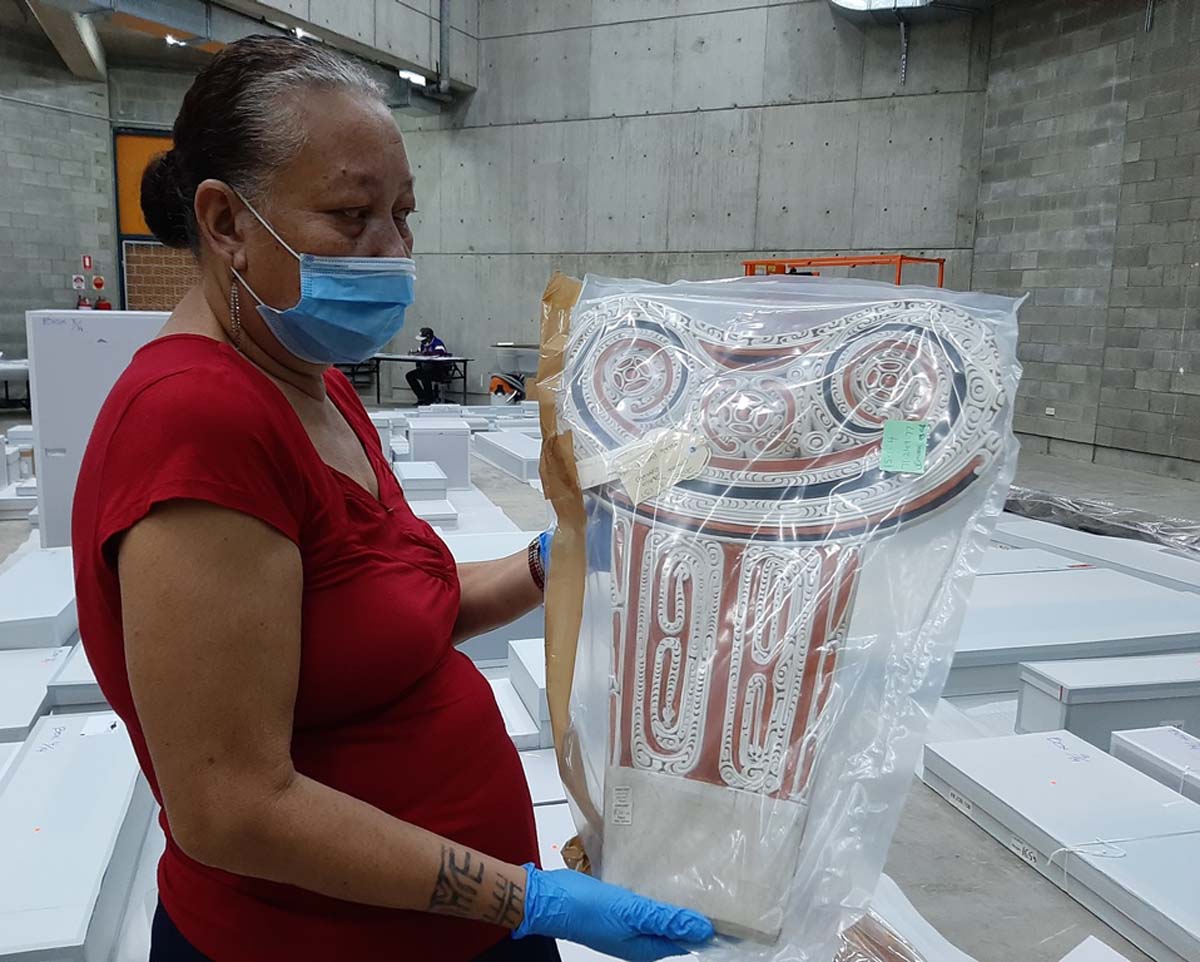
My favourite piece from these collections is a small part for a canoe splashboard from the Massim area in the Milne Bay Province. The artistic style of the Massim area is noticeably different from any other style in Papua New Guinea. This small canoe splashboard (local name: lagim) originates from the Massim area in the south-eastern point of the island of PNG, which includes the Trobriand islands, the Louisiade Archipelago and other islands. The splashboard is quite unique and the shape very pleasingly asymmetrical and the faint remains of red, black and white pigments are also not what one would expect to see after having been away from its place of origin for almost 50 years.
This has a very detailed pattern of linear bands, filled with detailed interlacing curves, volutes and spirals in relief. Splashboards such as this were positioned at a right angle behind the bow of the canoe with the decorated facing side turned towards the front and the lower prongs fixed to the canoe. The splashboards were intended not only to protect the crew from the splash of the waves, but also as magic, spiritual protection from evil water spirits and other influences.
The canoe splashboard is my favourite because I come from mixed parentage from the Milne Bay Province, Central Province and Gloucester in England.