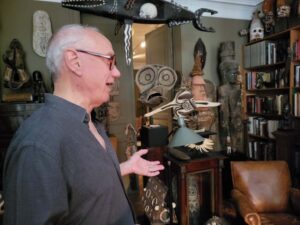
Interviewed by Bill Rathmell in Brussels, May 2022
BR: In 2003 you were interviewed by Tribalmania in Santa Fe (https://www.tribalmania.com/interviewconru.html) where you described your early career playing professionally in symphony orchestras and how you moved to London, did an MBA in Arts Policy Administration for Museums and started a department of African Art, Tribal Art and Antiquities for Bonham’s.
What has happened since then?
Kevin Conru: In 2003 I was based in London spending some time in Brussels and I was buying and selling through the Brussels, New York, San Francisco and Paris fairs. I never had a bricks-and-mortar gallery. As time has gone by, I have been doing less and less dealing as events such as fairs changed. Post-Covid there are really only two fairs (Paris and Brussels) continuing “live”. I started doing more books and curatorial exhibitions from a Tervuren Museum exhibition on the art of New Guinea, to a Sepik exhibition and a Bismarck Archipelago art show in Rotterdam. It\’s more interesting and so when I moved to Brussels as a permanent resident about 6 or 7 years ago my registration was as a writer and musician (I played the double bass with the Monnaie opera as well) so I wasn\’t a dealer anymore. I actually prefer the balance of life now.
BR: Apart from the pandemic, have you seen changes in the Oceanic art market?
Kevin Conru: The market has shifted dramatically; when I started in the late eighties there was already a shift away from London to Paris, Brussels and New York, as these places had wider and larger audiences than the UK. That trend continued and was one reason for moving to Brussels full-time. Paris is very strong still: it really took off when Sotheby’s and Christie’s got permission to sell in Paris. There are magnificent dealers there and many collectors as well – a whole range from the very top collectors to smaller collectors with lesser budgets. Brussels is close – we have the tradition of African art in Brussels through links with the former Belgian Congo. But there’s a younger generation, with a wider interest creating a bustle here in Brussels, as in Paris. The two cities – only an hour or so between them by train – are a crossroads too for Germany and Holland and all other parts of Europe. The atmosphere in Brussels is particularly convivial – the weekly Sablon antiques market continues – albeit getting smaller – and they have the annual BRUNEAF in July.
BR: Have your art interests changed over time?
Kevin Conru: Initially, I was very interested in African art but then got more and more interested in the Pacific (which was prevalent in London – prominent in museums and available at an affordable price) but I\’m still as fascinated and enthusiastic as ever about all the cultures. I’ve learned why some pieces are important, how rare they might be or the cultural or spiritual aspects of the sculpture – which makes pieces exciting. Also, there’s an abundance and richness to the Oceanic cultures, for example in the Sepik alone, the subject of my most recent exhibition and publication.
My current project is a catalogue text for the collection (African and Oceanic) of Sir Paul Ruddock, a businessman and philanthropist in London, which will be published by Thames and Hudson in a year or so. He was an omnivorous collector – he actually started out with mediaeval material from the 12th- 15th century and then became fascinated with African and Pacific art – so he built up a very nice collection. Then I start on a catalogue of Ernst Heinrich – I have his photographs and I have his “date book”, where people wrote comments and where he kept sketches of his pieces. He was one of the great collectors of the mid-20th century – when you could really find great New Ireland or PNG pieces for little money, as at that stage they just weren’t valued.
BR: What about the trends now? How do you see the world of Oceanic Art going into the future – ever increasing prices, ageing aficionados, cultural heritage laws, rising tides of cultural property repatriation?
Kevin Conru: I have been going to the Antique Indian and Ethnographic Art Show at Santa Fe virtually every August for 34 years now and I\’ve seen people that I\’ve known since I first went there and they are exactly 34 years older! There are younger people coming along, though not to the extent one would like. But another consideration in this field is that 34 years ago there were different types of pieces in the marketplace; one could still find Oceanic pieces readily in the English countryside for example. But every year there is less material around and what surfaces is very expensive – so it is tough for younger people to come into collecting.
In Artkhade I found a good Rarotonga staff God figure, about thirty years ago, was $200,000 – even back then, who had $200,000? But now it\’s two, five or even ten million dollars. You could conceive of getting $200,000 together then but getting $10 million nowadays is impossible – more than a house! It\’s very hard now to find what we consider a show-worthy piece for very little money. This isn’t necessarily a bad thing as the value of this art is as great as that of any other type of art.
On the other hand, Beth Pryce’s auction showed that a well-chosen collection of smaller pieces can be bought with reasonable budgets. There are always going to be the big auctions – with individual items $1M plus – that attract museums and very wealthy individuals and there’s still a dynamic market in the upper end too.
BR: What about the activity in the contemporary Oceanic art market? This may have more appeal to younger people who are priced out of the collecting market anyway, or who perhaps reject it for cultural or anti-colonial reasons. You\’ve just been to the Venice Biennale – I’d be interested in your reaction to what was going on there.
Kevin Conru: I\’m not very knowledgeable in contemporary art – I sometimes observe it and have feelings and responses to the art but I\’m not curatorially adept or competent to pass judgement. I do see that many young people are flocking to contemporary indigenous art, not only from the African diaspora but from Africa itself, so that\’s also the case with Oceania.
I was interested in seeing a real focus on indigenous artists and on gender issues in Venice this year. The pavilions of some northern countries had a collective assembly exhibition of the art of the indigenous people of the North Arctic which was fantastic, focused on the decline of the traditional herding activities. Yuki Kihara’s New Zealand exhibition was dealing with third gender issues in a Samoan community – obviously something documented and with a tradition of artistic representation. The American pavilion with Simone Leigh and the British pavilion with Sonia Boyce (who won the Golden Lion) also worked on issues concerning expatriate indigenous diasporas in their countries. I\’m not judging the art as A R T, and it is difficult to do so within the Western aesthetic traditions, but obviously as a statement of culture these items and shows are fascinating.
We have to learn to deal with indigenous peoples representing their principal issues with such a strong focus – with artists other than white males over fifty. The latter artists are very well represented outside the Biennale in Venice and elsewhere – so the experience was very good and I was glad to see a focus on indigenous artists. The spiritual traditions of indigenous peoples, with which they were in harmony before the influence of Christianity, colonisation and expatriation, are no longer their artists’ only issues. In the Solomon Islands there are people making contemporary art and there are people still having pieces in their gardens based on their traditional beliefs – so within the communities themselves the various traditions are living side-by-side.
Repatriation is another discussion which is important – how things were acquired. For example, in the dispersal of the Benin or Cambodian artefacts – if they were originally acquired in an inappropriate manner, we may need to discuss the possible return (but those are fairly extreme examples). With Oceania, we know that from the time of Cook the interaction there was mostly based on trade and mutual respect, gift-giving to explorers and eventually by indigenous converts to missionaries and sale to colonial officials.
There is a wide range of opinions – my own feeling is that if something was taken inappropriately – by theft or at gun-point – then repatriation is appropriate if the creator community desires it. But if anything was acquired in any sort of trade (such as for knives or metal objects, or currency) – even if the acquisitions are now considered treasures or masterpieces of art – we have to remember that at the time that these things were acquired, they were just seen as examples of another culture. The idea that all of this artistic merit does have financial value in Western terms actually came much, much later. When I look the at the prices for which Oldman and Webster were selling things – everything was about the same – £2 or £3 and some shillings – whether it was a mask now worth tens of millions of dollars, or a pair of Yoruba Ibeji figures which still have a relatively low value.
The monetization of Oceanic art came well after the earliest collections. It is something that accrued over the 20th and early 21st centuries along with the monetization of say Modigliani or Van Gogh – at the time of its acquisition most of the art from Africa, Oceania and the Americas was of modest value in western financial terms, yet now it’s worth millions. I would argue that the makers in these cultures understood how beautiful and how valuable these things were in the aesthetic sense – as much as we do in the West. If beautiful feather cloaks were given to Cook by Hawaiian ancestors as presents – they were valuable objects being given as gifts to an important person. At the time of the earliest exchanges in Polynesia and Melanesia the local people received (to them) unbelievable metal tools and iron nails – amazingly valuable for indigenous people. We also look at things like wild or red feathers that were so desirable. In exchanges like those the sailors were actually brokers for intercultural exchanges of goods.
One thing I always find fascinating too, is to look at the role of Christianity in the dispersal of art worldwide. Undoubtedly a lot of bad things were done in the colonial spread of western culture to the Pacific as well as to Africa. On the other hand, some of the most fervent and devout Christian communities remaining are in those places. So, the missionaries said, “If you want to become Christian, you can’t have ‘idols’ as well as worshipping the Christian God”. Throughout history colonisers have brought about change in religious beliefs and cultural attitudes (think about pre-Christian conquerors in the middle east or Muslims in Africa). The fact that western culture has appropriated and monetised the art adds an extra layer of ethical complexity to the debate.
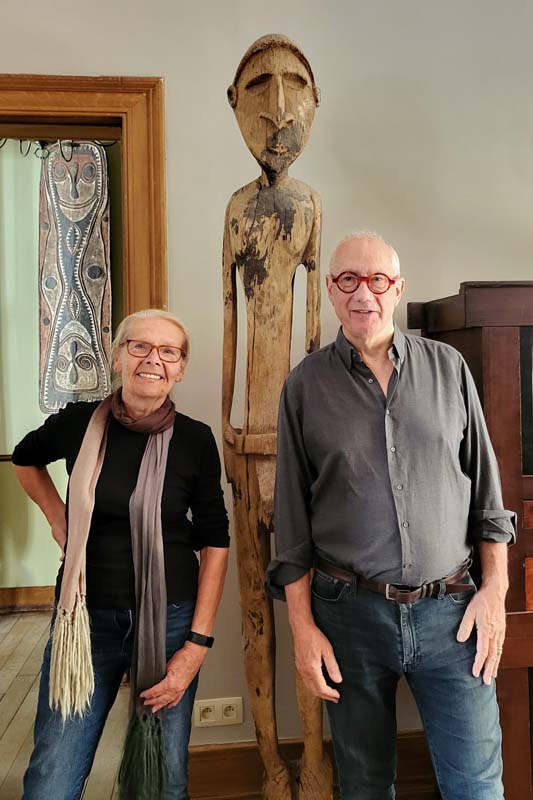
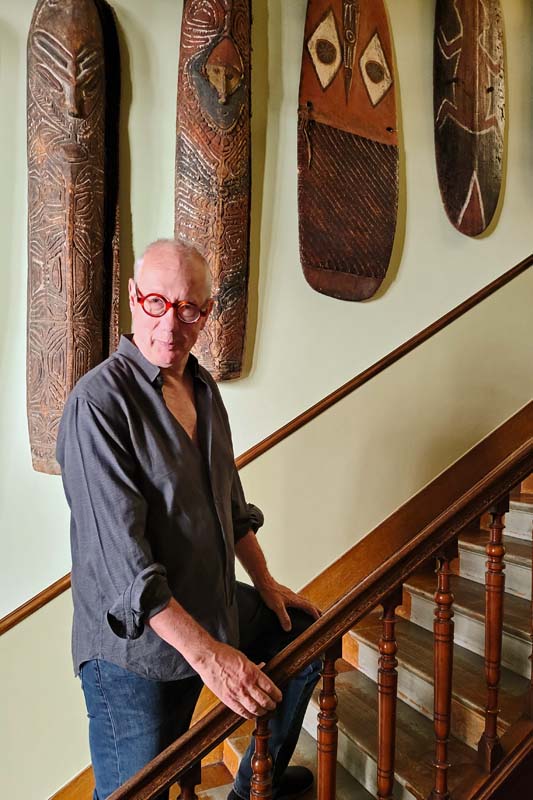
BR: You and your collection have moved from your gallery in the Grand Sablon in recent years into a nearby beautiful house where you now host the well-known Vasco & Co art bookstore. Your home is very much a crossroads where connoisseurs, dealers, artists, and academics meet. At the end of your 2003 interview you said, “The most exciting thing I found was the thing I bought yesterday – when that stops, I will stop“. What is your favourite piece?
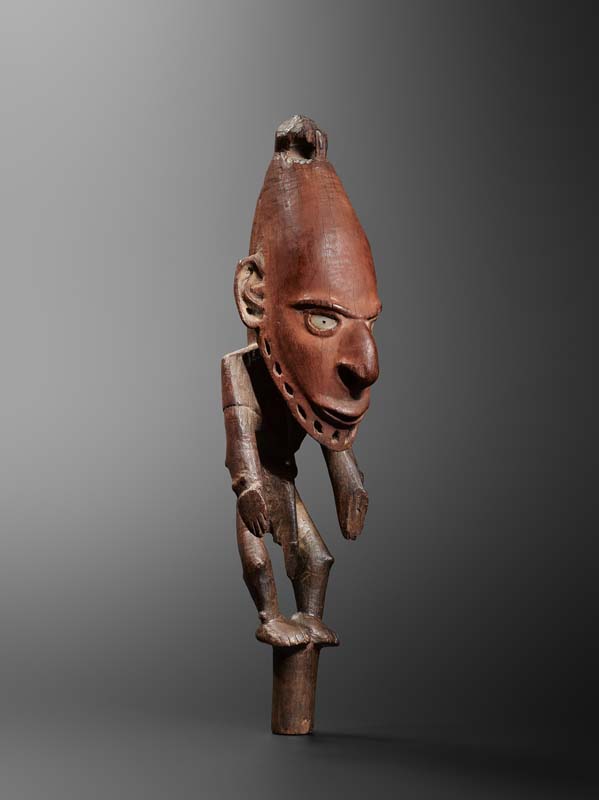
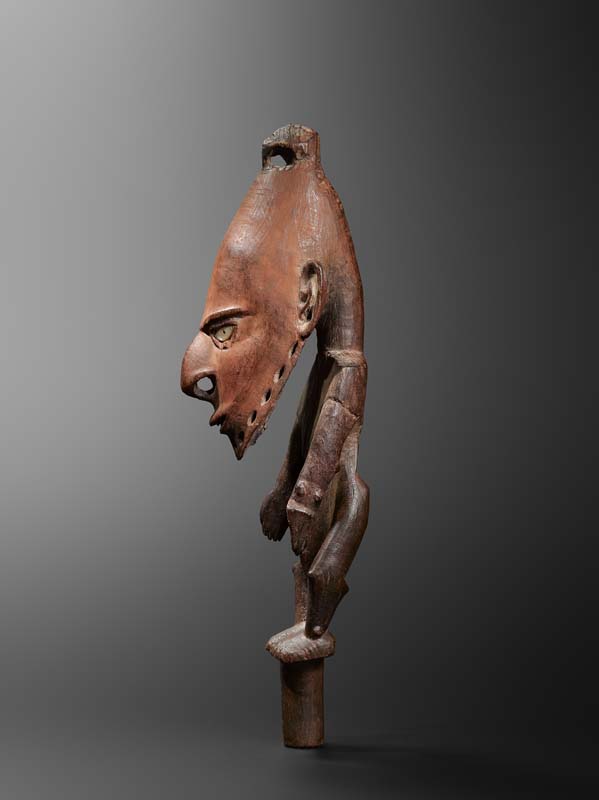
Kevin Conru: Purely on aesthetic grounds, I’d go for a blue-chip piece of mine which is a flute stopper (Wusear) from the East Sepik (Yuat River) – this is a very beautiful, wonderful piece and my favourite. It is perfection whichever way you turn it – in its expression, elegance, it has the same power and animation. For a sculptor to be able to capture that in a block of wood using stone tools – it\’s alive! It’s like he could get off this pedestal and run across the room, and his spirit could float about. This one was collected in the early 20th century, surely made in the 19th; no plumage, though I usually find that most of the plumage on such pieces was added later. Personally, I feel that I am really privileged to have custody of such a spiritual piece as this for the brief moment that I’m on earth. I feel I’m in really close contact with these pieces – the spirituality and humanity are there. When you see the modern versions and interpretations of such an item – there is no comparison in my view to the originals such as this. I can understand why one wants to reinterpret a wonderful piece of art but when you know the original you are forced to ask, “why are these contemporary artists doing this?”. Sure, I’m an over-fifty white male from a Christian background, but that’s just how I feel about this piece – really strongly connected. My best pieces are like family to me. And that spiritual connection can’t be “reinterpreted”.

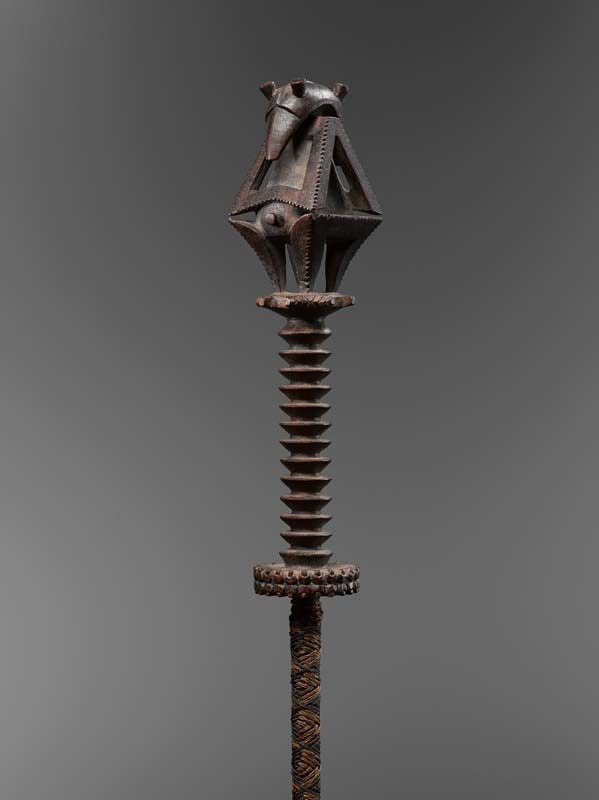
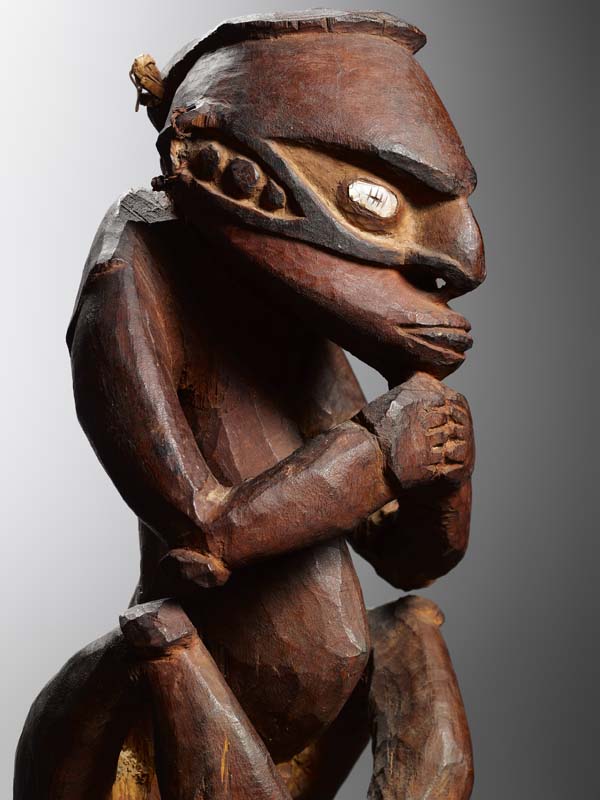
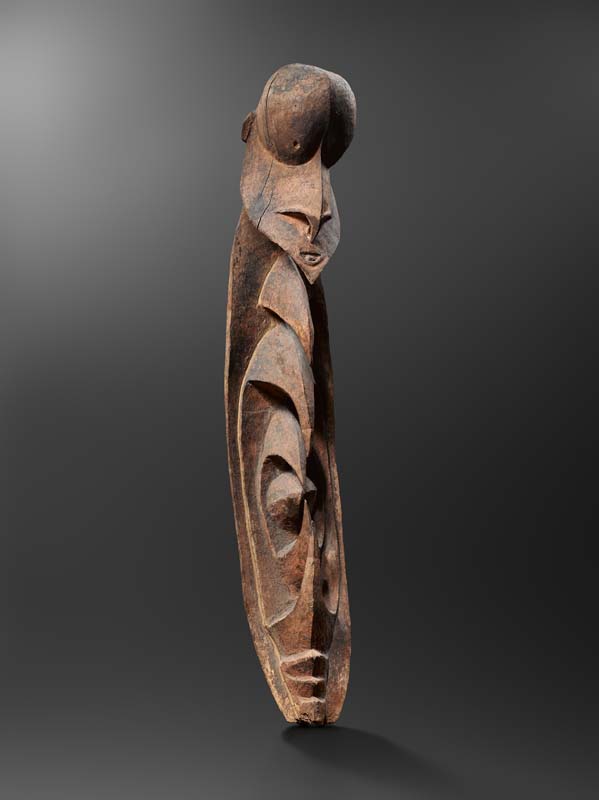
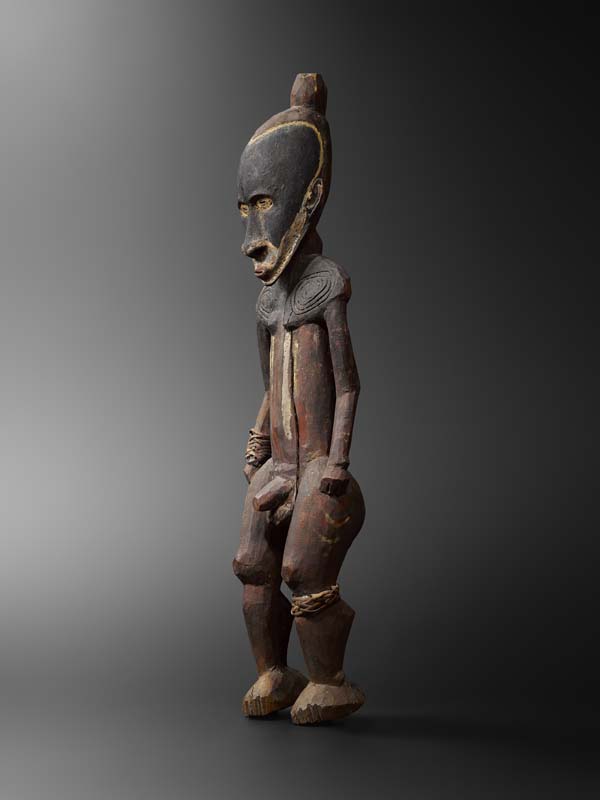
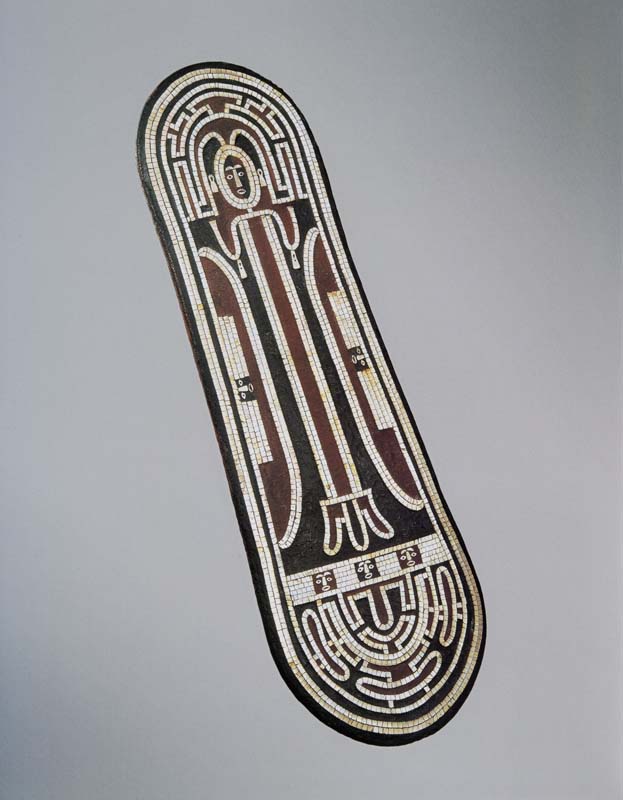
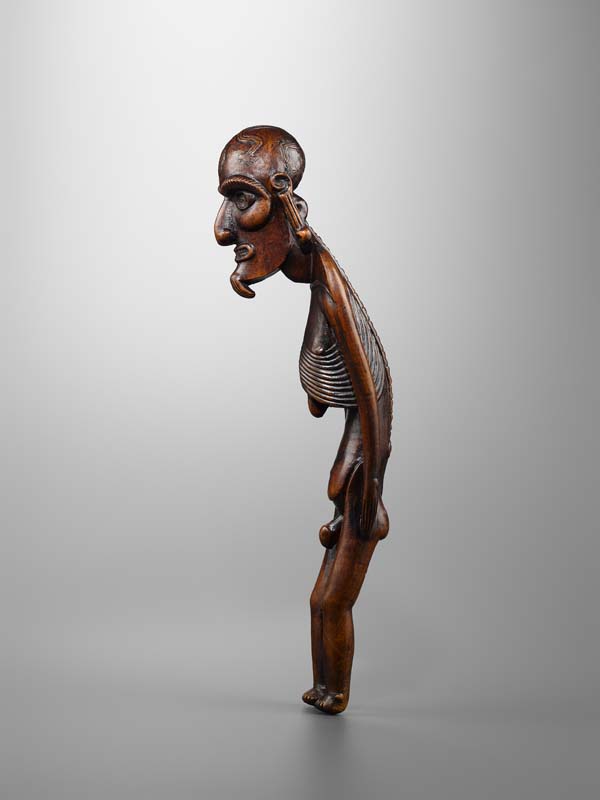
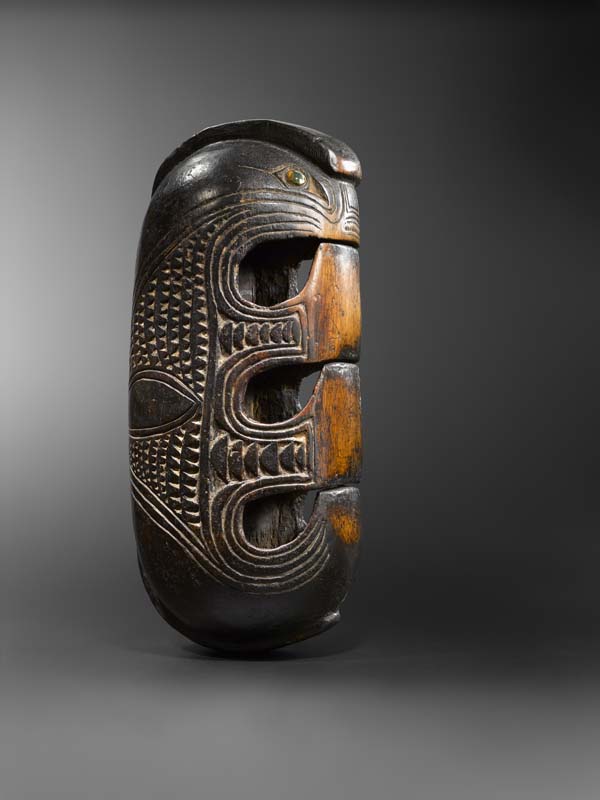
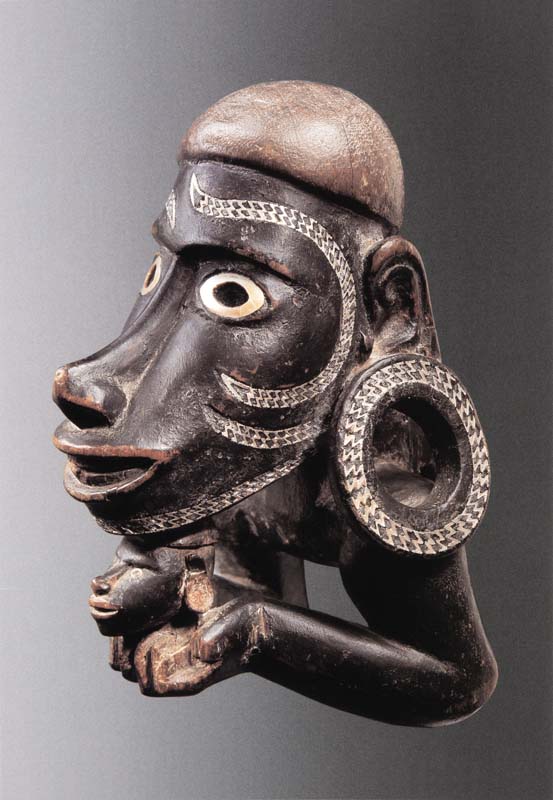
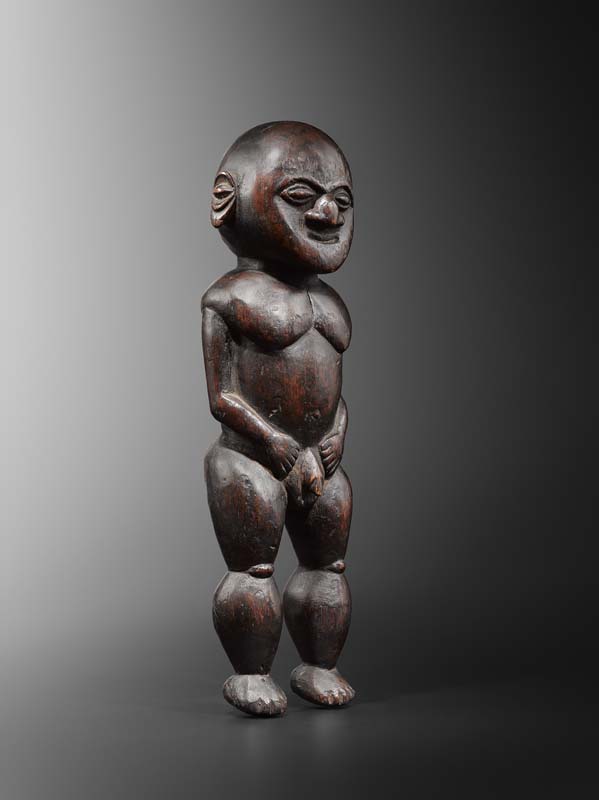
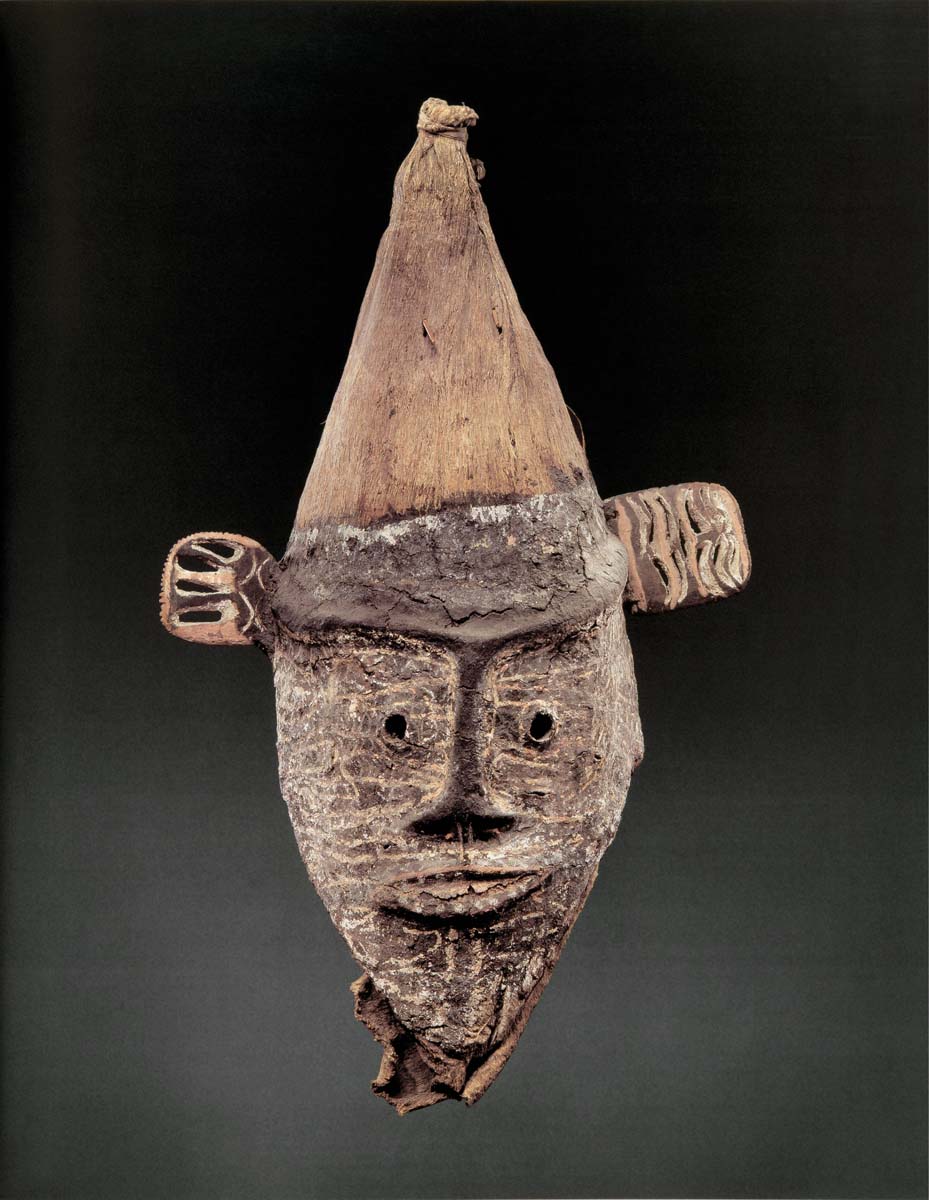
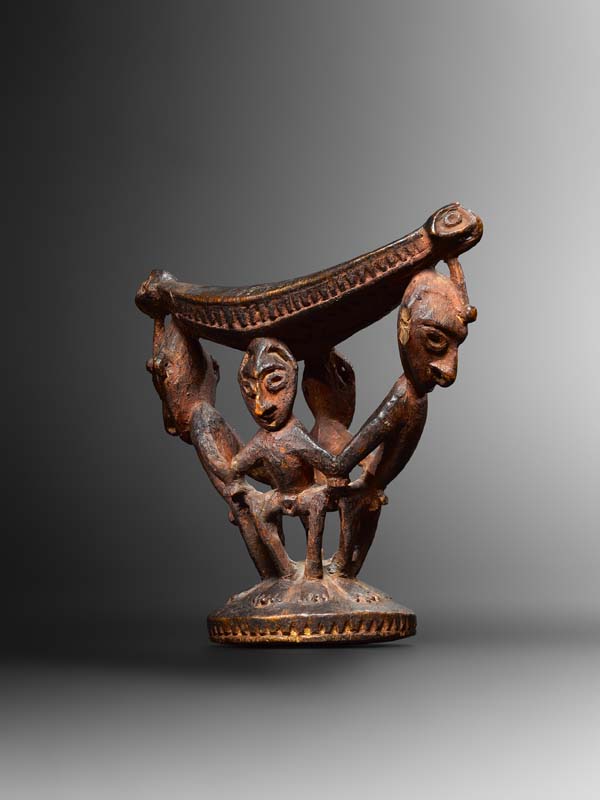
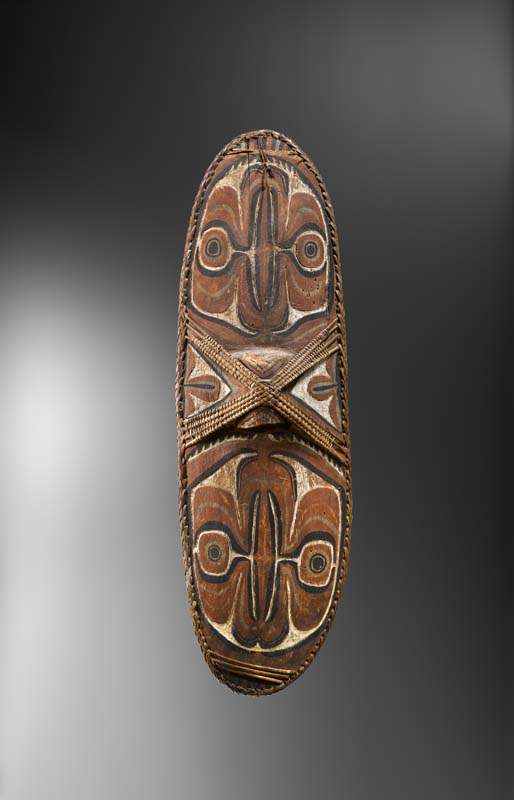
In my cataloguing and writing work, I have often had the photographs taken by Hughes Dubois. He is supremely skilled in capturing the spiritual essence of Oceanic sculptures. Some of my other favourite pieces have been photographed by him, and I have arranged for you to publish a selection of them in the Journal.
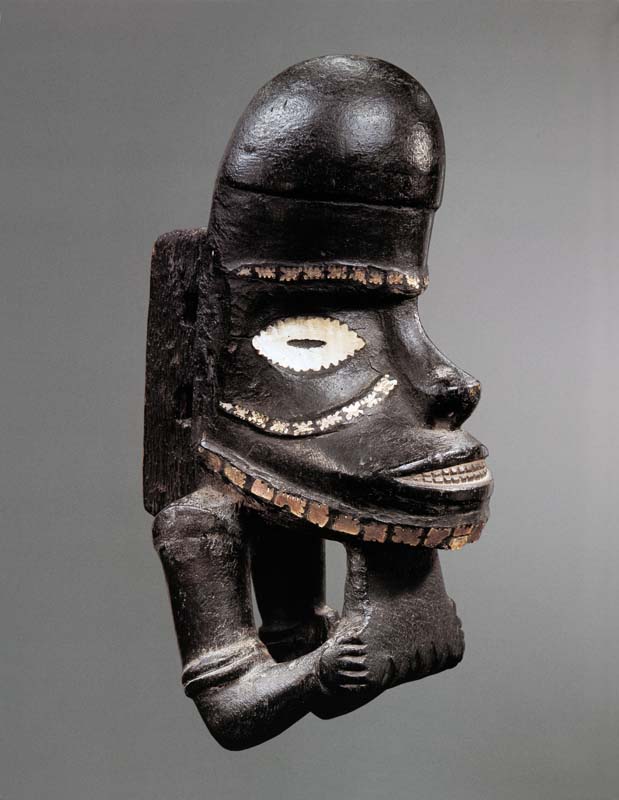
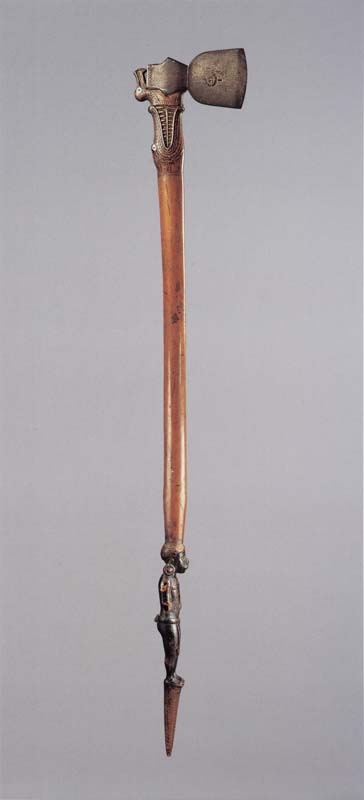
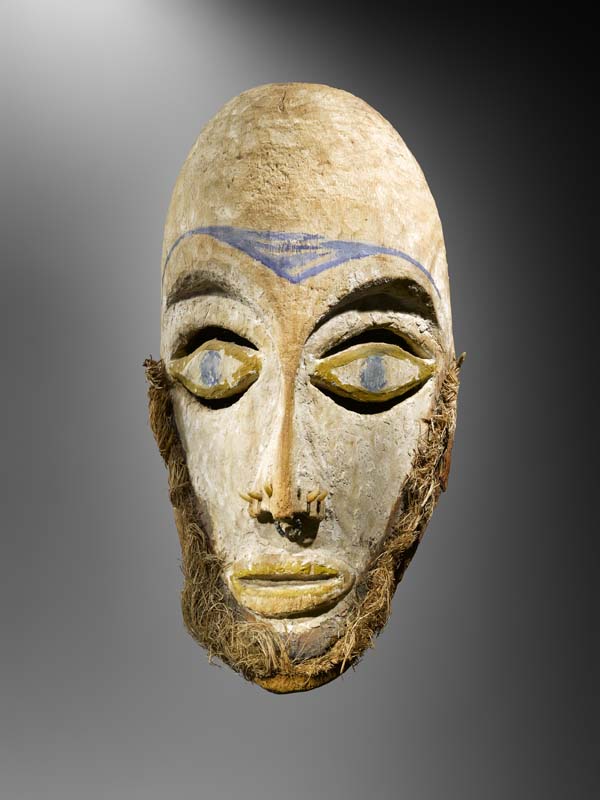
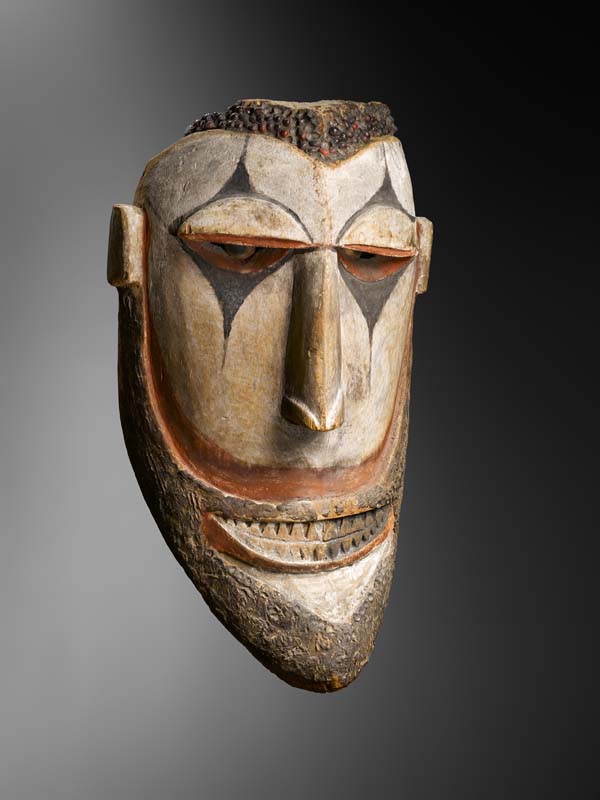
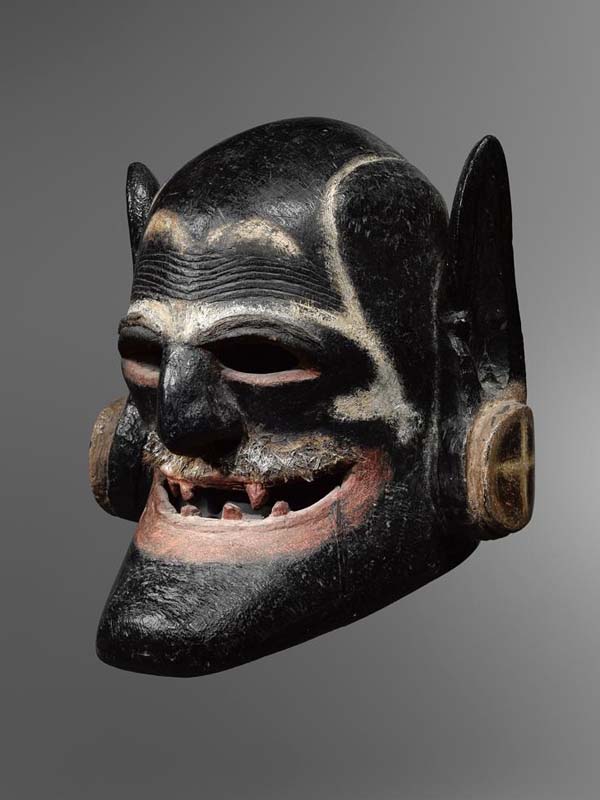
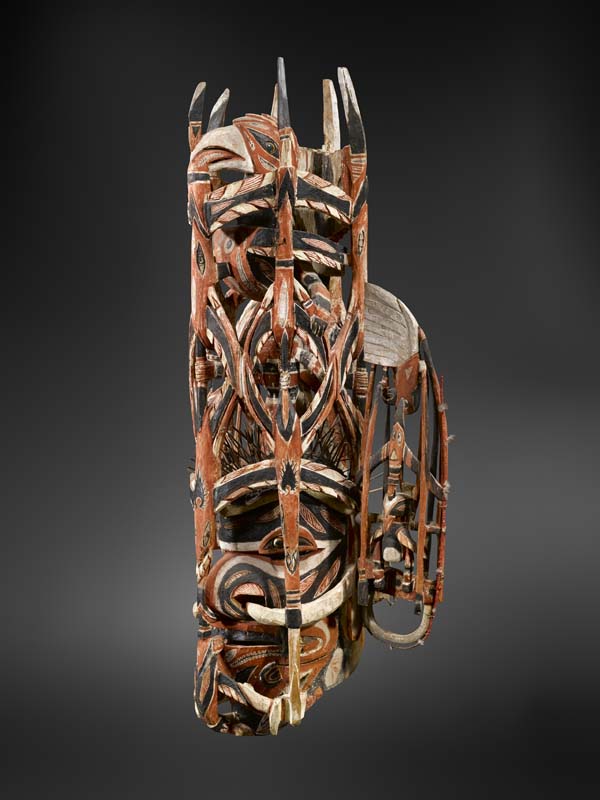
in 1980. 44 in 111cm.
Malmo, Sweden.