Cairns Art Gallery, 7 July –22 October 2023
Review by Margaret Cassidy
One of the joys of visiting Far North Queensland is to be delighted by the works of a variety of local contemporary artists on show at the Cairns Art Gallery. My recent visit did not disappoint as alongside the works of a number of regional Aboriginal artists was Exodus, an exhibition of recent works by Joel Sam.
Born in 1977 on Thursday Island in Zenadth Kes or Torres Strait, Sam is a Saibai artist of the Sui Baidam clan who currently lives and works in Cairns. Exodus is a very personal story for Sam. The exhibition is a personal account of the mass movement of around 300 people in the 1940s from Sam’s home island of Saibai – lying just 5km south of Papua New Guinea in the Torres Strait – to Cape York Peninsula.
A large low-lying island, Saibai was already facing increasing hardship in the 1940s due to monsoonal flooding, a scarcity of good drinking water and firewood, and limited accommodation. While on active duty during WWII, a group of young Saibai soldiers identified the tip of Cape York as a place for future settlement and in 1946 relocation commenced, first to Mutee Heads, then to Bamaga and later to Seisia. Despite their relocation their connections to Saibai cultural ways have never been lost.
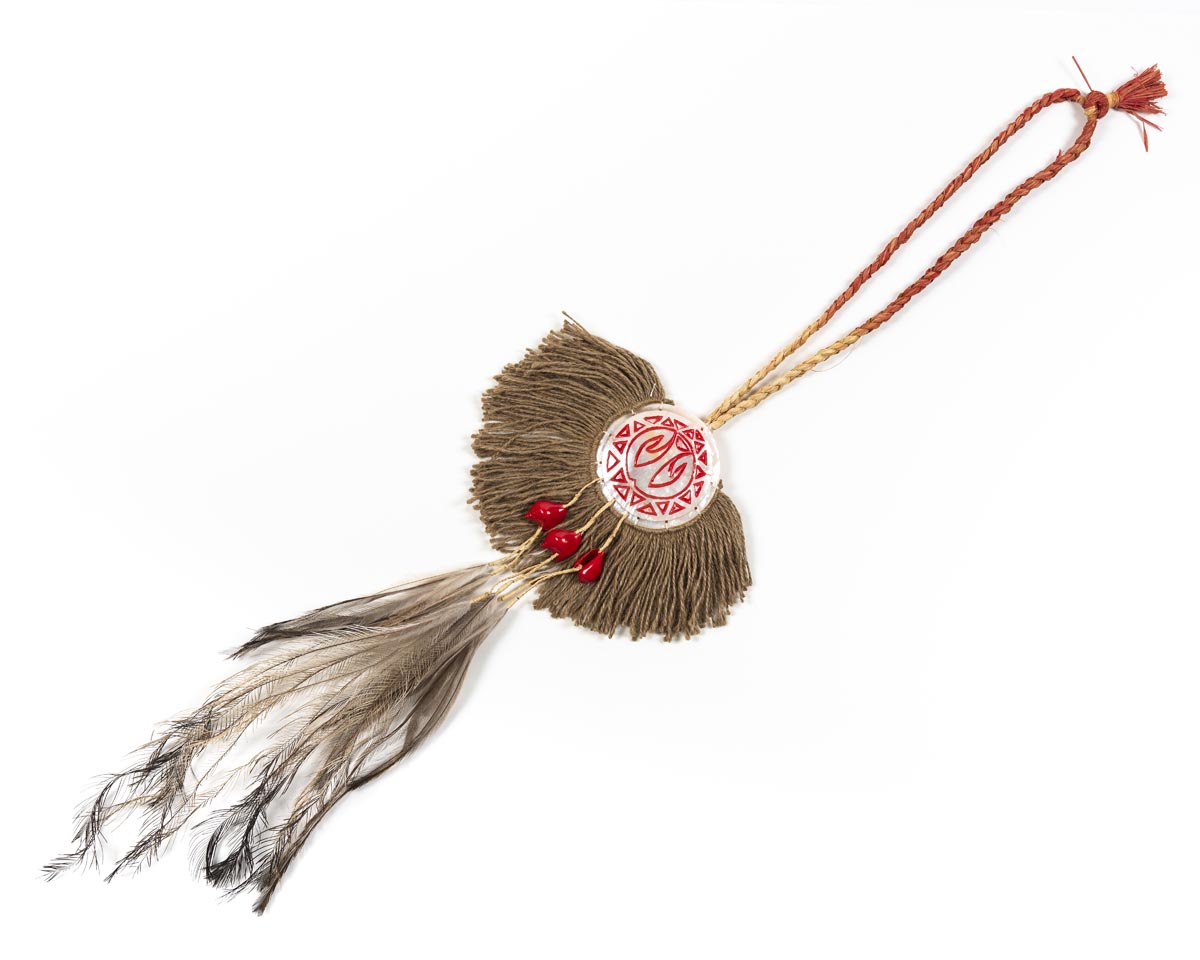
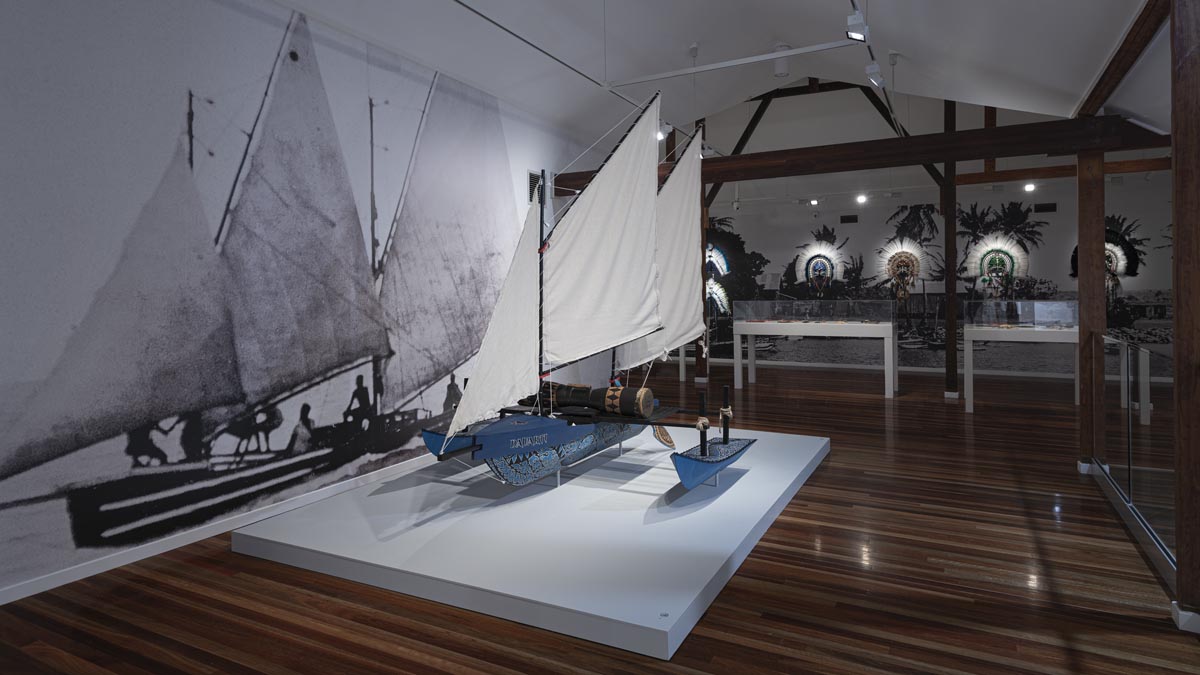
A Cairns RSL Club Artist Fellowship enabled Joel Sam to develop new linocuts, etchings, dhibal (feathered headdresses), dibi dibi (pearl shell pendants), and an outrigger canoe which represent the songs, dance and ceremonies that the families took to their new mudth, their new home on mainland Australia.
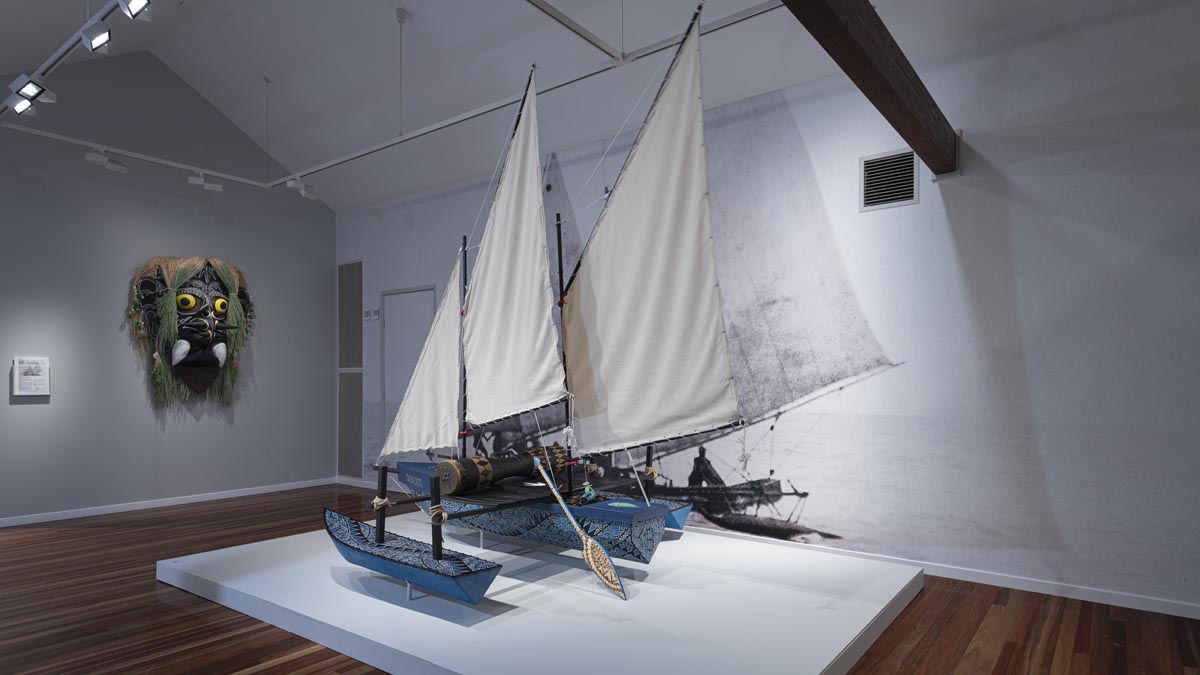
Housed in the upper floor of the Cairns Art Gallery, this exhibition is a vibrant mix of traditional and contemporary media. Attention is focused at the entry to the exhibition on the enormous colourful Wamaladi Mawa, an Umai and Sui Baidham clan mask made of acrylic painted wood with raffia, shells and rope.
Dauariti is the outrigger canoe made of wood with intricate traditional markings to represent the luggers used to undertake the initial journey to Mutee Heads from Saibai Island taking the first group of pioneering families. They took produce such as taro, cassava, sweet potatoes and yam to their newfound home gardens. They also brought their culture and during their journey they sang and danced.
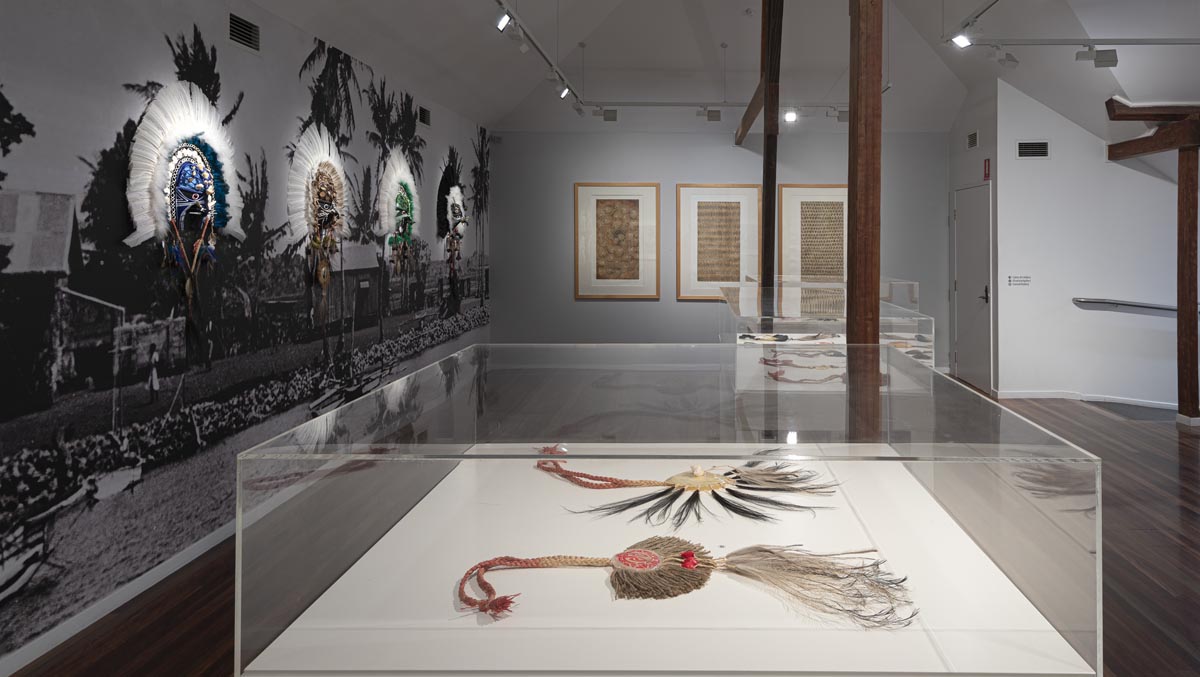
Joel Sam has designed and produced four feathered Torres Strait dhoeris (headdresses) each including a mask. Each dhoeri and mask is painted according to the feather’s colour and is decorated with shells, seeds and fibres to symbolise charms.
The dibi dibi or pearl shell pendants were traditionally worn during battle against intruders and used as a power source. In more recent times, the dibi dibi is worn during cultural ceremonies and as a form of contemporary jewellery. They are exquisite.
Artists from the Torres Strait Islands have experimented with different forms of printmaking, most notably linocuts and vinylcuts, since the mid 1980s leading to the development of a unique style that is now synonymous with the region. Sam’s monotone vinylcuts include the story of the Exodus as well as the gaigai fish, the dhangal (dugong) and the myth of Kongasau, a mari (ghost).
However, my favourites were the magnificent and large but delicately executed etchings of yam leaves, snake skin and snake scales inspired by Sam’s Torres Strait Islander culture and way of life. These three works are sublime and round off an exhibition of highly skilled and diverse artworks.