
Personal reflections from Crispin Howarth
Eric and I first met when he visited Melbourne around 2001 or 2002. We met on Chapel Street and over lunch we spoke of nothing else than art, history and the people of Papua New Guinea (PNG). Time passed quickly; it was great. Our friendship started there. Eric could seem quiet, reserved, but once you got to know him, his sense of humour was never far from the surface. Shortly afterwards, Eric and Evarne visited our home and we went to dinner; I remember Evarne giving advice on how to pack art if you buy it in PNG by wrapping things in bilum bags.

Eric’s interest for New Guineans and their arts was absolute – born through his exposure to PNG art while in Sydney. He collected a number of pieces in the early \’70s and stored them whilst in PNG. Some burnt in a fire, he kept the charred remains of a treasured Lumi shield all his life. The couple took their children to Papua New Guinea mid-1974, pre-independence, and lived there until 1982. Evarne worked as PNG handicraft & Cultural Officer, Eric as building and construction manager at Unitech: building the dual-purpose lecture theatre known as Duncanson Hall in 1976. Eric engaged thirty-five craftsmen from all around PNG, including Iatmul carver Sebastian Timpun, to create the 32 highly carved columns for the Duncanson Hall colonnade at Lae Unitech.
Eric and Evarne arrived a year before Independence and were committed to the country’s future. So many expats who lived in PNG left when independence was announced, so, the Cootes’ decision to stay moving in the opposite direction says something about their world view, Eric and Evarne were never agreeable with conformity and lived their own way.
Within the arts of New Guinea, it was the creations of the Tami people and other communities of the Huon Gulf that resonated with Eric. While in New Guinea Eric instigated a successful canoe revival project and spent long hours with people of Huon Gulf talking, listening, and learning about the material culture and arts, the nuances of dog tooth bilas and the layers of information around the carved wooden bowls of the region were fascinating to him.
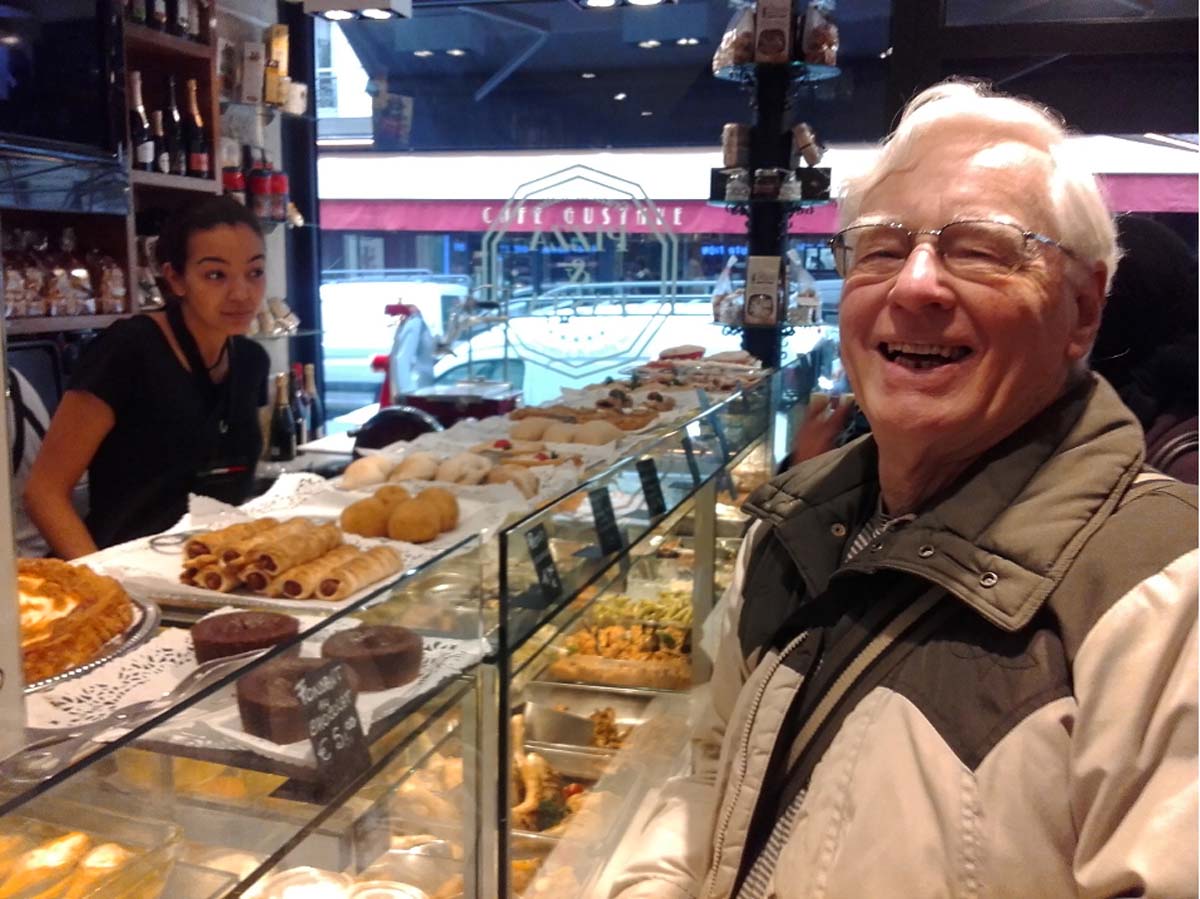
Eric is known internationally for his knowledge of PNG art, he was a VIP guest at the opening of the Jolika (Friede) collection galleries at the De Young Museum, San Francisco in 2006 and was never too far away from major exhibitions of New Guinea art around the world, in 2015 he was one of few Oceanic Art Society (OAS) members who made the pilgrimage to the Musee Du Quay Branly conference connected to the major exhibition Sepik: Arts in Papua New Guinea. Eric was a serious reader devouring all sources of written material to learn more on New Guinean cultures, so it is no surprise Eric has been referenced in multiple publications on Oceanic Art for his depth of knowledge. He wrote upon PNG arts; most recently In Praise of the Human Form: Arts of Africa, Oceania and America 2020 on Tami sculpture and his first publication was the 40-page N.E. New Guinea and the Tami for the Morobe Cultural Centre in 1977. Over a decade ago, Eric became an itinerant volunteer for the Pacific Arts department of the National Gallery a highlight of which was his presentation at the first OAS Forum in 2008 on the arts of the Huon Gulf with the Gallery’s collection at hand for members to study.
Over these past two decades visits to the Coote’s private museum, Sanguma, were a delight. Discussions on Tami art: why a headrest would look as it did, marvelling at the challenges an artist overcame to carve such resolved forms. Conversations ranged from the appreciation of patina, attention to details like the binding on adornments to outright adoration of carved countenances: how a brilliant artist could give expression and personality to carved face on a betelnut mortar. These were the things that excited Eric. By spending time in the presence of Eric and his collection it was obvious that unpinning our conversations on New Guinea art was his great respect for Papuan people themselves that grew from his life in their country.
With thanks to Elizabeth Pegg.