
by Chris Boylan with the input of Dolly Guise’s family
Dolly Guise, who graduated as Papua New Guinea’s (PNG) first female PhD in anthropology, lived an extraordinary life. Just as the Japanese arrived in PNG, she was born into an important Milne Bay family and lived her early life near Port Moresby; she was the fourth and last child of the marriage between Elsie Miller and Reginald E Guise.
Her paternal great grandfather was an English aristocrat, Reginald Edward Guise, who settled among the Hula in PNG in 1883, as a trader, and lived there for 20 years, learning the language and customs. He married Dolly’s great grandmother, Rogena, a Papuan (Hula) woman from Hood lagoon, west of Port Moresby, in the 1880s. This is possibly one of the earliest cross-cultural legal marriages in PNG. He built Rogena a home, they had three sons and he gave them all his name. Unlike many white men, Reginald Guise also welcomed his wife’s extended family to their home.
When their three sons were relatively young, Reginald Guise returned to England with advanced skin cancer and, knowing he may not return, left a will with the Administration, leaving everything to Rogena for the education of their sons. Even though he willed his considerable fortune to his wife, the Administration gave this money to the Anglican Church, and removed the sons from their mother, who died at a young age. One of the sons, Sir John Guise became Papua New Guinea’s first Governor General at Independence in 1975. As her uncle, he was an influential and important man in her life and Dolly regarded him as a surrogate father. Despite hardship, Dolly was part of a large extended and loving Papuan family throughout her childhood. Family was an integral and important part of her life.
Dolly had an equally strong set of maternal ancestors with Elsie who was the eldest daughter of Tavara and James Miller. Dolly’s grandfather, James or Jimmy Miller, was an Englishman who came to PNG via Australia in search of gold. He was tall, thin, austere, and a rigid disciplinarian. Dolly’s family know from oral history that he met Tavara in Port Moresby. After a courtship, she took him home to Wairavanua, further along the same coast to Rogena, to meet her family. Like Rogena, she too had the courage to wed a white man and died early in life. Tavara and Jimmy started a trade store and developed their small business into a thriving and fully established copra plantation, called Madana, meaning place of snakes. She left him two daughters – Elsie, Dolly’s mother, and her sister Mary. Although the union was never legalised, after her death Jimmy never remarried and lived alone. The family have no photos of Tavara but know her face, hands and part of her body were covered in clan tattoos, indicating her high customary status.
Dolly was educated in various religious schools in Papua, and eventually received a scholarship to St Gabriel’s school at Waverley in Sydney. Soon after graduation, in 1960, she gained entry to NIDA, studying acting and dance. She met Fritz Seehofer, and in 1962 they married. With married life, they moved to the western suburbs in Sydney, opened a business and Dolly withdrew from her studies. They had two children, Marcus born in 1963 and Liesel, born in 1965. With determination, Dolly eventually moved the family to Wahroonga, raising and educating her children.
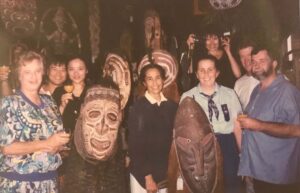
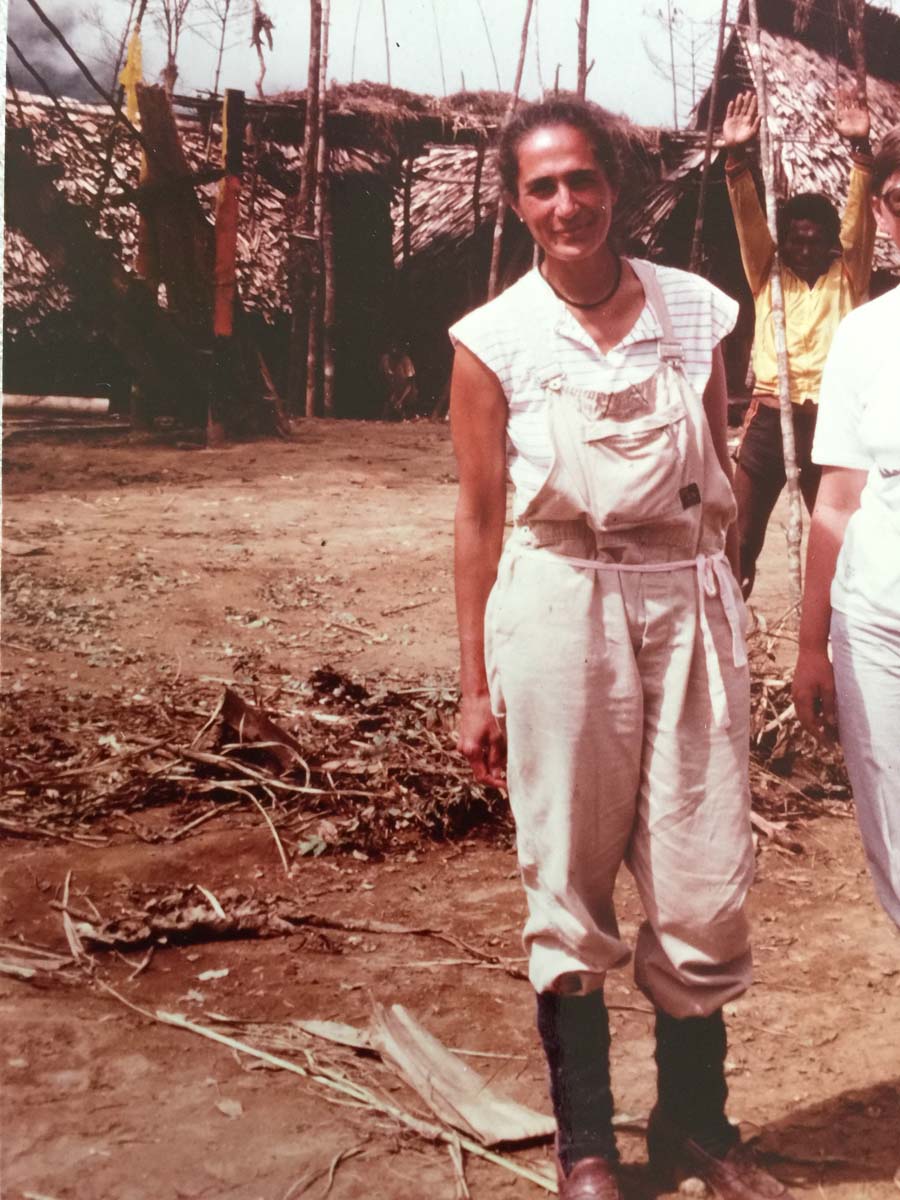
When the time was ripe, she went back to school, and eventually received a Commonwealth Scholarship to Macquarie University. She enrolled in an Arts degree, majoring in anthropology. In 1983, moving to Sydney University, she started her doctorate. Her field study was among the Goilala, inland in Central Province. Her PhD dissertation was titled The Malode Gaba: Pig and Power among the Chirime (Sydney University 1993). After graduation she began tutoring in anthropology at Sydney University, and also took up part-time work with New Guinea Arts
in Sydney.
Eventually Dolly’s background and experience led her to take up work in PNG, where, in 1999, she became the Community Relations Manager at Tolokuma Gold Mine in Goilala, her old stomping ground. She was highly respected both within the community and by the mining company for her untiring and totally committed work ethic.
Dolly was a formidable character. Being highly principled and ethical, and a razor-sharp mind, she was well known for putting her position clearly and forcefully. Hence her high reputation in her liaison position working between the Goilala community and the mining interests.
Dolly spent her final years on her family farm at Bellbrook near Kempsey which, though the brainchild of Fritz whose passion was to raise Arabian horses, Dolly came to love and cherish.
Image Caption (Top): Dolly Guise (centre) among the staff at New Guinea Arts. Mid-1980s. Photo: Helen Dennett.