At Powerhouse Ultimo, Australia until 31 December 2023
Reviewed by Margaret Cassidy
Post-impressionist French artist Paul Gauguin’s images of the Pacific are probably the most well-known of the range of works by European artists who have travelled to the South Pacific over recent centuries. In fact, Gauguin’s The month of Mary (Te avae no Maria) painted in 1899 was the prime visual image for an exhibition of art works from the Hermitage on display at the Art Gallery of New South Wales and featured on billboards and on the back of buses throughout Sydney in the summer of 2018-2019.
Sāmoan interdisciplinary artist Yuki Kihara takes as her starting point for Camp Paradise select paintings by Paul Gauguin created during his time in the Islands of Tahiti and the Marquesas between 1891 and 1903. Curated by Natalie King, the result is both highly creative, extremely clever and addresses some of the most urgent issues of our times — the visible impact on the coastal Sāmoan environment of the climate crisis, Indigeneity, and gender intersectionality of the Pacific — with exceptional aesthetic flair, technical skill and humour.
Born of a Sāmoan mother and Japanese father and identifying as fa’afafine (Sāmoa’s ‘third gender’, in the manner of a woman), Kihara is an artist and curator with very specific point of view; her works both reveal the toxic influence of colonialism and also showcase queer rights. A version of this exhibition first represented New Zealand at the 59th Venice Biennale in 2022. Kihara received her secondary and tertiary education in New Zealand.
For the second iteration now on show at the Powerhouse Ultimo, audiences are led down a walkway under a series of posters containing quotations establishing gender as a key point of view for the exhibition; they include, for example, “I’ve never really tried to be either a girl or a guy. I’ve always been me” by Tuilagi Seiuli Ailani Allan Alo Vaai and “I was so lucky to have my name Jean; it’s such an asexual name” from Jean Melasane.
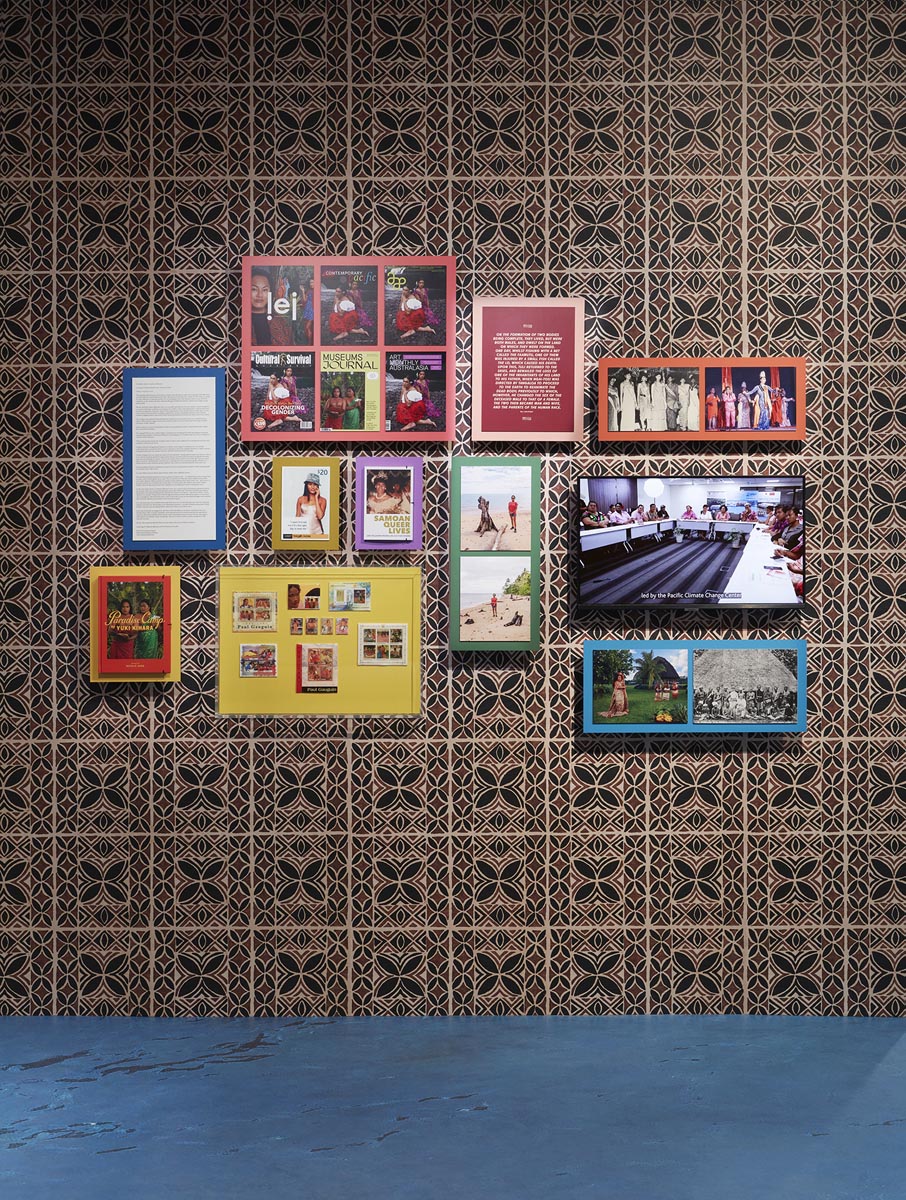
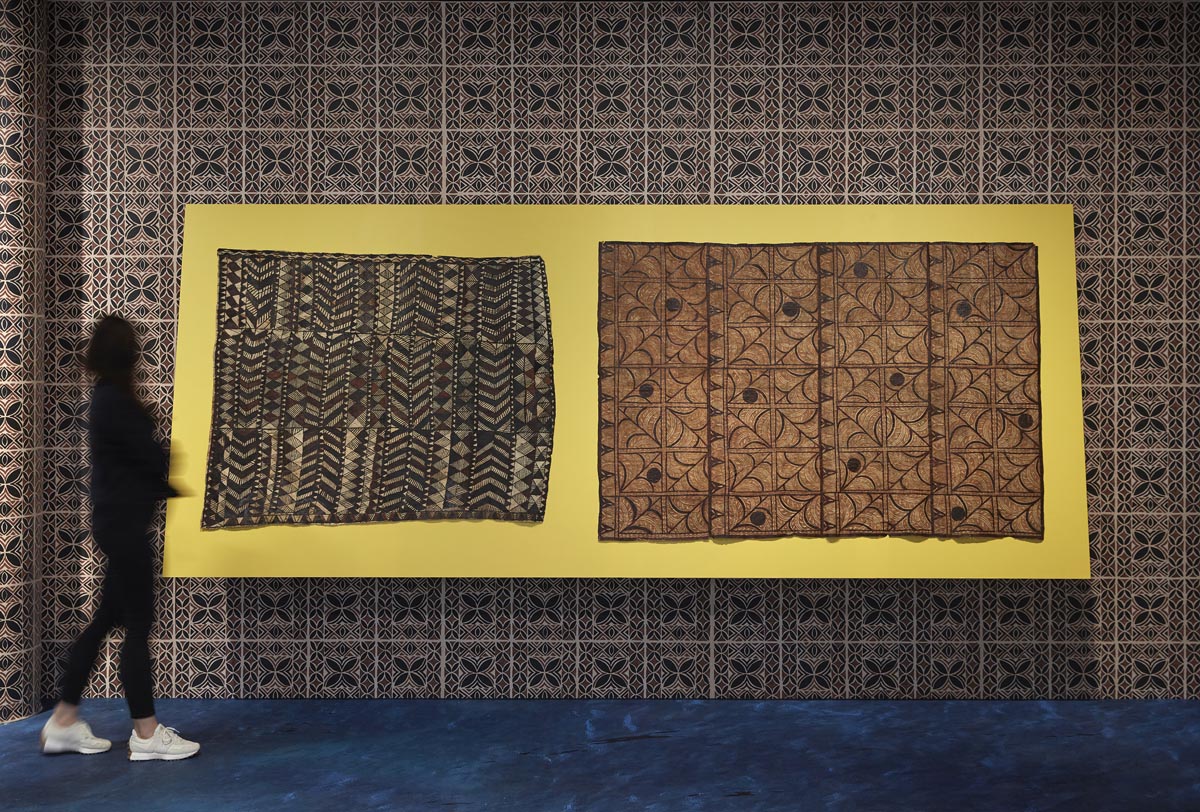
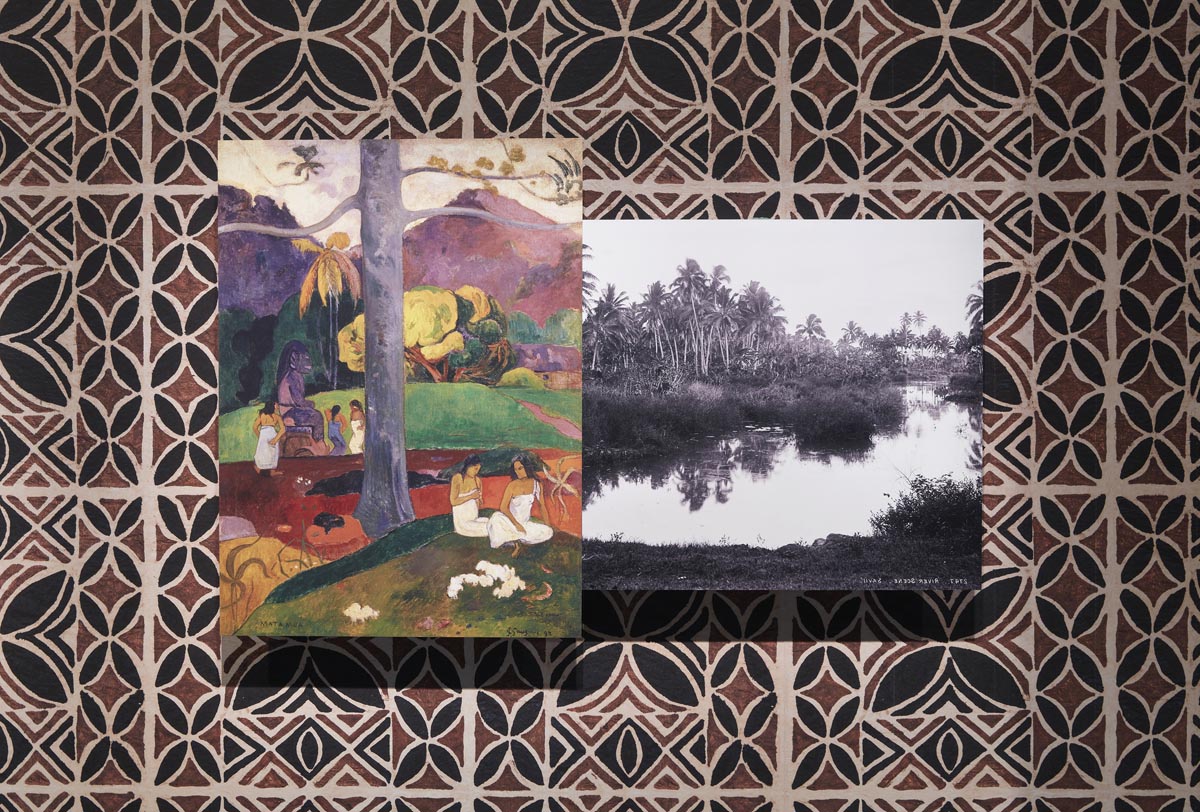
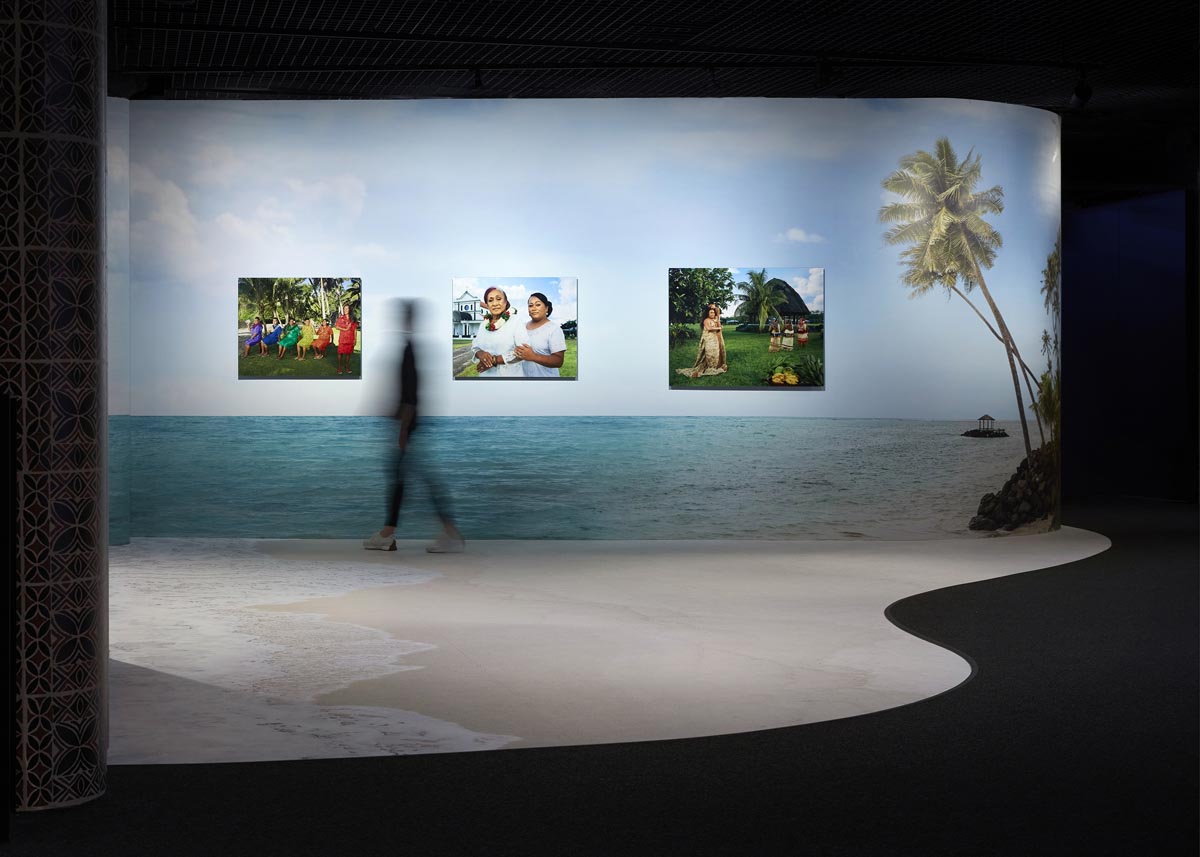
From there, audiences enter a cavernous underground gallery with the floor and wall covered in a vast vinyl wallpaper of Saleapaga Beach, a Sāmoan coastal landscape decimated by the 2009 tsunami. Against a siapo-patterned backdrop are a series of black and white colonial photographs of Samoa from the Powerhouse collection interspersed with colour reproductions of some of Gauguin’s Pacific paintings as well as other archival images that conflate pop culture, historical imagery and aesthetic anthropology through historical tourism posters, newspaper clippings and Pasifika safe sex posters.
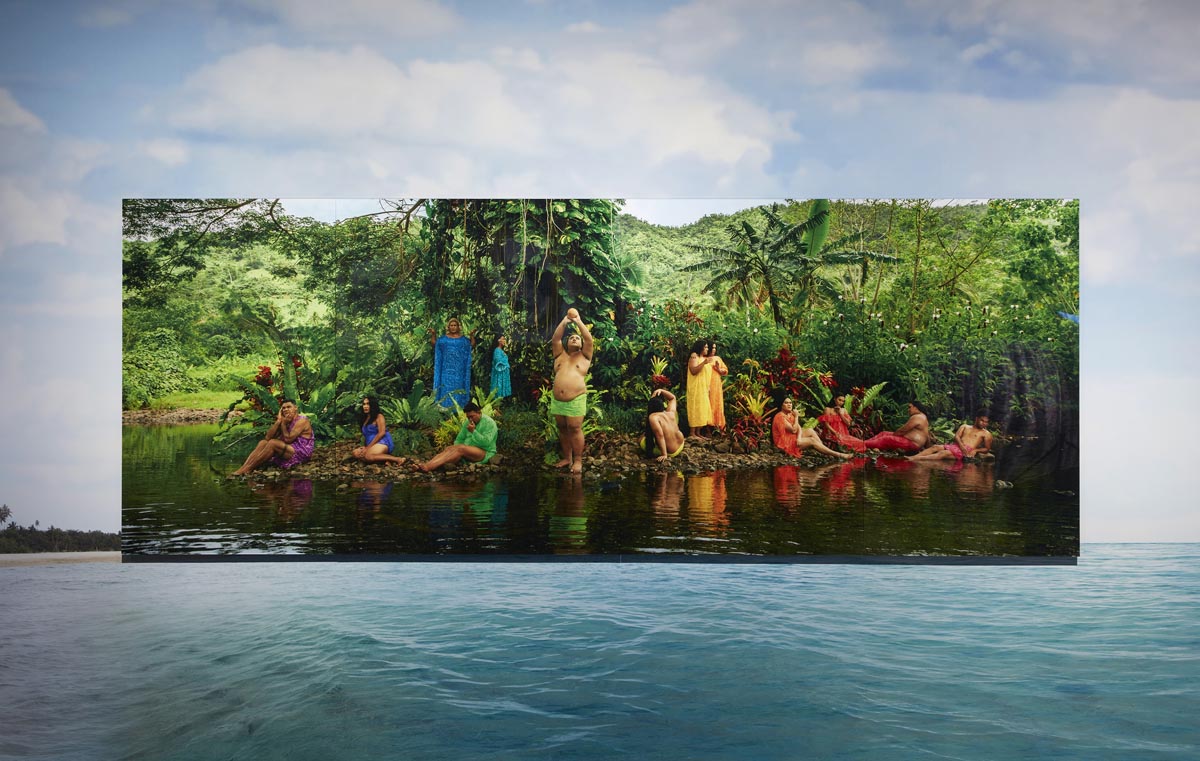
One major highlight of the exhibition are the twelve tableau photographs in saturated colour, situated against the vast wallpaper of the seascape. Eleven of the works were shot on location in Sāmoa, from rural villages to churches, plantations and heritage sites, with a local cast and crew of over eighty people. These images are breathtakingly beautiful, eerily reminiscent of Gauguin’s works reproduced alongside them, and cleverly empowering the fa’afafine cast.
The final image has Kihara herself transformed with prosthetics into a studio-based Gauguin self-portrait Paul Gauguin with a hat (After Gauguin) (2020). It is an ingenious reversal, a clever use of masking, disguise and, as always, creativity.
This exhibition is the culmination of years of research and planning. In 2008 Kihara was the first Pacific Islander and New Zealand artist to have a solo exhibition at the Metropolitan Museum of Art in New York; it was there that for the first time she saw paintings by Paul Gauguin. She returned repeatedly to view these paintings. She was further inspired by an essay by Māori scholar Dr Ngahuia te Awekotuku’s essay He tangi mo Ha’apuani (A lament for Ha’apuani): Gauguin’s models – a Māori perspective, where Awekotuku discusses how Gauguin deliberately painted his models to appear androgynous and exotic as a reflection of his fascination with the māhū of French Polynesia. Kihara undertook deep research and archival study of Gauguin’s brief visit to Auckland in 1895 where he made detailed sketches of Māori and Moana Pacific treasures. From this research comes speculation that Gauguin had access to photographs of people and places in Sāmoa and painted from these images.
Another highlight of the exhibition is the five-part episodic talk show First Impressions: Paul Gauguin featuring a group of fa’afafine critiquing selected works by Paul Gauguin, who is both essentially unknown and irrelevant to them. Commissioned by the Fine Arts Museums of San Francisco and the Ny Carlsberg Glyptotek, Copenhagen, the pointed and clever humour of the talk show guests encapsulates the opposing views and cultures of patriarchal colonial Europe and the traditional Polynesian acceptance and celebration of queer being.
Paradise Camp was created with fa’afafine and fa’atama audiences in mind; the artist saying, “the title of my exhibition is intended to ‘camp’ the notion of ‘paradise’ by using satire and subversion”. The Powerhouse has hosted a series of events associated with Kihara’s eight week creative residency and the Fa’afafine community with members travelling from as far away as Samoa for some events.
There have also been events for the broader Sāmoan diaspora living in Sydney. At one such event, dancer and recently crowned Miss Sāmoa NSW 2023, Moemoana Schwenke said, “While I was in Tahiti I got to learn a little bit more about Paul Gauguin the artist who is really responsible for a lot of the incorrect and maybe negative depictions of our Pacific women. During colonialism Europeans came to the Islands and saw Tahitian women dancing like this and viewed it as something very erotic, maybe something a bit lascivious, and little did they know that the way they dance is just a part of their life and their culture and worshipping their environment thank God that rests in all living things. So I applaud Yuki Kihara for highlighting Paul Gauguin and how he romanticised, perhaps sexualised, our Pacific women and our beautiful Pacific fa’afafineand fa’atama who exist in Samoa but all around the Pacific as well.”
Subverting the art historical canon dominated by dead white male artists through what Kihara calls visual sustainability’ or ‘upcycling’ signature visual images, the exhibition is multi-layered and worth repeat visits and reflection. It is supported by a rich website https://paradisecampatpowerhouse.com/virtual-explore for further exploration at home. Paradise Camp will tour Sāmoa in 2024.