
by Neriba Gallasch
My deepest respect for the Torres Strait people.
Where is the Torres Strait?
Who are the Torres Strait Islanders?
The Torres Strait is a grouping of many, many islands, more than 200 in number. Some you could not live on, but around 20 are permanently habitable.
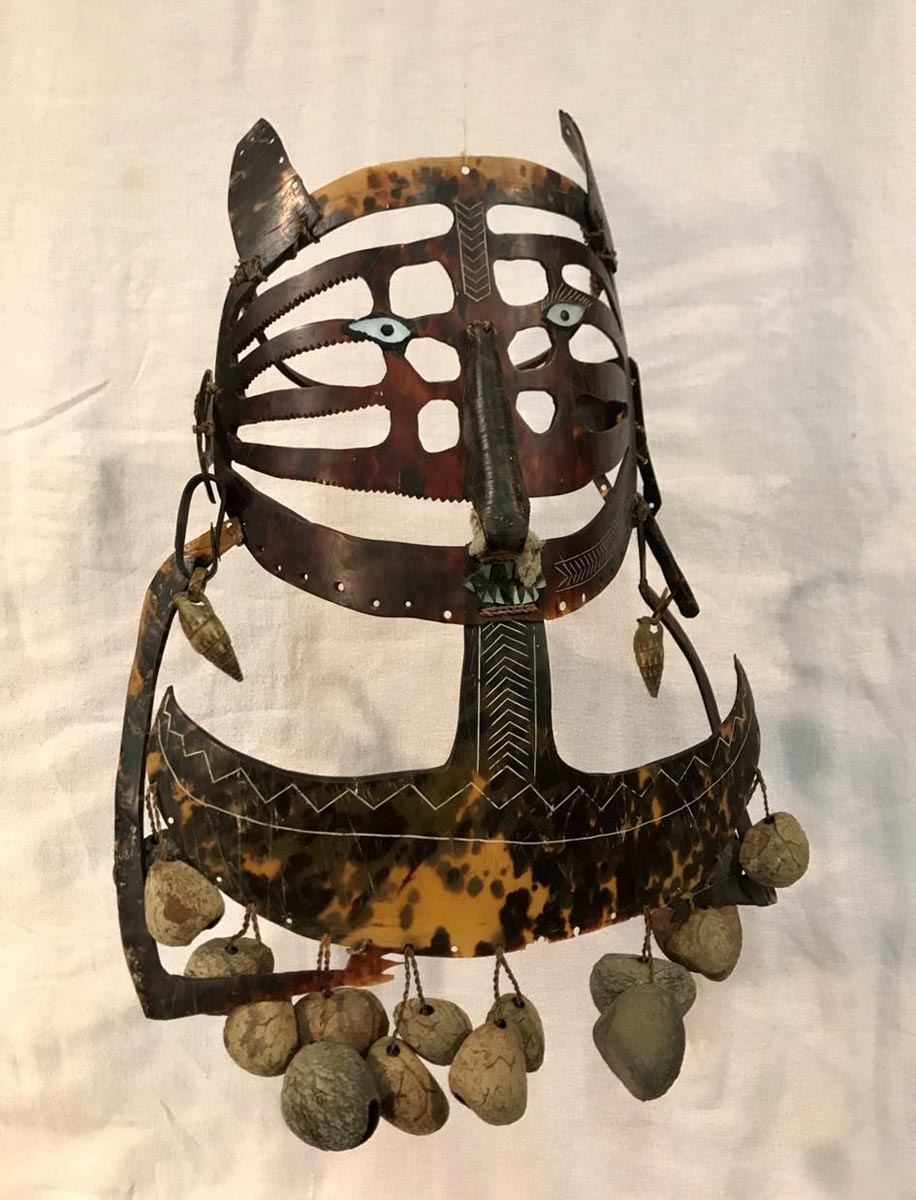
For the Islanders, the rhythms of life are dictated by stars, moon, wind, tides and changing seasons. Totem and sacred objects were called upon to ensure good hunting and fishing. To find out more, I would recommend reading Throwing off the Cloak by Dr Elizabeth Osbourne, published in 2009.
Today many Australians still don’t know where the Torres Strait is. This led me on my journey to finding out more. So I started keeping my eyes open for any objects that were accessible to me. That was difficult. But time was a great friend, when you are not expecting it.
Torres Strait Art is unique, like nothing else in the world. From dance, music and all the different creations that relate and are dictated by the environment.
Traditional art is mainly made of turtle shell masks and wooden drums. Their creations are of a simple design. Totem figures and Charms are very important with the use of feathers, pearl shell, cowrie shell and other seashells.
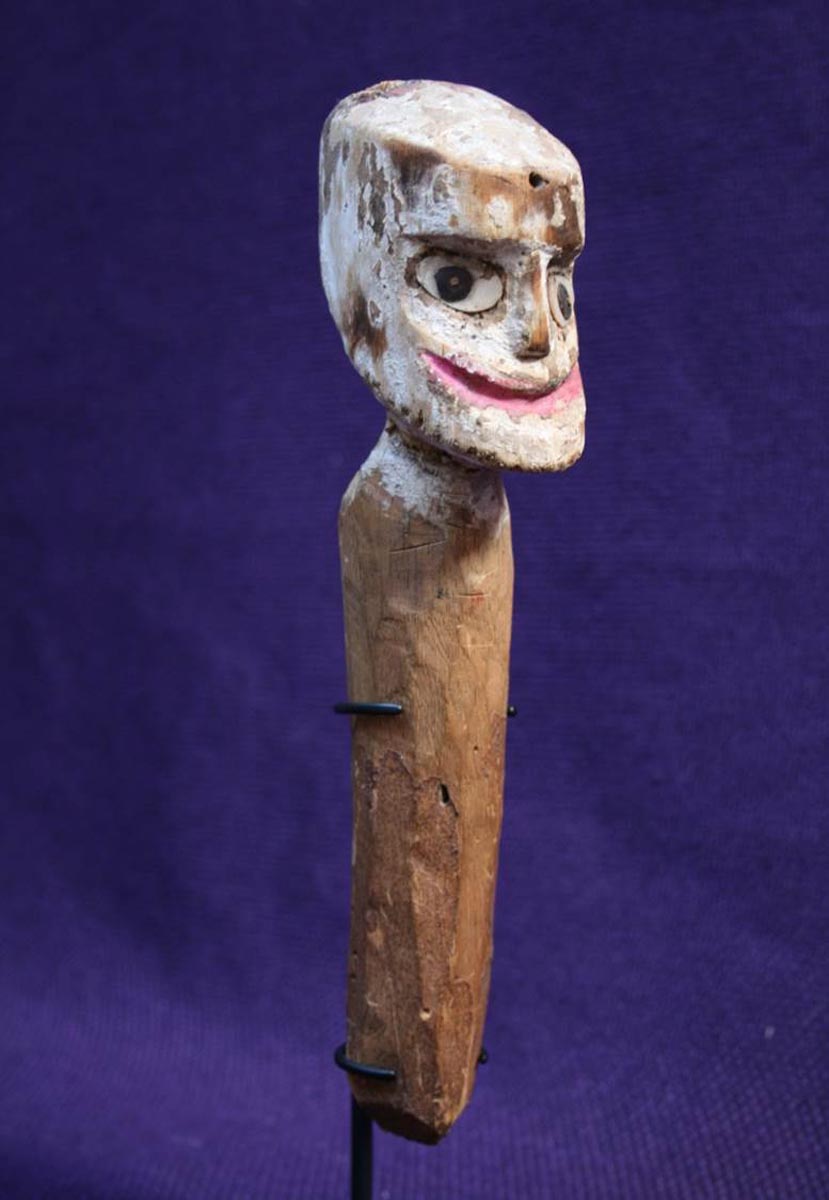
Totem figures are so rare and unique. Early masks from the Torres Strait are recognizable and there are only a handful around the world. Institutions like the Queensland Museum and the Metropolitan Museum of Art in New York have examples of early pieces collected.
With regard to contemporary works it is pleasing to see more institutions are displaying contemporary Torres Strait art. Today’s creators are carrying on the duty of sharing their culture to the world. A handful of artists like Ricardo Idagi, Alick Tipoti, Dennis Nona and George Nona. Ken Thaiday Snr., was the only known creator a few decades earlier. Some institutions carry his work. There are others that I don’t know about but what I do know is that the contemporary movement is active and alive, taking on the task of finding their roots.

Many artists live on the mainland and practise their art, resulting in a growth in this area. I believe there are a handful of collectors in this country that might have some unique pieces, but are keeping it under wraps. Most of these unique pieces are held in Institutions and Private collections around the world. We can only hope in the future that some of these objects can come back home.

To conclude, I ask every one of you to take a bit of your time and look and learn about the Torres Strait, like myself. I’m just starting that journey. Thank you.
Neriba Tinabi was born in Rabaul, New Britain, Papua New Guinea and was one of the first girls to get a secondary education and then worked in an airline office in Rabaul. In 1979 she relocated to Hahndorf in the Adelaide Hills with her Australian husband, agronomist Harold Gallasch, and their family. There they both worked to establish a natural history business and tribal art gallery. Today, Tineriba Gallery is considered to be the longest running art space of its kind in Australia. Neriba has focused on travelling to Aboriginal communities and art centres and was on the inaugural board of the Australian Aboriginal Art Association.