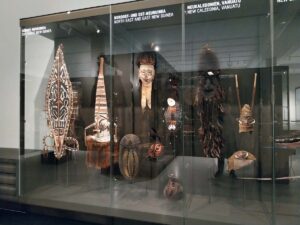
by David Hourigan
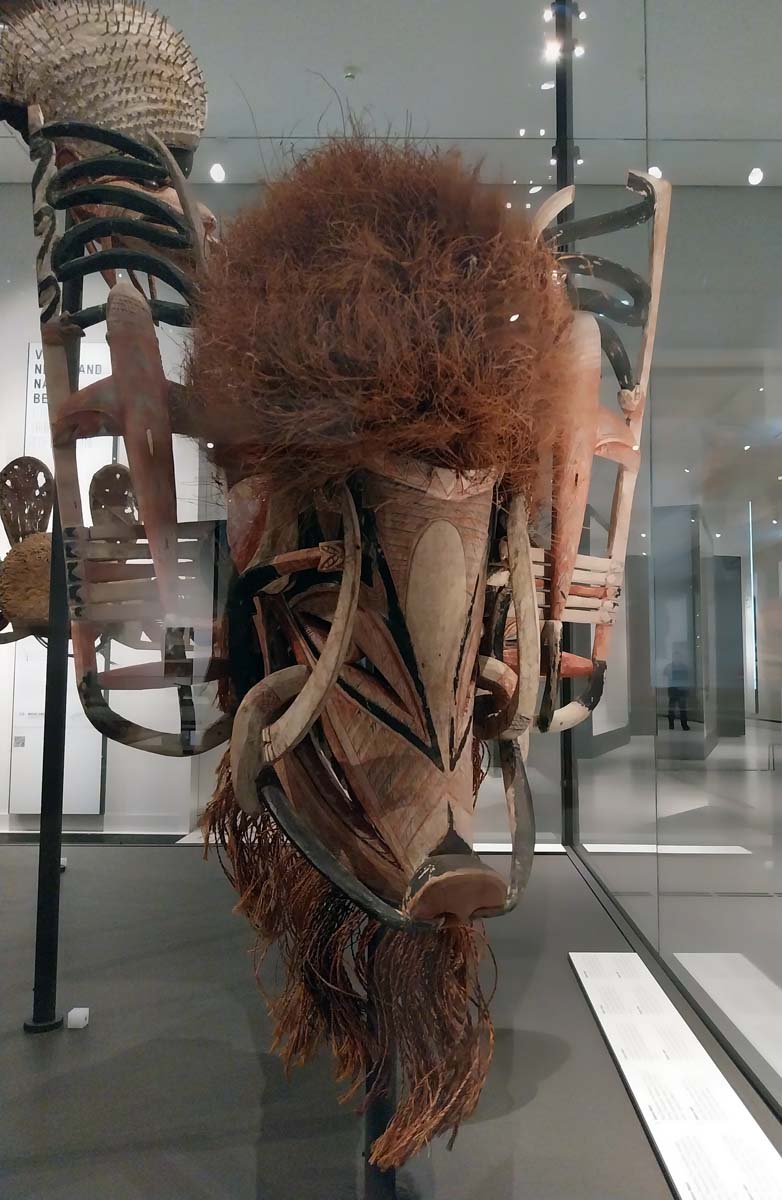
I have been responsible for the graphic design of each OAS Journal for many, many years. I do not collect Oceanic art (my own collecting focuses on imperial German pickelhaube spiked helmets) and I would certainly never claim to be an expert on Oceanic art, but some appreciation and knowledge has seeped in by osmosis over the years – I now know the difference between a malanggan and a matua mask! Earlier this year I travelled to Berlin, very keen to visit the newly rebuilt Berlin Palace as part of my interest in Germany’s imperial past. When I entered and encountered the Humboldt Forum inside, I knew I had to share some of the highlights in the OAS Journal.
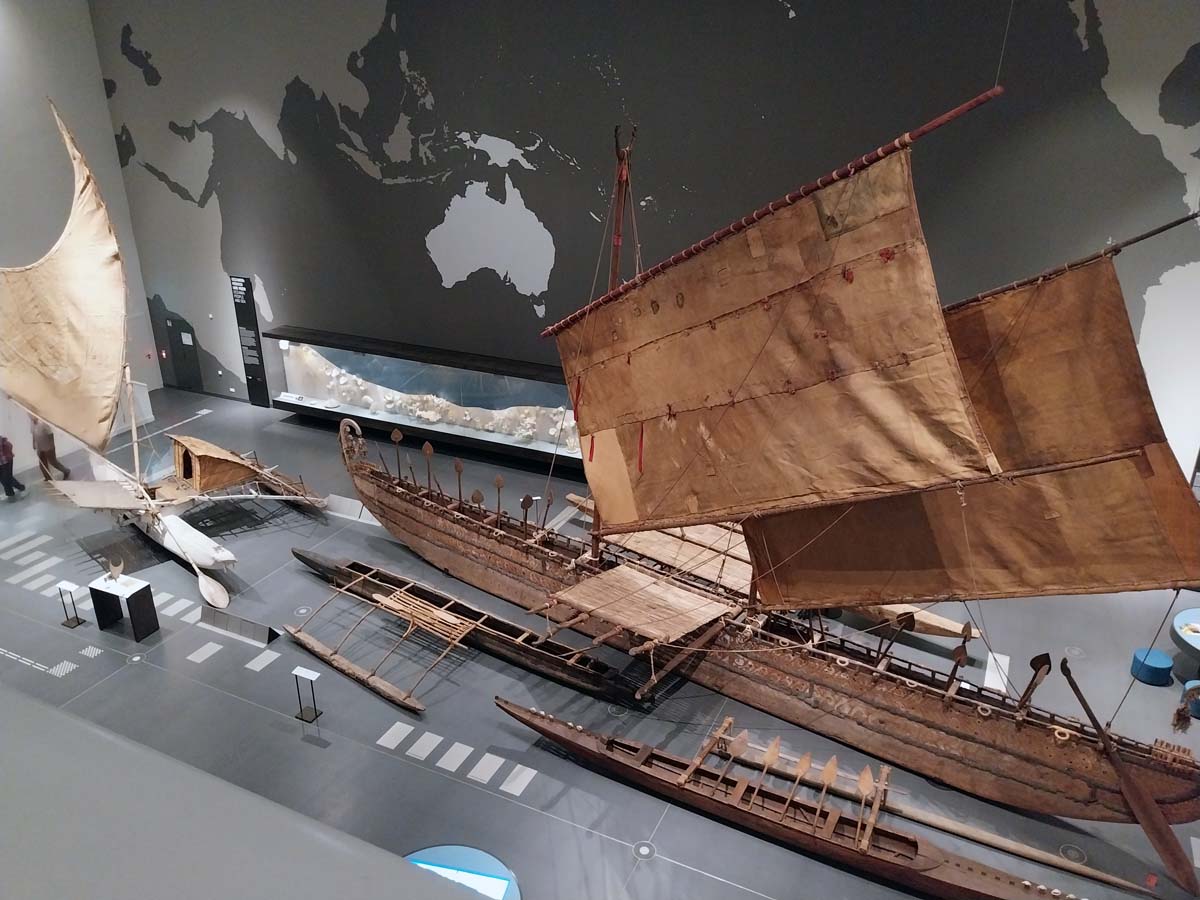
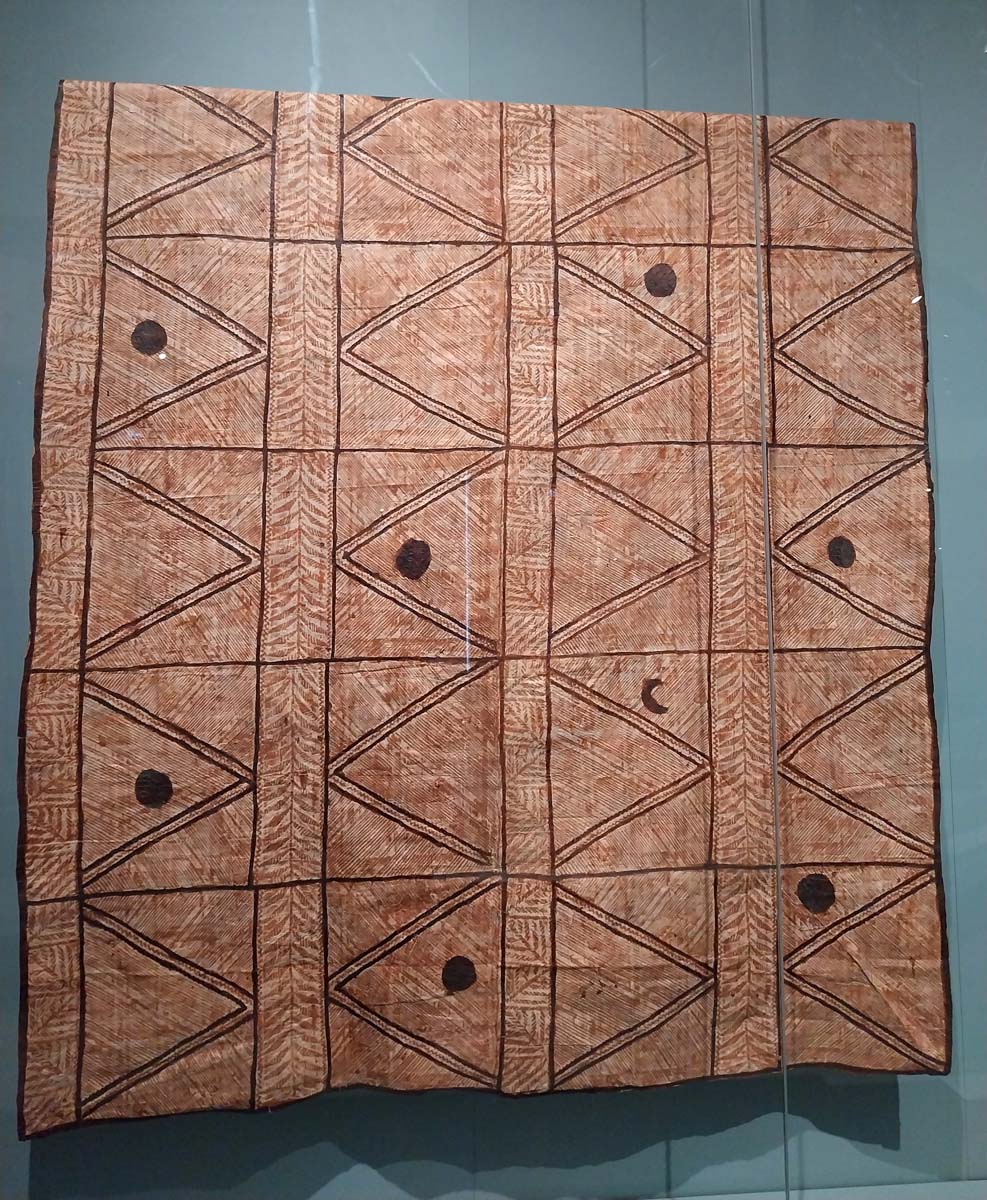
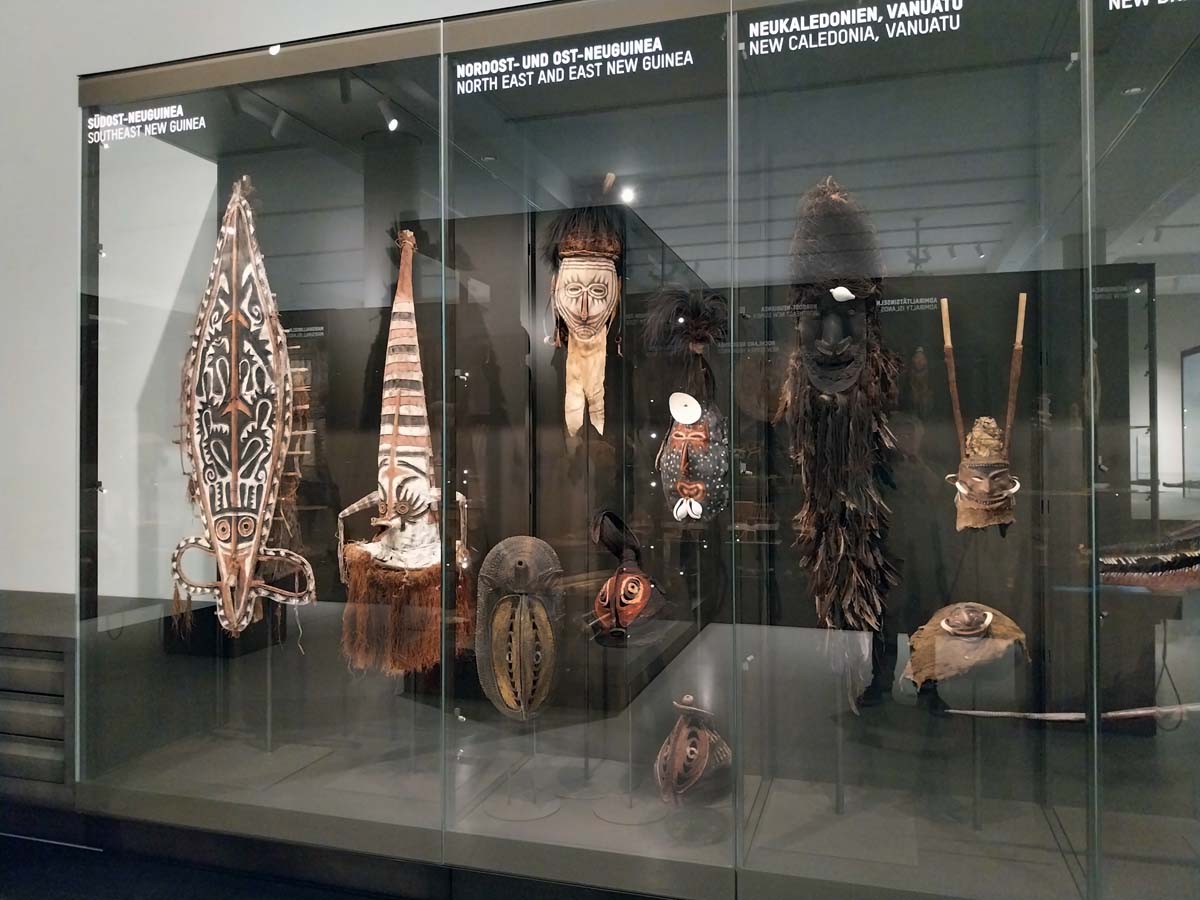
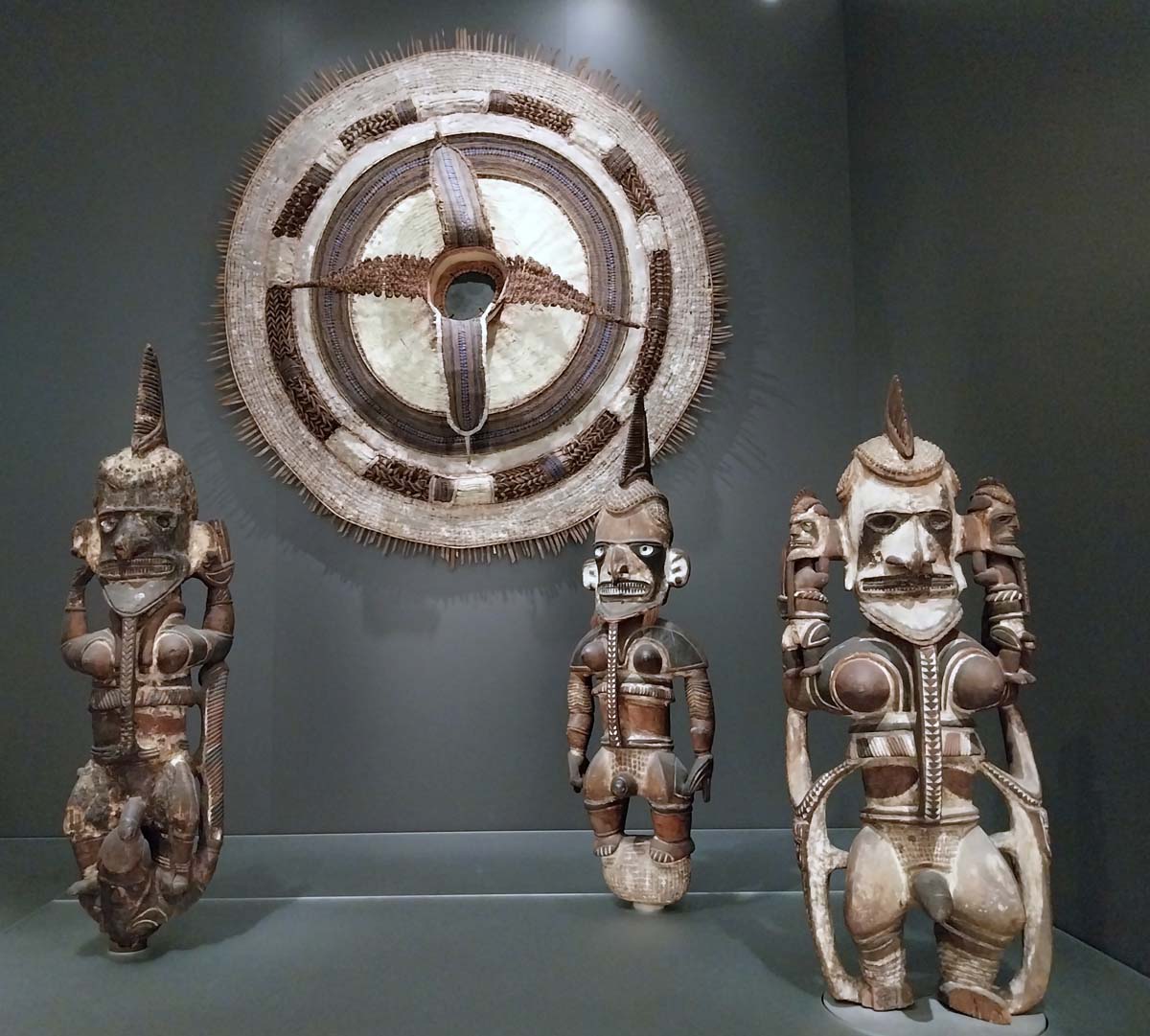
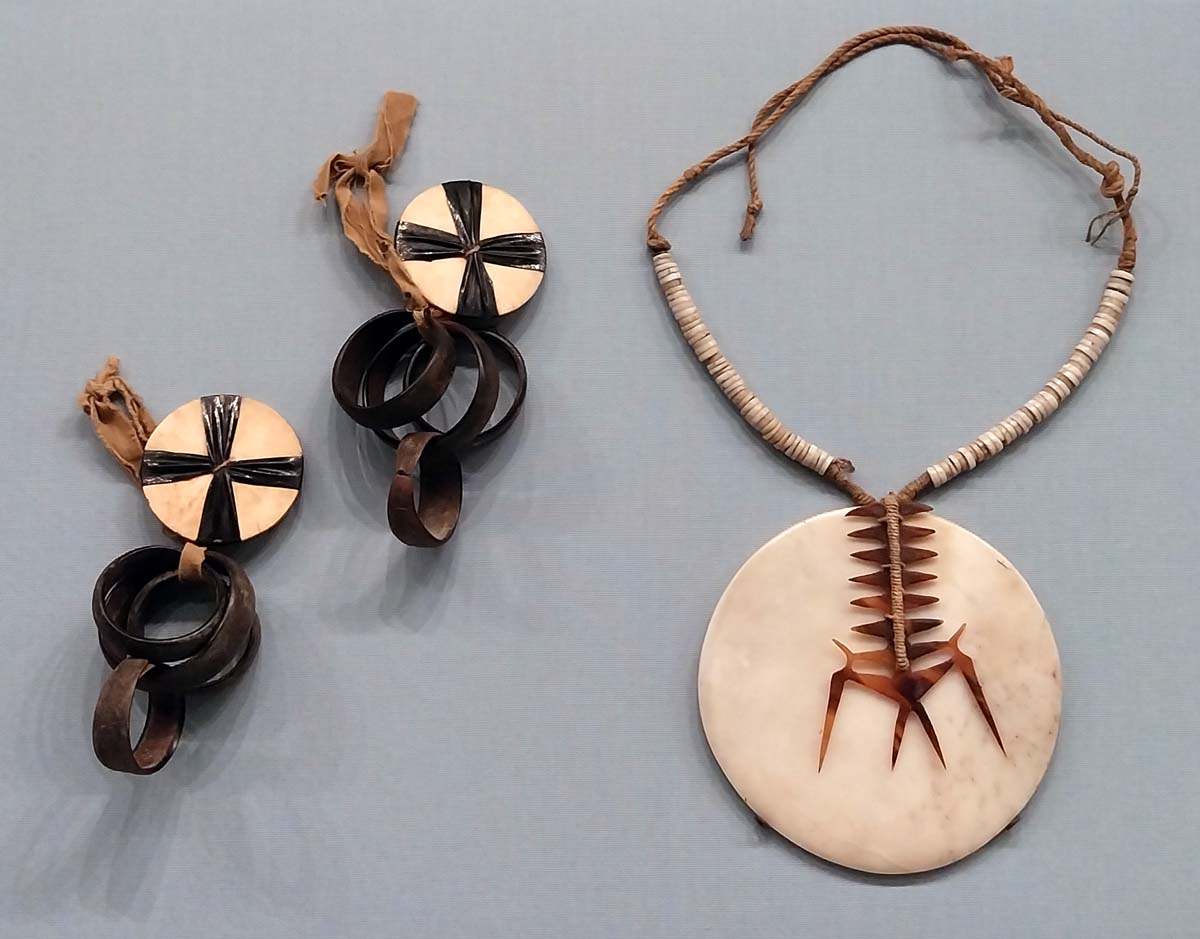
Aware that Germany had collected a great deal in their colonial past, I had no idea of the extraordinary museum collection I was about to experience. The first room containing a gigantic offshore sailboat from Luf, Papua New Guinea, collected in 1903, sufficiently impressed me. In the next, Solomon Islands ear jewellery and pectoral ornaments. Every room contained world-class Oceanic artefacts; Sepik carvings, Maori door panels, Samoan barkcloth, New Ireland kulap figures, Micronesian necklaces. Several hours were utterly insufficient – I could have spent days there.
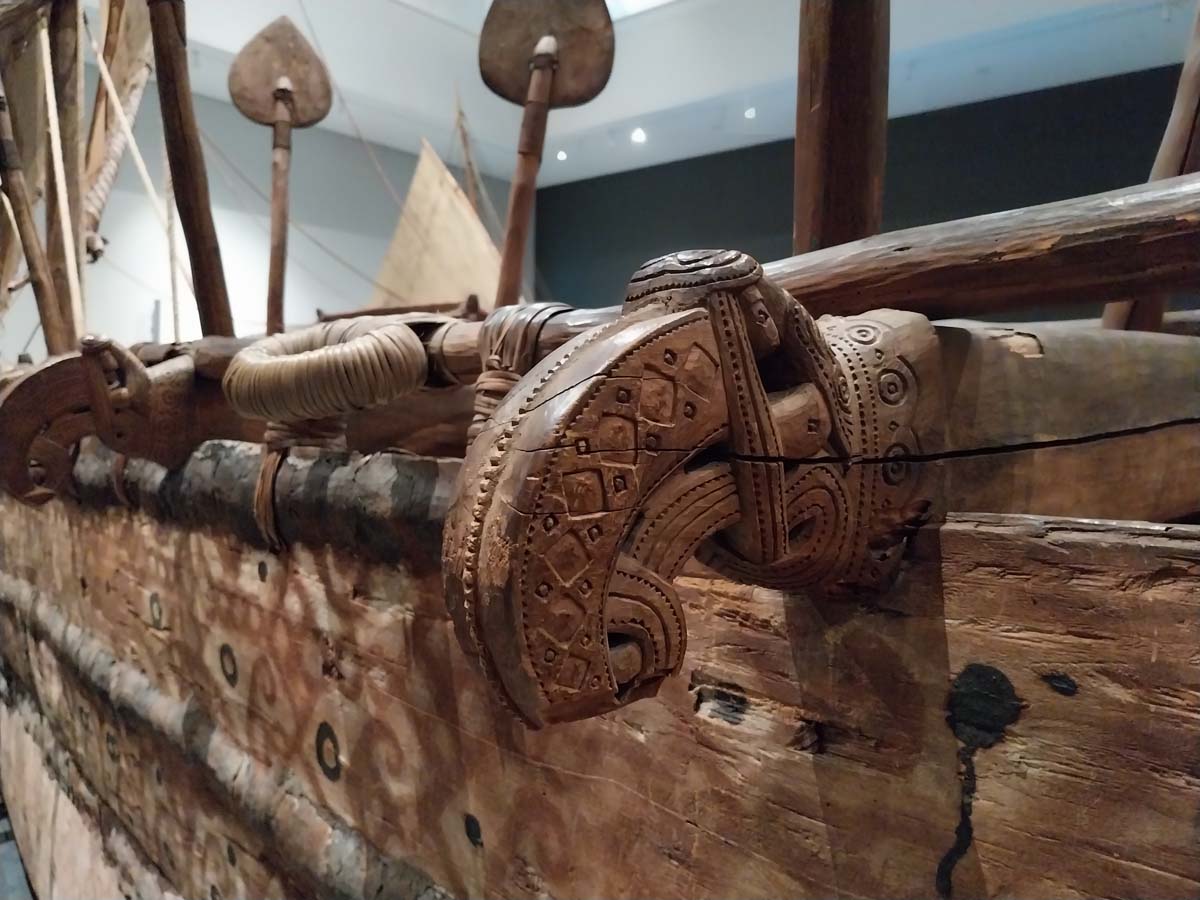
I am keeping this necessarily short, as I prefer to let the images speak for me, but one final important point must be made. I was impressed by the museum’s dialogue about colonialism, their willingness to explain the political and economic systems which resulted in items from the other side of the planet being “collected” and shipped to ethnographic collections in Berlin. It is part of a much larger openness, a willingness to confront Germany’s history which impressed me greatly. In fact, the Humboldt Forum, now part of Berlin’s vibrant “museum island’ and built next door to the Pergamon Museum, famous for its antiquities and Islamic art, is the new kid on the block in this city of museums and galleries, opening in 2021 and intent on being a future-focused space to foster the “universal story of the human race from multiple perspectives”. The current holdings of the Humboldt Forum are largely based on the 150 year old Königliches Museum für Völkerkunde (Royal Museum for Ethnology).
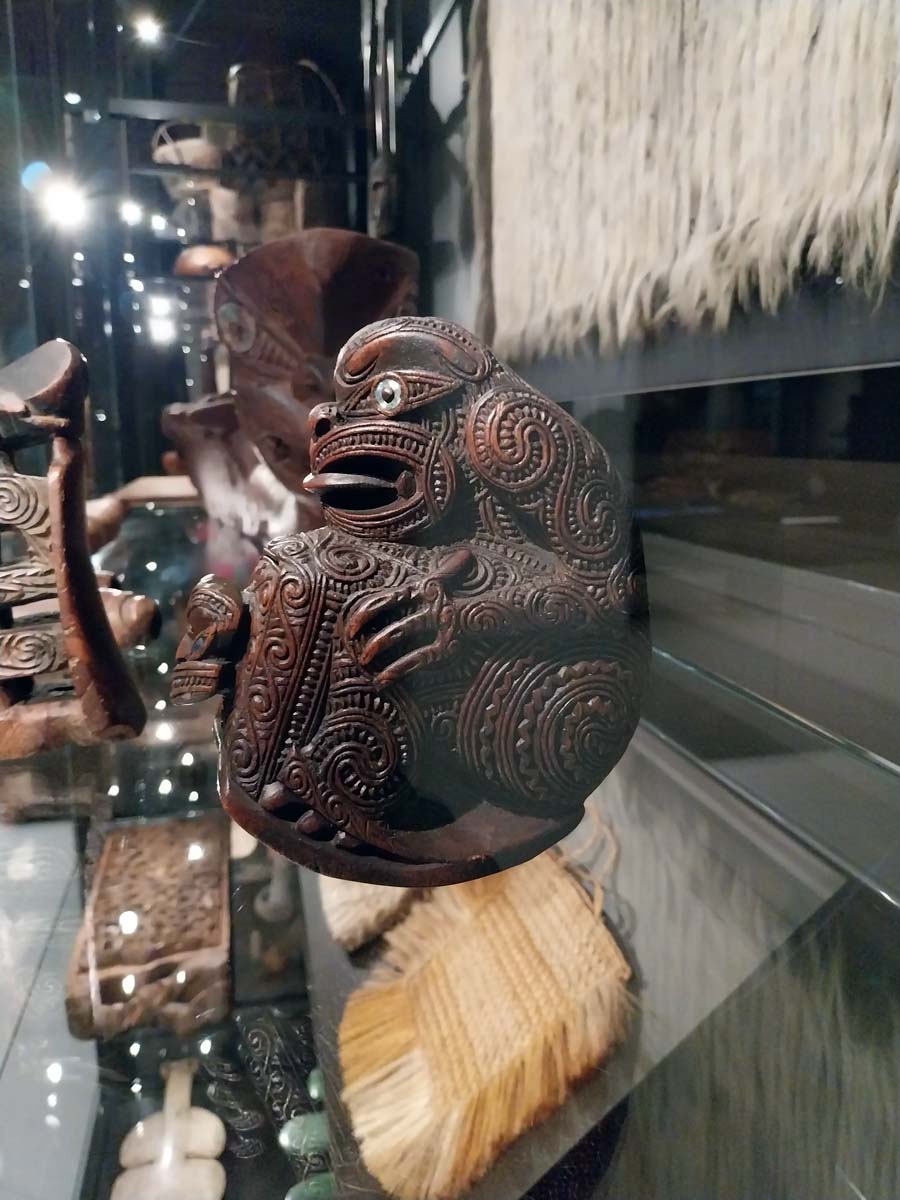
If you ever have the opportunity to visit the Humboldt Forum, set aside more time than you expect. I also recommend researching the Berlin Palace, it is a fascinating entity that encapsulates so much of the last two centuries, from imperial hubris, through revolution, Nazi hatred, communist drabness and modern restoration – to have discovered such Oceanic gems inside was, for me, an unexpected and entirely wonderful bonus.